For years, booking a weekend in Europe has been almost too easy. Choose a city, open an app, find a small apartment somewhere near the centre and, a few clicks later, you have a temporary home in Paris, Barcelona or Lisbon.
For travellers, short-term rentals have changed the way we experience cities. They can offer more space than a hotel, a kitchen of your own and the feeling – at least for a few days – that you are living like a local.
But there is a problem. In some of Europe’s most popular destinations, the people who actually live there say it is becoming increasingly difficult to find a home of their own.
Now the European Union is preparing to become more involved.
On September 9, 2026, the European Commission is expected to present new proposals aimed at giving cities more power to control short-term holiday rentals in areas where housing has become especially difficult to afford. The plans could affect platforms such as Airbnb and, in the longer term, change the familiar European city break.

From spare room to global business
Airbnb began with a simple idea: people could make some extra money by renting a spare room or their home when they were away.
That idea grew very quickly.
Today, short-term rental platforms are an important part of European tourism. According to the European Commission, this type of accommodation now represents around a quarter of tourist accommodation offers in the EU. In 2025 alone, guests spent more than 951 million nights in short-term accommodation booked through online platforms.
For travellers, the advantages are obvious.
A family can rent an apartment instead of several hotel rooms. A group of friends can stay together. Visitors can prepare their own meals, live outside traditional hotel districts and sometimes find cheaper accommodation.
Hosts benefit too. Renting a property for a few weekends can provide useful extra income.
So why are governments becoming worried?
Because in some places, short-term rentals are no longer simply about someone renting out their home while they are on holiday.
Entire apartments can be used almost permanently for tourists.
And every apartment used mainly for visitors is potentially one less apartment available for somebody who actually needs to live in the city.
The housing problem
Europe is already facing a serious housing affordability problem.
The European Commission says average house prices across the EU increased by more than 60 per cent over the previous decade, while rents rose by more than 20 per cent. It has therefore made affordable housing one of its major policy priorities.
Short-term rentals are certainly not the only reason housing has become expensive. Construction costs, limited housing supply, investment properties, population changes and speculation all play a role.
But in heavily visited neighbourhoods, converting ordinary homes into holiday accommodation can make an existing problem worse.
Imagine an apartment building with twenty flats.
If one owner occasionally rents out a room, the effect on the neighbourhood is probably small.
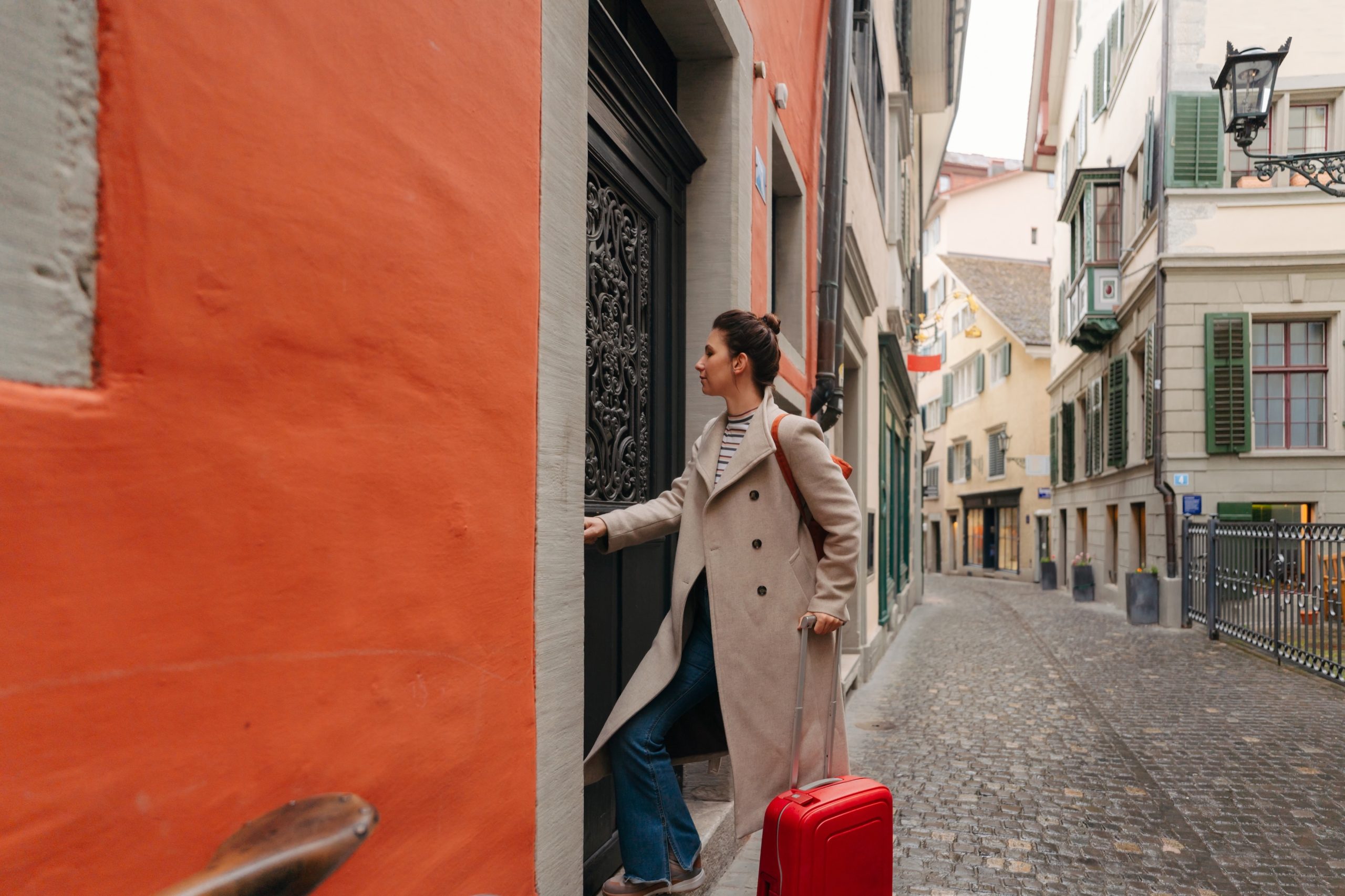
If eight of those apartments become permanent tourist rentals, however, things begin to change. Fewer homes are available for local tenants. New visitors arrive every few days. Suitcases roll through the corridors late at night. Key boxes appear outside buildings. Local shops may slowly begin serving tourists instead of residents.
The neighbourhood can remain physically the same while becoming a very different place to live.
Paris has already started tightening the rules
You do not have to wait for new EU legislation to see what stricter regulation looks like.
Paris already has some of Europe’s toughest rules.
Since January 2025, Parisians have generally been allowed to rent out their main home as tourist accommodation for a maximum of 90 days per year, down from the previous 120-day limit. The accommodation must also be registered. Renting out a second property to tourists is subject to much stricter conditions.
The city says the rapid growth of furnished tourist rentals has reduced the number of homes available on the traditional rental market and contributed to higher housing costs.
There is also the question of everyday life.
Paris has even acted against one of the small symbols of the Airbnb era: the key box. Since 2025, attaching key boxes to public street furniture has been prohibited.
It may sound like a tiny detail, but it says something about how dramatically tourism has entered residential neighbourhoods.
Barcelona wants to go much further
Barcelona has chosen an even more radical direction.
The city plans to stop renewing the licences of roughly 10,000 tourist apartments, effectively ending licensed short-term tourist flats by November 2028. The local government hopes that apartments currently used for holiday visitors will return to the residential market.
The decision comes after years of growing tension surrounding tourism.
Barcelona is one of the most visited cities in Europe, but its popularity has created a difficult relationship between visitors and residents. Local people have repeatedly complained about rising rents, overcrowded neighbourhoods and businesses increasingly designed for tourists instead of the people who live nearby.
The debate has occasionally become very visible. Anti-overtourism demonstrations have taken place in Barcelona and other Spanish destinations, with housing and holiday rentals among protesters’ main concerns.
Barcelona’s message is becoming clear: tourism is welcome, but residents must still be able to live in their own city.
So what is the EU planning?
Until now, rules on short-term rentals have varied enormously from one country – and sometimes one city – to another.
That is where Brussels wants to step in.
A draft of the European Commission’s planned Affordable Housing Act suggests creating a clearer system for identifying places suffering from “housing stress.” Factors could include the relationship between property prices and local incomes, population growth and the balance between housing supply and demand.
Once an area is officially considered under serious housing pressure, local authorities could have a clearer legal basis for introducing restrictions on short-term rentals.
That does not necessarily mean banning Airbnb.
Possible measures could include limiting the number of properties used for holiday rentals, placing caps on rental activity or protecting existing registered hosts while stopping the market from expanding further. According to the draft reported by Reuters, measures would have to be proportionate, non-discriminatory and justified by the public interest.
In other words, Brussels appears to be trying to give cities more freedom while also setting clearer rules about how far they can go.
Europe already knows much more about the rentals
There has already been another major change this year.
Since May 20, 2026, new EU rules have applied to the collection and sharing of information about short-term rentals.
Platforms are required to help verify registration numbers where registration systems exist and regularly provide information about bookings to public authorities. Authorities can also request action against listings that do not follow the rules.
This may not sound particularly exciting to a traveller looking for somewhere to spend a weekend.
But data matters.
A city cannot effectively control short-term rentals if it does not know how many exist, where they are located or how often they are being used.
For years, this has been one of the biggest difficulties for local governments.
The new system gives them a much clearer picture.
Not everyone thinks stricter rules are the answer
There is another side to the debate.
Property owners argue that short-term rentals allow ordinary people to earn extra income. In tourist regions, visitors staying in apartments also spend money in local cafés, restaurants, shops and other businesses.
Industry groups have warned that overly strict regulation could hurt small hosts and damage local tourism economies.
Airbnb itself has said it supports the EU’s new data-sharing system but wants governments to introduce rules that are fair and proportionate. The company argues that home sharing can exist alongside sensible housing policies.
There is also a simple economic question.
If thousands of tourist apartments disappear from popular cities while the number of visitors remains high, those visitors will still need somewhere to sleep.
Hotels could become busier.
Prices could rise.
Tourists may move towards nearby towns or less famous neighbourhoods.
And some travellers might simply choose another destination.
Does this mean the end of Airbnb in Europe?
No.
The headlines may sometimes make the situation sound dramatic, but Europe is not about to ban Airbnb across the continent.
The proposed EU system is mainly about allowing tougher action where housing pressure is particularly serious.
An apartment in a small town with plenty of available housing is very different from an apartment in the historic centre of a city where local workers can no longer afford the rent.
That difference appears to be at the heart of the new approach.
The future of short-term rentals in Europe may therefore become much more local.
One city may allow them quite freely.
Another may limit the number of nights.
A third could stop issuing new licences completely.
For tourists, checking accommodation rules may gradually become as normal as checking local tourist taxes.
The city-break dilemma
There is an irony in all of this.
Many travellers choose apartments because they want a more authentic experience.
They want to shop at the neighbourhood bakery, drink coffee beside local residents and spend a few days somewhere that does not feel like a tourist resort.
But if too many apartments become tourist accommodation, the local residents who create that atmosphere may slowly disappear.
A neighbourhood cannot offer visitors “local life” if local people can no longer afford to live there.
That is the difficult balance Europe is now trying to find.
Tourism creates jobs, brings money into cities and allows millions of people to discover places they might otherwise never see.
At the same time, cities are not museums or amusement parks.
They are homes.
A different kind of European holiday?
For now, anyone planning a European city break can still find thousands of apartments online.
There will be no sudden moment when Airbnb disappears from the map.
But the direction is changing.
Paris has already reduced the number of days a main residence can be rented. Barcelona is preparing to remove tourist-apartment licences altogether. New EU data rules are making the sector easier to monitor, and Brussels is now considering giving cities a clearer legal framework for taking stronger action in areas suffering from housing shortages.
For travellers, that could eventually mean fewer apartments, stricter registration, different neighbourhoods and perhaps higher accommodation prices in some of Europe’s most popular destinations.
But there is a bigger question behind the new rules.
When we visit Paris, Barcelona, Lisbon or any other beautiful European city, what exactly are we coming to see?
The buildings matter. The museums matter. The restaurants matter.
But cities are really made by the people who live in them.
And perhaps the future of European tourism will depend on making sure they can continue to do exactly that.
 Gergő's English Club