Today, travelling can begin before we even leave the sofa. We type a destination into our phone, compare hotels, check the weather, look at restaurant reviews and save interesting places on a digital map. When we arrive, a small blue dot tells us exactly where we are. If we take a wrong turn, our phone simply finds another route.
It is so normal that it is becoming difficult to remember that travelling was once very different.
September 27 is World Tourism Day, and in 2026 the official theme focuses on the digital world and artificial intelligence. It is a perfect moment to look in the opposite direction for a while. What was travelling like before smartphones, Google Maps and instant internet access?
The answer is simple: it required more preparation, more paper – and sometimes a little more courage.
The Map Was One of the Most Important Things in Your Bag
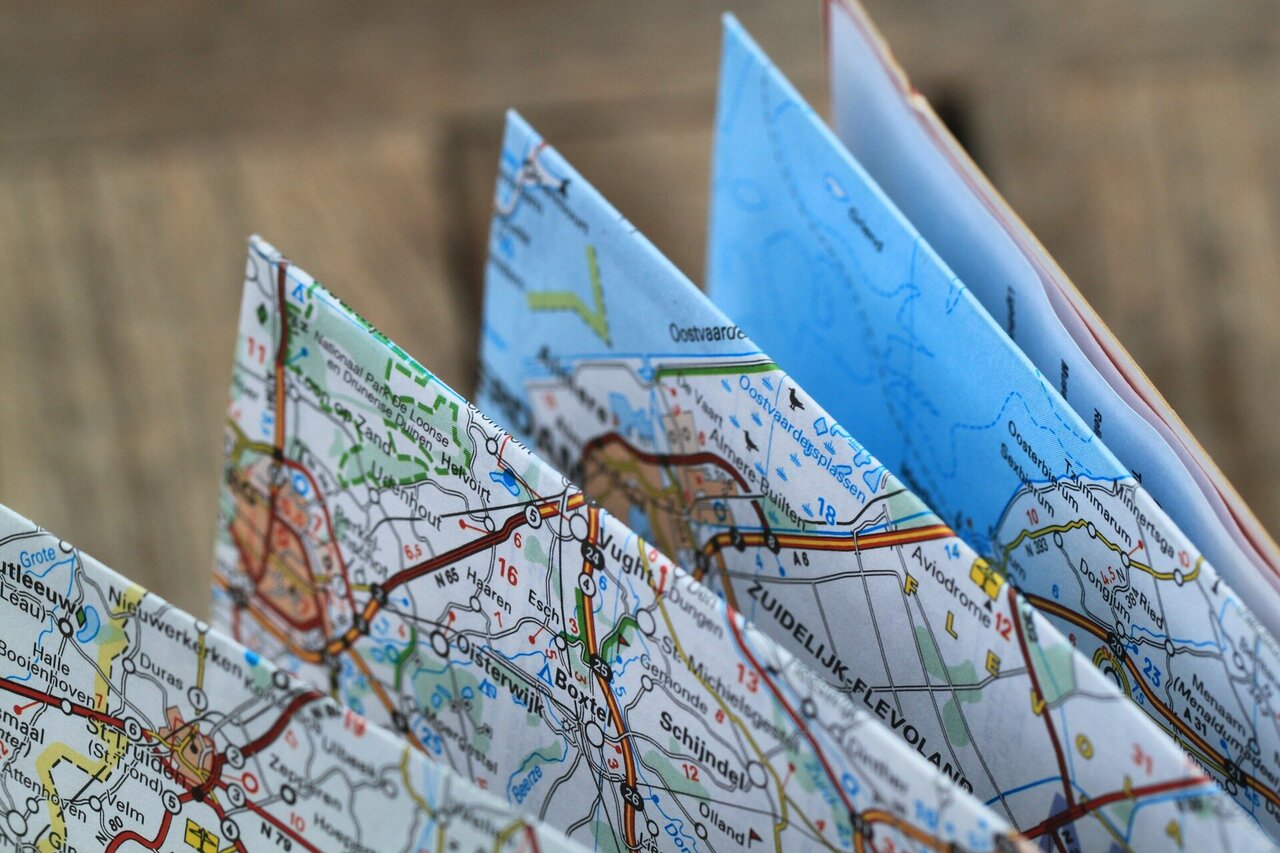
For generations of travellers, a folded paper map was an essential part of a journey.
You could buy one before leaving home, pick one up at a petrol station or get a free city map from a tourist information office. Then came the familiar ritual: opening the enormous sheet of paper, trying to understand which direction you were facing and discovering that folding it back into its original shape was almost impossible.
Yet paper maps had one important advantage. They forced you to look at the bigger picture.
Instead of following a blue line for 300 metres and then turning left, you actually had to understand the city. You noticed where the river was, which neighbourhood was north of the centre and how different streets connected with each other.
Getting lost was also a normal part of travelling.
And sometimes that was not a bad thing.
A wrong turn could lead to a quiet square, a tiny café or a street you would never have chosen deliberately. There was no warning from a phone telling you to make a U-turn immediately. You simply had to work out where you were.
Maps themselves have an extraordinarily long history, of course, but digital navigation gradually changed our relationship with them. GPS technology became increasingly important for civilian users during the late twentieth century, and a major turning point came in May 2000, when the United States ended the intentional reduction of civilian GPS accuracy. According to the official GPS information service, civilian accuracy improved dramatically after the change.
Then online maps began to enter everyday life. MapQuest became one of the first popular consumer mapping websites in the 1990s, allowing people to find routes on a computer – although many travellers still printed the directions before leaving home.
Google Maps arrived later, launching on desktop computers on February 8, 2005. What began as a service designed to help people travel from point A to point B eventually became something much larger: a tool for exploring cities, finding businesses, reading reviews and navigating almost anywhere.
But before all this, you had to know how to read a map.
Guidebooks Were the Internet of Travel
If the map told you how to get somewhere, the guidebook told you why you should go there.
Before travel blogs, TripAdvisor, YouTube and TikTok, books such as Lonely Planet, Baedeker and other travel guides were often among the most valuable items in a traveller’s luggage.
People marked pages, underlined hotel names and wrote notes in the margins. A good guidebook could tell you where to sleep, what to visit, where to eat and how much things were likely to cost.
Travel guidebooks are far older than many people realise. Some of the recognisable features of modern guides appeared during the nineteenth century, when publishers began producing books specifically designed to help people organise their own journeys.
Later, the famous Michelin Guide had similarly practical beginnings. The Michelin brothers originally created their guide for motorists around the beginning of the twentieth century. It contained useful information including maps, places to get fuel, hotels and instructions for changing a tyre. Its purpose was partly to encourage people to drive more – and therefore use more tyres. Only later did Michelin become famous around the world for restaurant recommendations and stars.

Lonely Planet became another symbol of independent travel after Tony and Maureen Wheeler travelled overland from London to Australia and produced Across Asia on the Cheap in 1973. For generations of backpackers, books like these became almost travel bibles.
And unlike a website, an old guidebook became a physical memory of the journey.
Years later, you could open it and find a train ticket between two pages, a coffee stain from Prague or a handwritten note reminding you that the little restaurant near your hotel had excellent soup.
Meeting Someone Meant Making a Proper Plan
Imagine arranging to meet a friend in London in 1995.
There was no WhatsApp message saying, “I’m five minutes late.”
No live location.
No quick message saying, “Actually, let’s meet at the other entrance.”
You agreed on a place and a time – and then you were expected to be there.
If something went wrong, things became more complicated. You might search for a public telephone, call the hotel or simply wait and hope the other person appeared.
Telephone numbers were written down on pieces of paper or stored in small address books. Travellers carried coins, phone cards and important contact details with them.
It sounds inconvenient today, and often it was.
But there was also something strangely definite about it. Plans mattered because changing them was not always easy.
Asking People Was Part of Navigation
There was another navigation system that worked surprisingly well.
People.
If you did not know where the railway station was, you asked someone.
If you could not find your hotel, you showed the address to a local resident.
If you wanted to know which restaurant was good, you asked the receptionist, a taxi driver or somebody sitting in a café.
Of course, the advice was not always correct. Language differences could turn a simple question into a small adventure. Sometimes two different people pointed in completely different directions.
But these conversations were also part of travelling.
Today we can spend several days in another country without asking anyone for directions. Our phones tell us where to go, machines sell us tickets and apps recommend restaurants.
Technology has made travel easier.
It may also have made it a little less social.
Photographs Were Different Too
Even taking photographs required more patience.
A traveller with a film camera might have had only 24 or 36 pictures on a roll of film. You could not take twenty photographs of the same building and choose the best one later.
You looked through the viewfinder.
You waited.
You pressed the button.
And that was probably it.
You often did not even know whether the photograph was good until you returned home and had the film developed.
There was something exciting about finally opening the envelope from the photo lab and seeing your holiday again for the first time.
Today we can take thousands of photographs during one trip. We can edit them immediately and share them with people on the other side of the world within seconds.
That is an incredible advantage.
But perhaps the limits of film photography made individual photographs feel a little more valuable.
Was Travelling Better Then?
Probably not.
It was certainly more difficult.
Getting lost could be stressful. Missing a train because you had misunderstood a timetable was not romantic. Finding a closed hotel late at night without internet access could turn into a serious problem.
Modern technology has removed many of these difficulties.
Google Maps can guide us through an unfamiliar city. Translation apps help us communicate. Digital tickets mean we do not have to carry piles of paper. We can check train delays instantly, find accommodation at the last minute and contact our families from almost anywhere.
And now artificial intelligence is beginning to change travel again. The United Nations’ 2026 World Tourism Day message notes that AI is already changing how travellers choose destinations and how travel experiences are designed.
So there is no real reason to wish the smartphone away.
Still, something from the old style of travelling may be worth keeping.
Perhaps we do not always need to follow the fastest route.
Perhaps we do not need to read fifty reviews before entering a café.
Perhaps every interesting place does not need to appear on a “Top 10” list.
And perhaps getting slightly lost is sometimes still part of the experience.
The next time you visit a new city, try something unusual. Put your phone in your pocket for half an hour. Walk without watching the blue dot. Look at street signs, notice the buildings around you and choose a street simply because it looks interesting.
You may not find the quickest route.
But you might find something better.
Because before Google Maps, travelling was not only about knowing exactly where you were.
Sometimes it was about discovering where you had ended up.

