Imagine visiting your grandmother and discovering that she does not live in a house or an apartment. She lives in a Boeing 727.
You walk up the aircraft steps, enter through a real aeroplane door and find bedrooms, a kitchen, a living room and even a luxury bathroom in the cockpit.
For many English learners, this story may sound familiar. A woman called Joanne Ussery appeared in New Headway Elementary in a reading called The Lady Who Lives on a Plane.
But, just like Seumas McSporran, she was not invented for a textbook. Jo Ann Ussery was real. And for several years in the 1990s, a retired passenger jet really was her home.
When disaster created an unusual idea
Ussery was a beautician from Benoit, Mississippi. After losing her previous home in the early 1990s, she needed an affordable replacement.
She considered buying a mobile home, but finding something large enough at a reasonable price was difficult.
Then her brother-in-law, an air traffic controller, suggested something completely different:
Why not buy an old aeroplane?
At a nearby aircraft salvage yard in Greenwood, Mississippi, retired commercial planes were being broken up for parts. Among them was a former Continental Airlines Boeing 727.
Ussery went to see it and immediately began imagining it not as scrap metal, but as a house.
A Boeing for $2,000
The aircraft itself cost only $2,000. Transporting it was another matter. With its wings removed, the huge fuselage was moved by road to Ussery’s property near Benoit and placed beside a lake, with its nose pointing towards the water.
From the outside, it still looked like an aeroplane.
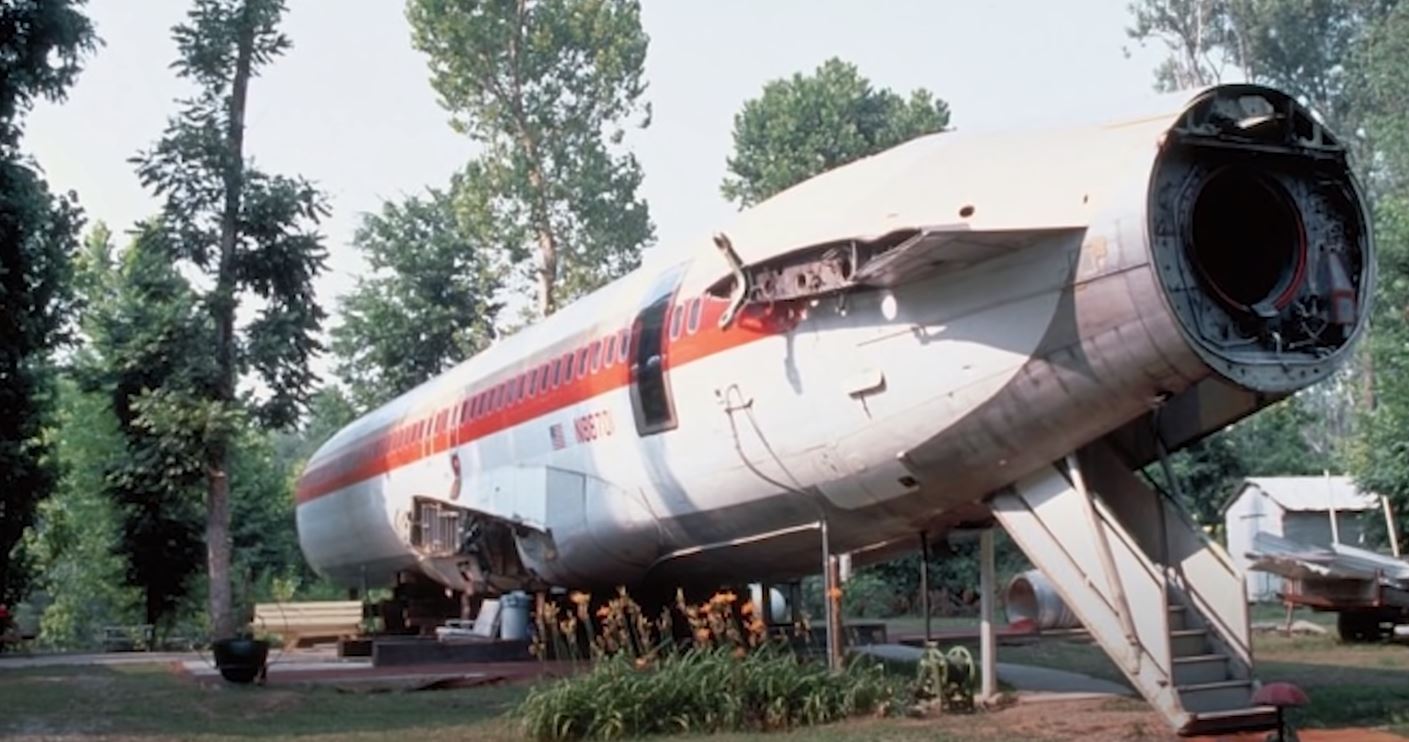
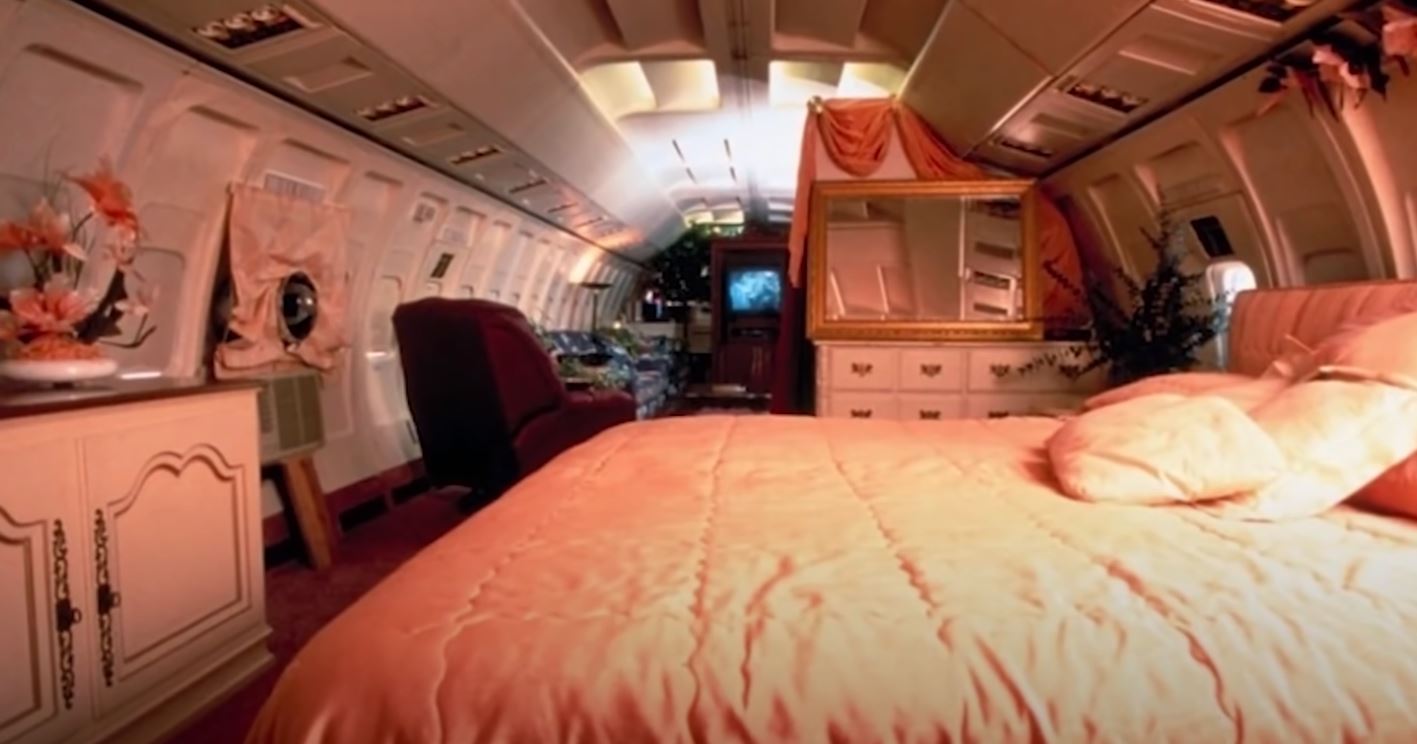
Inside, however, Ussery began turning it into a home. The completed living space covered more than 1,500 square feet, or around 140 square metres. It included three bedrooms, a living area, a kitchen, laundry facilities and bathrooms.
Ussery also kept many of the aircraft’s original features. The overhead luggage compartments became storage, the emergency exits remained visible and parts of the cockpit equipment were left in place.
She did not want the plane to stop looking like a plane.
A bath in the cockpit
The most famous room was at the very front.
Ussery transformed the cockpit into a master bathroom, with a large bath or Jacuzzi placed below the cockpit windows. Instead of pilots looking out over clouds and runways, somebody could now relax in warm water while looking across the lake.
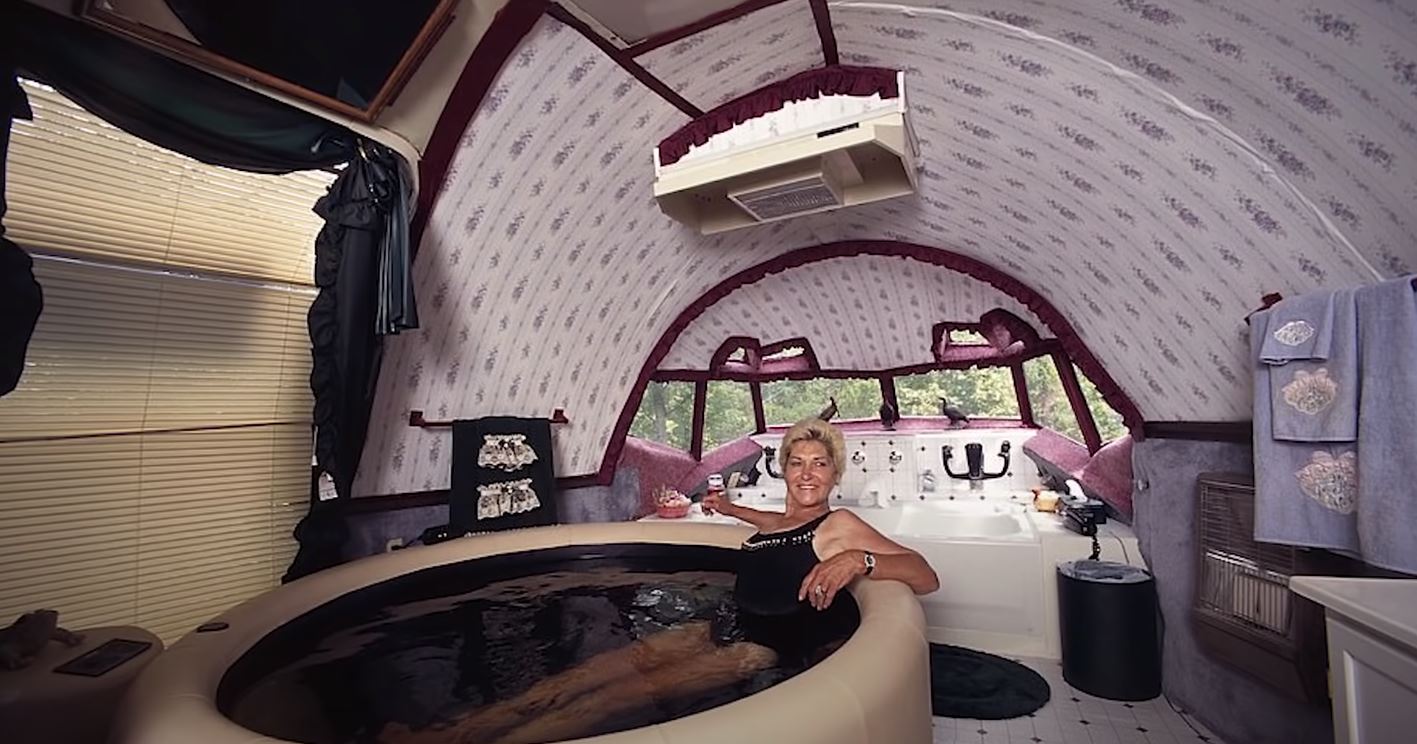
Her bedroom was close to the cockpit, while the other rooms stretched along the long passenger cabin. Her grandchildren particularly enjoyed the space. The former airliner gave them a huge indoor area to run through, complete with aircraft windows and emergency exits.
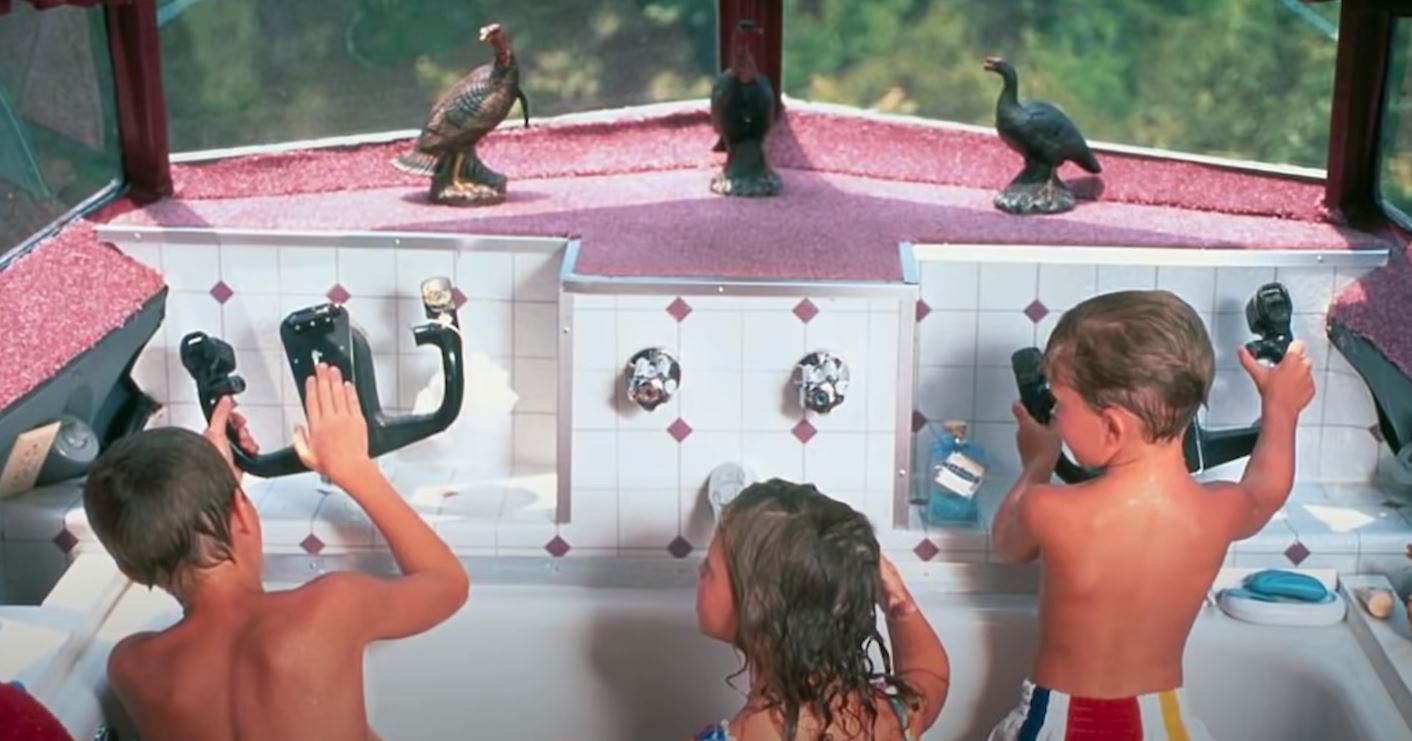
It must have been one of the most unusual places in America to visit Grandma.
Surprisingly practical
Living in an aeroplane sounds uncomfortable, but Ussery found several advantages.
Aircraft are heavily insulated, so the interior could remain comfortable. The aluminium body did not need a normal roof replacement and was not vulnerable to termites.
There was also plenty of built-in storage.
Ussery added the normal comforts of domestic life, including air conditioning, a telephone, a cooker, washing facilities and a dishwasher.
The result was not a novelty display.
It was a real, functioning home.
How much did it cost?
Different sources give slightly different totals.
The aircraft itself is consistently reported as costing $2,000. Moving and converting it brought the final price much higher, but several accounts put the overall project at around $30,000, with some estimates slightly above that.
Even so, it was still an extraordinary amount of living space for the money.
And Ussery had created something almost nobody else had.
“Little Trump”
Ussery gave her aircraft home a name:
Little Trump.
The name referred to Donald Trump’s Boeing 727, which was famous at the time as a luxury private jet.
Ussery’s aircraft was very different. It had been retired from airline service and was heading for the scrapyard when she bought it.
But after the conversion, it too had bedrooms, comfortable furniture and a luxurious bathroom.
The name suited the playful nature of the whole project.
From unusual home to media attraction
It did not take long for newspapers and television programmes to discover the story.
A woman living inside a Boeing 727 was perfect human-interest material.
Photographs showed Ussery standing proudly beside the fuselage or relaxing inside rooms that looked half home and half aircraft.
Her story also inspired other people.
One of them was Bruce Campbell, an electrical engineer in Oregon who later created his own home inside a Boeing 727. He said that learning about Ussery helped convince him that converting an aircraft into a house was actually possible.
In this sense, Little Trump became an early example of something we would now call upcycling: taking an object that had reached the end of its original life and giving it a completely new purpose.
From Mississippi to English classrooms
Then Jo Ann Ussery’s story travelled much farther than the plane ever could.
It appeared in Oxford University Press’s New Headway Elementary.
For English learners, the article was ideal. Students could practise vocabulary for rooms, furniture and household objects while reading about a home they were unlikely to forget.
A normal three-bedroom house might not stay in the memory for long.
A Boeing 727 with a bath in the cockpit probably would.
The textbook described Ussery’s grandchildren visiting the aircraft, the emergency exits being opened on hot evenings and the modern appliances inside.
It even ended with Ussery joking that next time she would like a Boeing 747, because she wanted an upstairs and downstairs.
For many students, that was where the story ended.
The real aircraft, however, had one final chapter.
The final journey
Ussery lived in the plane from about 1995 until 1999.
By then, Little Trump had become famous enough that there were plans to move it to another location and open it to the public. Unfortunately, the move went badly.
In 1999, while the aircraft was being transported, it fell from the vehicle carrying it and was badly damaged. It could not realistically be restored.
After surviving years of commercial flying, escaping the scrapyard and spending several years as a family home, the Boeing 727 was finally destroyed during a short journey on the ground. There is something sadly ironic about that ending.
The aircraft had safely carried passengers through the sky.
Its final journey was the one it could not survive.
More than just a strange house
It is easy to remember Jo Ann Ussery simply as “the woman who lived in an aeroplane”. But her story began with a very ordinary problem. She needed an affordable home. Instead of rejecting an unusual idea, she asked whether it could work.
Then she made it work. She looked at a retired aircraft and saw bedrooms. She looked at luggage compartments and saw cupboards. She looked at a cockpit and saw a bathroom.
And for several years, a Boeing 727 became one of the most unusual family homes in America.
For many English learners, Jo Ann Ussery remains a woman they first met in a few paragraphs of a textbook. Perhaps some assumed the story had been invented to make an English lesson more interesting. It had not. There really was a woman in Mississippi whose grandchildren climbed aircraft stairs when they went to visit Grandma.
There really was a kitchen inside a Boeing 727. And there really was a bath where airline pilots had once sat. Sometimes the best textbook stories are the ones nobody needed to invent.

