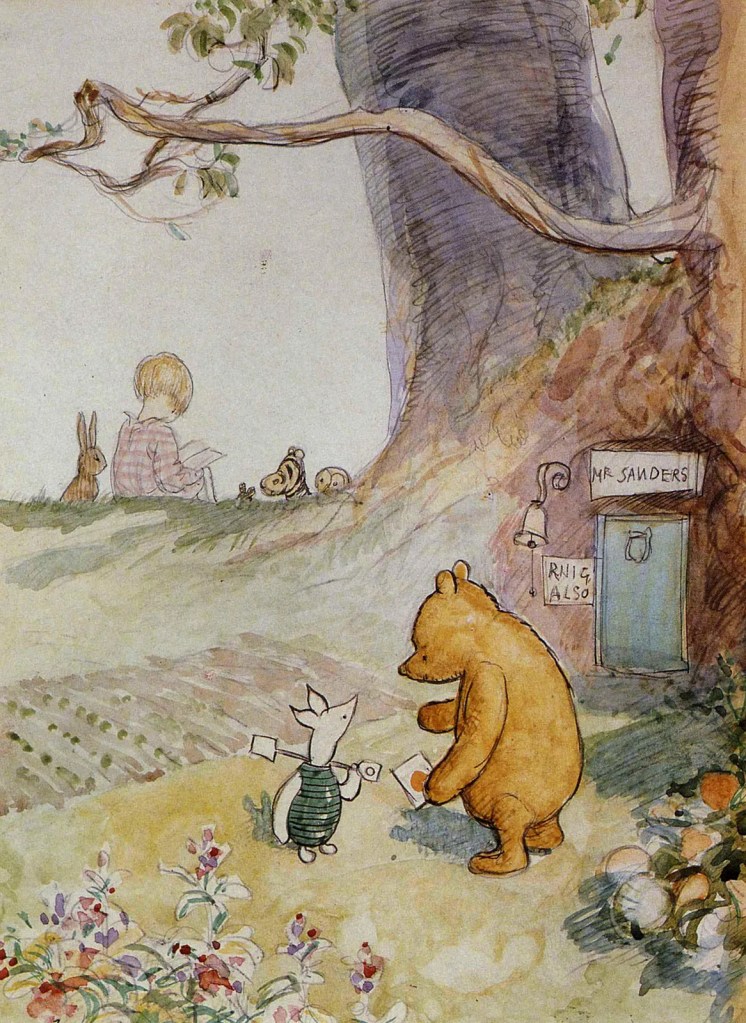
 There are fictional characters we remember from childhood, and then there are characters who somehow stay with us. Winnie-the-Pooh belongs to the second group. He is not a superhero. He does not save the world, fight great enemies or travel to distant planets. He mostly walks through the forest, visits his friends, looks for honey and sometimes gets himself into trouble. Yet one hundred years after the publication of A. A. Milne’s Winnie-the-Pooh, the little bear from the Hundred Acre Wood is still loved by children and adults around the world.
On 14 October 2026, Winnie-the-Pooh celebrates its 100th anniversary. The original book was published in 1926, written by A. A. Milne and illustrated by E. H. Shepard. A century later, Pooh has become much more than a character in a children’s book. His world has appeared in films, television programmes, toys and countless other forms, while new anniversary editions and celebrations are marking his hundredth birthday.
But the story of Pooh did not begin with a book. It began with a real little boy and a teddy bear.
A Bear Called Edward
Christopher Robin Milne was born in 1920. On his first birthday, he received a teddy bear bought from Harrods in London. At first, the bear was called Edward Bear. Over the following years, Christopher received several other stuffed animals, including Piglet, Eeyore, Kanga and Tigger. Roo also existed as a real toy, although he was later lost. Rabbit and Owl, however, were created entirely from imagination.
The name Winnie came from somewhere rather unexpected.
During visits to London Zoo, Christopher Robin became fascinated by a black bear called Winnipeg, usually known simply as Winnie. The real Winnie had originally travelled to Britain with a Canadian soldier during the First World War before eventually living at London Zoo. Christopher liked her so much that Edward Bear was renamed Winnie.
The second part of the famous name came from a swan called Pooh. Together, the two names created one of the most recognisable names in children’s literature: Winnie-the-Pooh.
A Father Who Turned Play into Stories
Christopher Robin’s father was Alan Alexander Milne, better known as A. A. Milne. Born in 1882, Milne was already an established writer long before Pooh became famous. He wrote plays, poems and humorous pieces and worked for the British magazine Punch. He had also served during the First World War.
Milne began turning his son’s games and toys into stories. Christopher Robin himself became a character, while the family’s surroundings helped create the world in which Pooh and his friends lived.
The Milne family had a country home close to Ashdown Forest in East Sussex. Walks through this landscape provided much of the inspiration for the Hundred Acre Wood. Places that appear in the stories were influenced by real locations in and around the forest, and visitors still travel there today to walk through the landscape associated with Pooh, Piglet and Christopher Robin.
Pooh actually appeared in print before the famous 1926 book. A story featuring him was published in the London Evening News on Christmas Eve 1925. The following year, the stories were collected in Winnie-the-Pooh. Another collection, The House at Pooh Corner, followed in 1928.
 The Man Who Drew the Hundred Acre Wood
It is difficult to imagine the original Pooh stories without E. H. Shepard’s drawings.
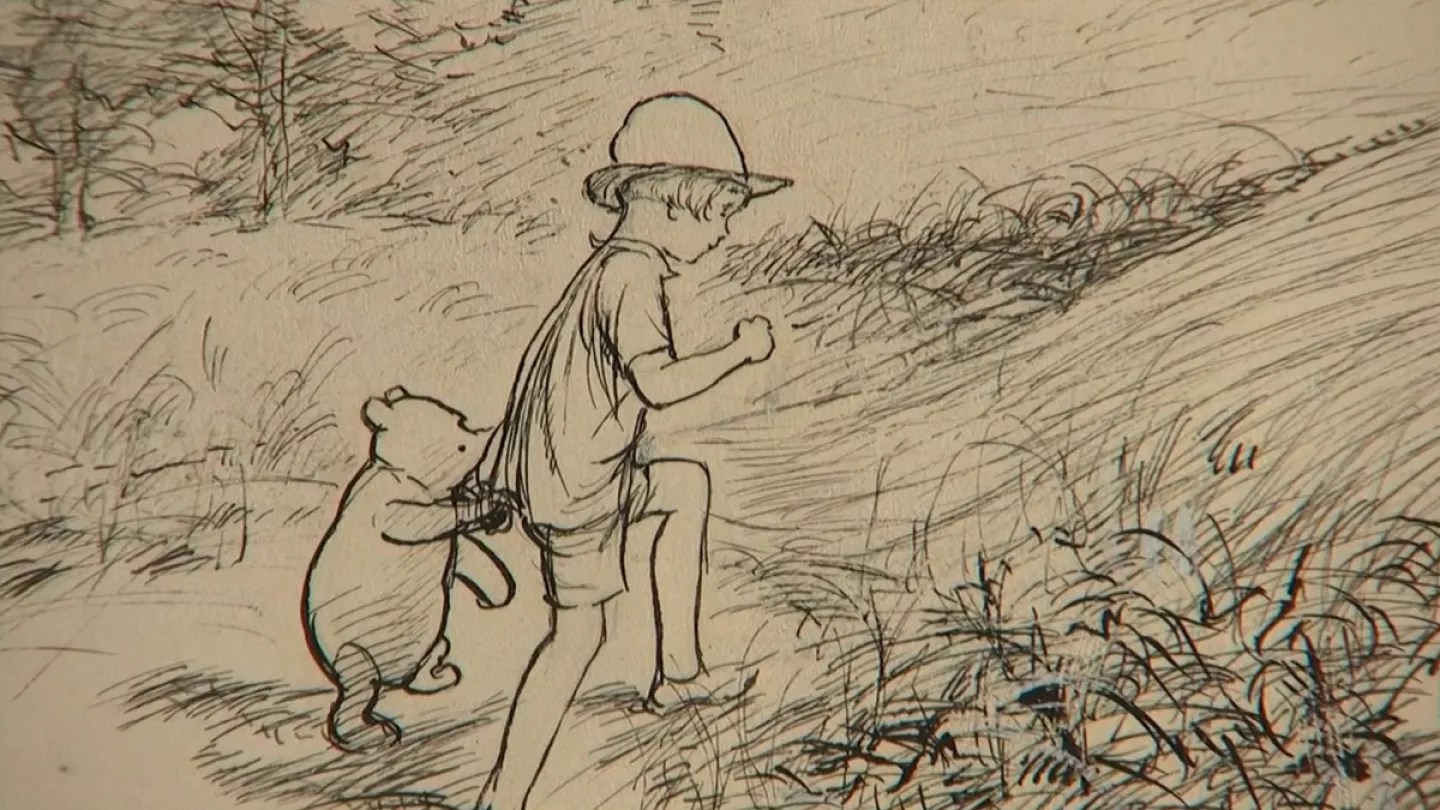
Shepard was an English artist and illustrator who had also worked for Punch. His simple pencil drawings gave Pooh and his friends the appearance that generations of readers came to recognise. Milne created their personalities, but Shepard gave them faces, movements and a visual world.
Their collaboration became one of the most famous partnerships in children’s publishing. The Victoria and Albert Museum in London now holds hundreds of Shepard’s original Winnie-the-Pooh drawings, including sketches created for the 1926 book.
The drawings are surprisingly simple. There are no spectacular effects or complicated backgrounds. Instead, Shepard often leaves large areas of empty space around the characters. The result feels quiet and intimate, almost as if we are looking into a child’s private imaginary world.
That simplicity is part of Pooh’s magic.
The Real Pooh Still Exists
Perhaps one of the most charming details of the entire story is that Christopher Robin’s original toys still survive.
Pooh, Piglet, Eeyore, Kanga and Tigger are kept at the New York Public Library. They were taken to the United States in 1947 and eventually donated to the library in 1987. Today they are part of the library’s permanent treasures and can still be seen by visitors.
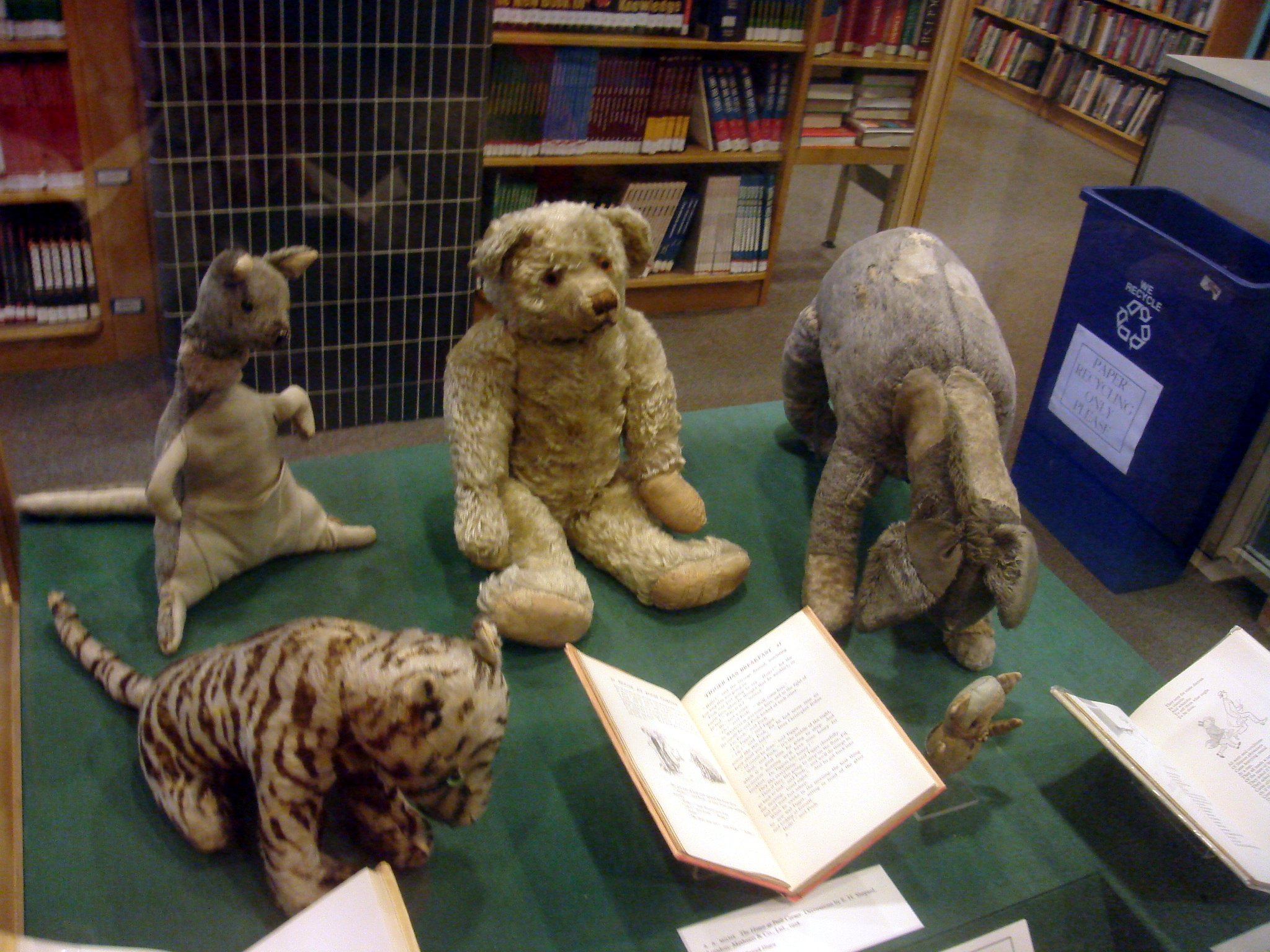
Looking at the original toys is quite different from seeing the colourful characters most people know from cartoons. They are old, worn and slightly fragile. That is exactly what makes them special. They were not originally created as famous characters. They were simply a child’s toys that had been played with, carried around and loved.
And somehow, that ordinary beginning became a worldwide story.
More Than a Children’s Book
At first sight, the Winnie-the-Pooh stories seem extremely simple. A bear wants honey. Piglet worries. Eeyore complains. Tigger gets excited. Rabbit tries to organise everyone. Christopher Robin watches over them.
But underneath these small adventures there is something much more human.
Each character seems to represent a different way of experiencing life. Piglet is often nervous but can be surprisingly brave. Eeyore expects things to go wrong but remains part of the group. Tigger throws himself enthusiastically into everything. Rabbit likes plans and organisation. Pooh is not particularly clever, but he is patient, loyal and kind.
None of them is perfect.
And perhaps that is exactly why the stories work.
The Hundred Acre Wood is a place where characters are accepted even when they are worried, miserable, confused or difficult. Nobody has to become a completely different person before they can belong.
For children, these are funny animal characters.
For adults, they can sometimes feel surprisingly familiar.
Why Adults Return to Pooh
One of the interesting things about Winnie-the-Pooh is that people often understand the stories differently when they return to them later in life.
As children, we may concentrate on the adventures. As adults, we notice the friendships.
The characters rarely solve enormous problems. Instead, they do small things for each other. They visit. They listen. They look for someone who is missing. They share food. They sit together.
In modern life, where everything seems to be measured by productivity, speed and achievement, the Hundred Acre Wood offers something almost radical: the idea that simply spending time with someone can be important.
Pooh does not have a career plan.
Piglet does not need to become fearless.
Eeyore does not suddenly become cheerful.
They simply continue walking through the forest together.
Perhaps this is why the books still feel comforting after a hundred years.
A Very Different Kind of Wisdom
Pooh has also become associated with a kind of gentle philosophy. His stories are full of ideas about friendship, patience, simplicity and noticing the world around us.
There is something unusual about a character who became famous partly because he does not pretend to know everything.
Pooh frequently gets things wrong. His plans can be ridiculous. His logic is sometimes completely backwards.
But he pays attention to his friends.
And very often, that turns out to matter more.
 From a Quiet English Forest to the Whole World
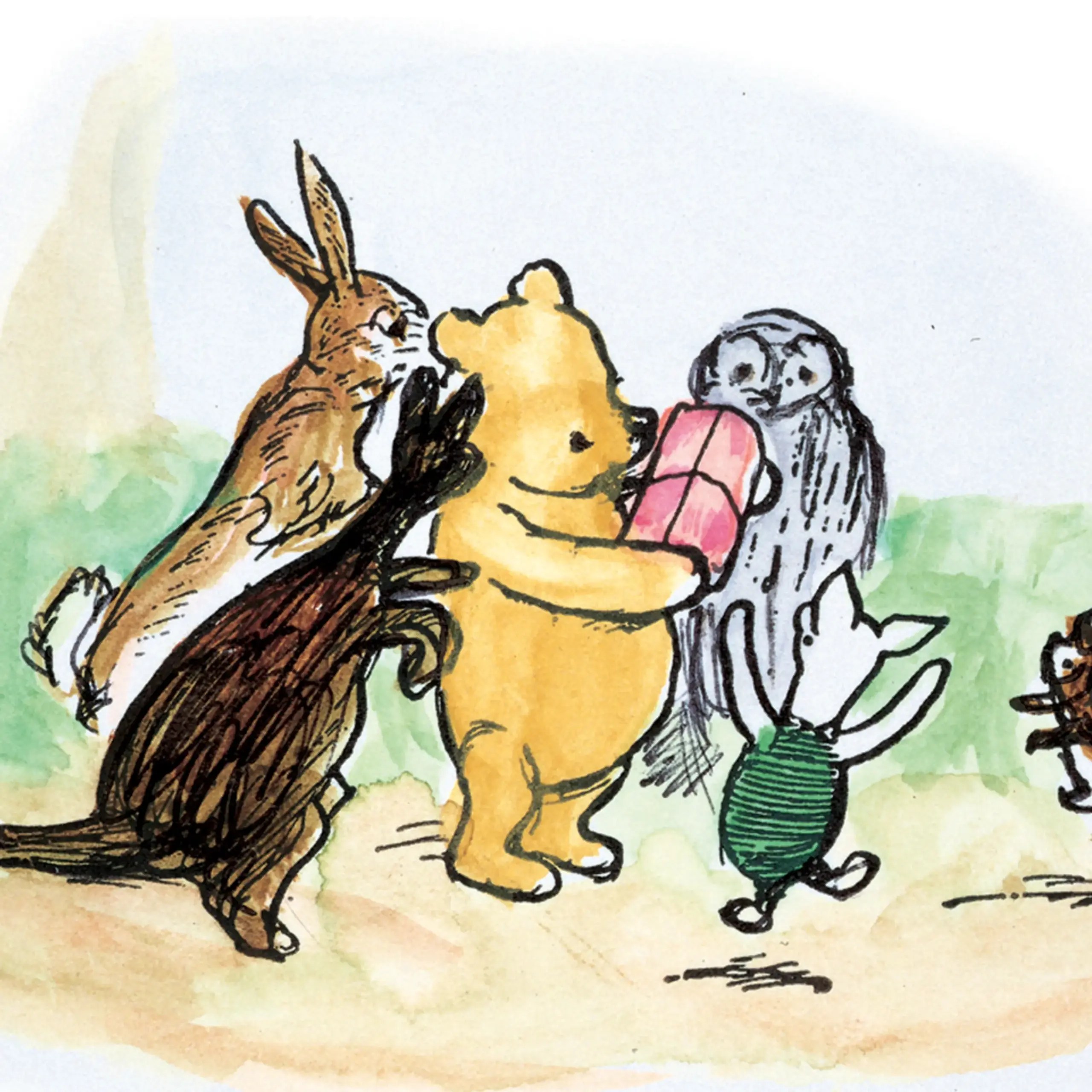
Of course, Winnie-the-Pooh later became a global phenomenon. Walt Disney introduced its own animated version of the characters in the 1960s, helping Pooh reach generations of viewers who had never read the original books. Since then, there have been films, television series, toys, clothing, theme-park attractions and countless other products.
But behind all of that remains a surprisingly small story.
A father watched his young son playing with his toys.
They walked together through an English forest.
The father turned those moments into stories.
An illustrator drew them.
And one hundred years later, people are still reading them.
A Hundred Years, but Not Really Old
Children’s entertainment has changed almost beyond recognition since 1926. Today children grow up surrounded by smartphones, streaming services, video games and endless digital entertainment.
Yet Pooh continues to survive.
Perhaps it is because the most important parts of the stories were never really about the 1920s.
Being frightened and needing a friend is not old-fashioned.
Feeling left out is not old-fashioned.
Wanting to belong is not old-fashioned.
Neither is kindness.
That may be the real secret of Winnie-the-Pooh. The stories take place in a world of forests, sticks, honey pots and stuffed animals, but the feelings inside them have hardly changed at all.
A hundred years after readers first entered the Hundred Acre Wood, Pooh is still there: slightly confused, probably hungry and surrounded by his friends.
And perhaps the reason we still need him is wonderfully simple.
The world has become much faster.
Pooh never did.

