Walking through the gates of an amusement park on a warm summer afternoon. Somewhere in the distance, a roller coaster rushes along its tracks, carrying a group of screaming passengers. Children are running towards the carousel, music is playing from loudspeakers, and the smell of popcorn and candy fills the air. Colourful lights are flashing, families are taking photographs, and everyone seems to be enjoying themselves.
Now imagine returning to the same place twenty or thirty years later. The entrance gates are locked, the ticket offices are empty, and weeds are growing through the pavement. The roller coaster is slowly rusting, the carousel has stopped turning, and the cheerful music has disappeared. There are no visitors, no laughter and no excitement. Everything is silent.
Welcome to the strange and fascinating world of abandoned amusement parks.
There is something particularly unsettling about these forgotten places. An abandoned factory or railway station may look mysterious, but an empty amusement park creates an entirely different feeling. After all, these places were built for one simple purpose: to make people happy. Seeing them slowly disappear into nature can be both beautiful and heartbreaking.
Around the world, dozens of amusement parks have closed their gates for the last time. Some were victims of financial difficulties, while others were destroyed by natural disasters or simply became less popular. A few have even become famous precisely because they were abandoned.
Pripyat, Ukraine – The Amusement Park That Never Had Its Grand Opening
Perhaps the most famous abandoned amusement park in the world is located in Pripyat, Ukraine, just a few kilometres from the Chernobyl Nuclear Power Plant.
In April 1986, Pripyat was a modern Soviet city with approximately 50,000 inhabitants. Many residents worked at the nearby nuclear power station, and the city had schools, shops, apartment buildings and cultural facilities. A brand-new amusement park was also being prepared for the May Day celebrations on 1 May.
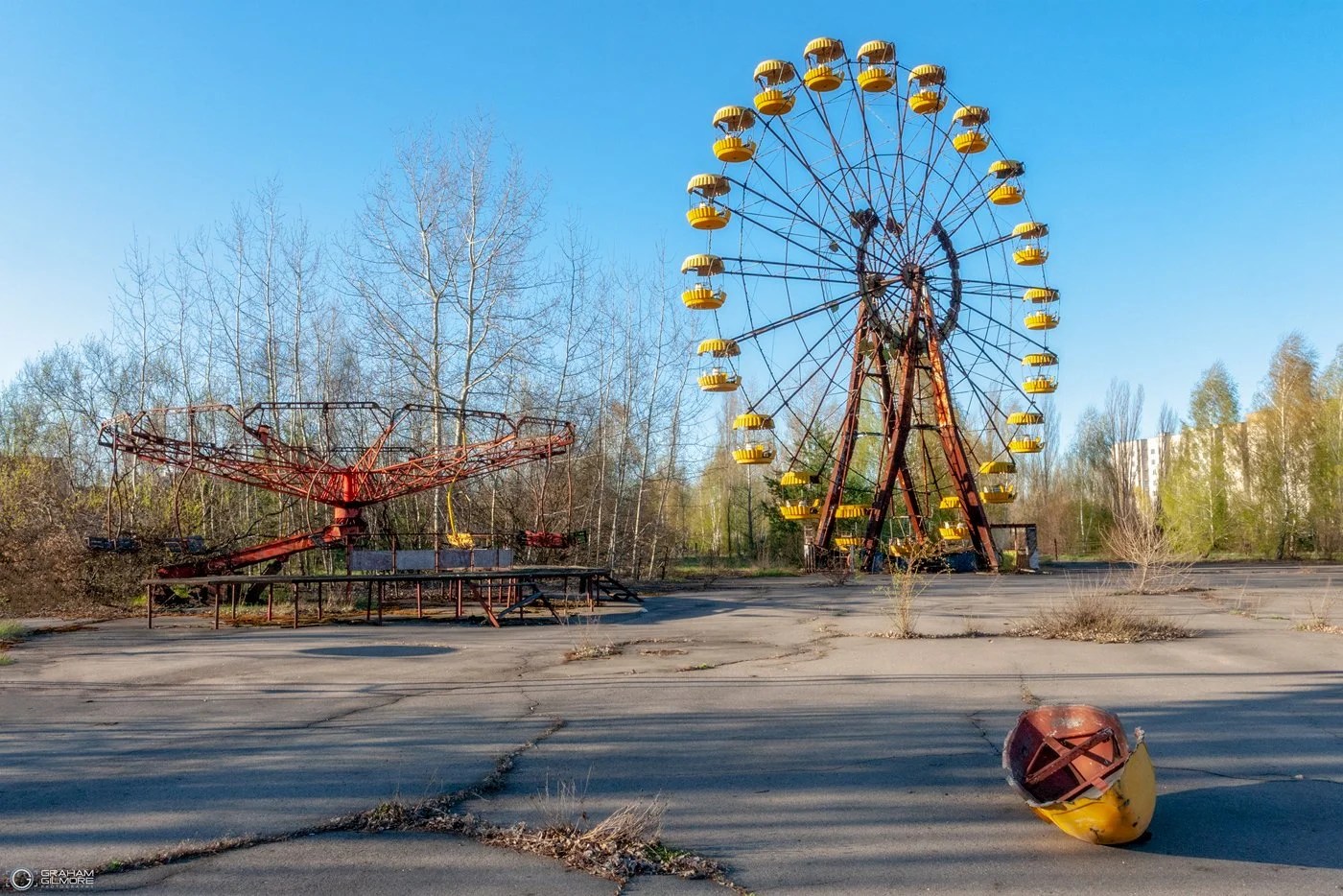
Its attractions included bumper cars, swings and a large yellow Ferris wheel, which was expected to become one of the city’s most popular landmarks.
However, the celebrations never took place.
On 26 April 1986, Reactor Number Four at the Chernobyl Nuclear Power Plant exploded, causing one of the worst nuclear disasters in history. The following day, the authorities evacuated Pripyat. Residents were told to take only essential belongings, as many believed they would return home after a few days.
They never did.
The amusement park’s official opening was cancelled, and its attractions were left behind. Some accounts suggest that a few rides operated briefly on the day of the evacuation, although this story remains uncertain.
Today, the Ferris wheel is one of the most recognisable symbols of the Chernobyl disaster. Its yellow passenger cabins and rusting metal structure have appeared in countless photographs, documentaries and video games.
What makes Pripyat especially haunting is that the park represents happiness that never truly had a chance to begin. Unlike most abandoned amusement parks, it does not remind us of decades of joyful memories. Instead, it represents a future that was suddenly taken away.
Six Flags New Orleans, USA – When a Hurricane Changed Everything
In New Orleans, Louisiana, another amusement park became a symbol of tragedy, although under very different circumstances.
The park originally opened in 2000 under the name Jazzland and later became Six Flags New Orleans. It offered roller coasters, water attractions and entertainment for families. Like many amusement parks, it was designed to provide a temporary escape from everyday life.
Then, in August 2005, Hurricane Katrina struck the American Gulf Coast.
New Orleans experienced catastrophic flooding, and large areas of the city remained underwater for days. The amusement park was also flooded, with much of its equipment seriously damaged.
Six Flags New Orleans never reopened.
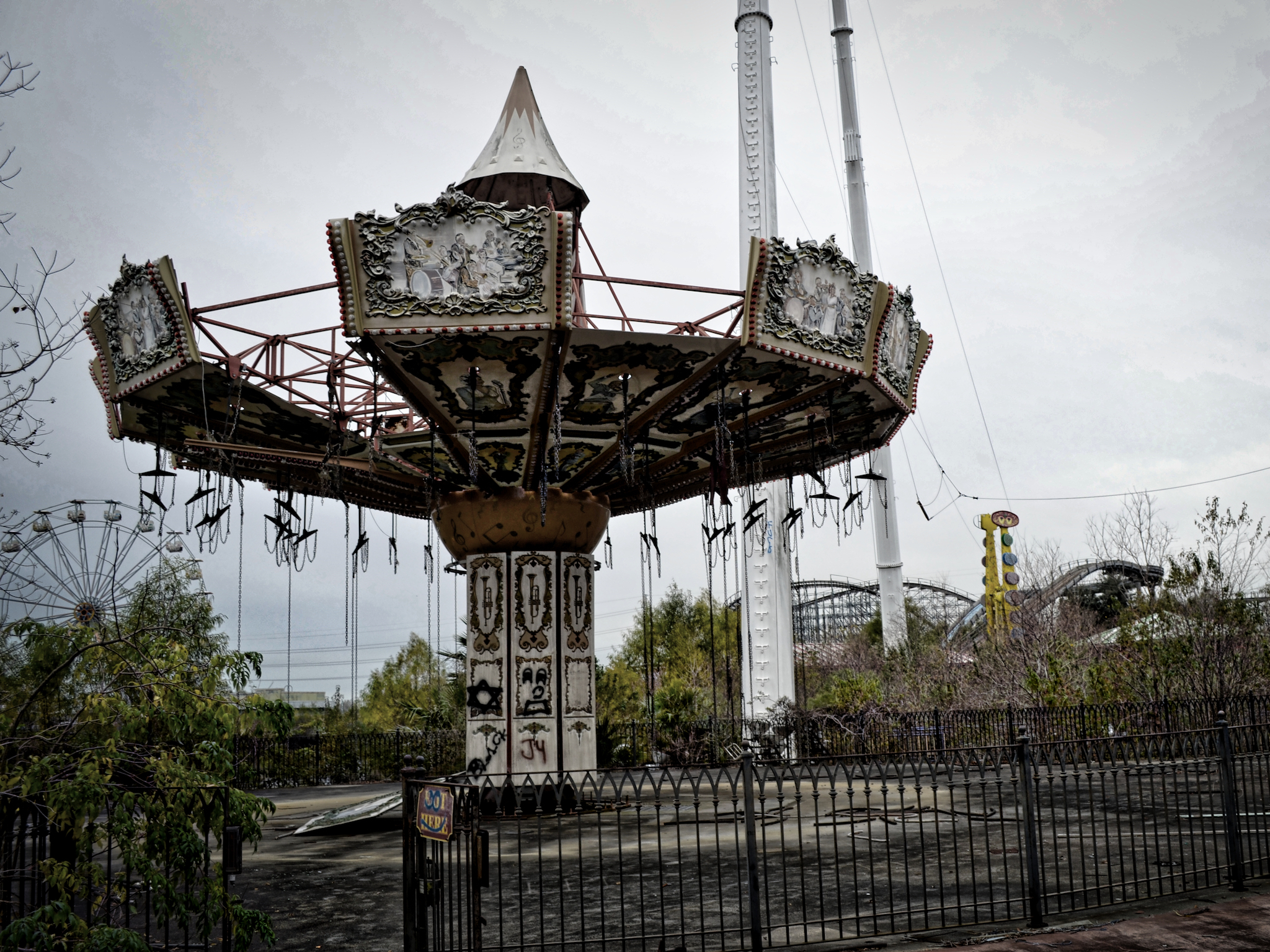
For almost twenty years, the abandoned park stood as a reminder of the hurricane. Its roller coasters slowly disappeared behind growing vegetation, colourful decorations faded in the Louisiana sunshine, and empty buildings became covered in graffiti.
Photographers and filmmakers were particularly interested in the location. Its unusual atmosphere made it an attractive setting for film productions, while photographs of the abandoned rides spread across the internet.
However, the story has recently entered a new chapter. In 2025, the former amusement rides and much of the remaining equipment were demolished as part of plans to redevelop the site.
The famous abandoned amusement park that once fascinated photographers is now largely a memory itself.
Nara Dreamland, Japan – A Forgotten Fairytale
Not every abandoned amusement park owes its closure to a disaster. Sometimes, even the most magical places simply lose their popularity.
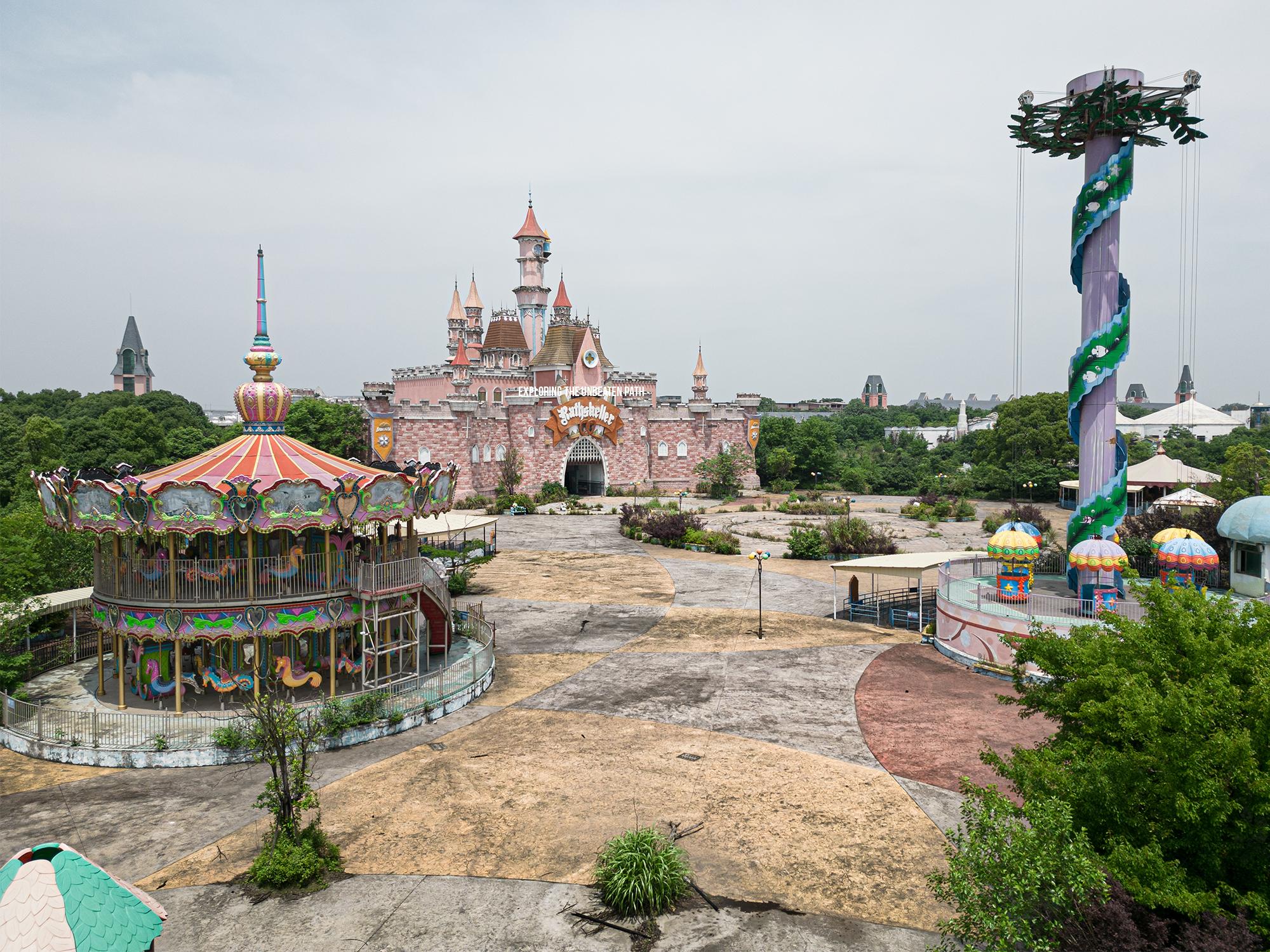
Nara Dreamland opened in Japan in 1961. Inspired by Disneyland in California, it featured a fairytale-style castle, colourful attractions and a main street that reminded visitors of an American town.
For many Japanese families, the park became a popular holiday destination. Children could explore a world of fantasy, enjoy exciting rides and experience a small part of the American theme park culture that was becoming increasingly popular.
However, things began to change in the 1980s.
Tokyo Disneyland opened in 1983, offering visitors a much larger and more modern experience. Later, Universal Studios Japan and Tokyo DisneySea created even more competition.
Nara Dreamland gradually lost its visitors, and in August 2006, after 45 years of operation, it closed permanently.
What happened next turned the park into an internet legend.
For approximately ten years, Nara Dreamland remained abandoned. Its castle was still standing, but the colourful buildings slowly deteriorated. Plants grew along the paths, paint peeled from the walls, and the roller coasters stood motionless above the trees.
Photographs of the empty park became extremely popular online. Some people compared it to a forgotten dream, while others thought it resembled the setting of a horror film.
The contrast was striking: a place originally designed to look like a fairytale had become something almost frightening.
Eventually, demolition began in 2016, and the remaining structures were removed by the end of 2017.
Today, Nara Dreamland no longer exists, but its photographs continue to tell the story of a once-popular attraction that gradually disappeared from everyday life.
Spreepark, Berlin – From Socialist Entertainment to an Urban Legend
Europe also has its famous abandoned amusement parks, and one of the most interesting examples can be found in Berlin.
Spreepark originally opened in 1969 as Kulturpark Plänterwald, during the period when Berlin was divided into East and West.
For residents of East Berlin, it offered something special. In a country where opportunities for travel and entertainment were often limited, the amusement park provided a place where families could spend an exciting afternoon together.
Following German reunification in 1990, the park was modernised and renamed Spreepark. New attractions were introduced, including roller coasters and themed areas.
Unfortunately, the park struggled financially and eventually closed in 2002.
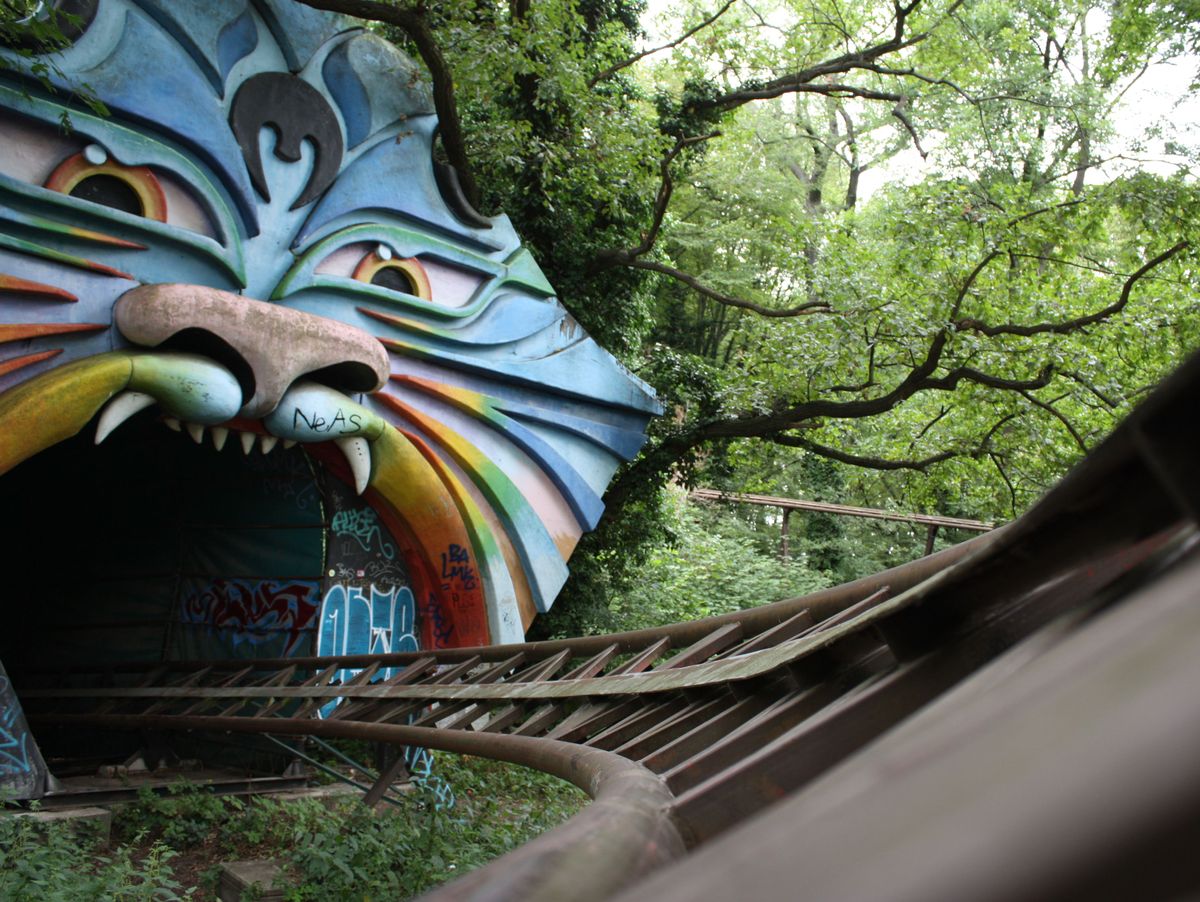
Over the following years, Spreepark became one of Berlin’s most famous abandoned locations. Photographers were attracted by its rusting Ferris wheel, forgotten dinosaur figures and empty attractions hidden among the trees.
The park also developed an almost legendary reputation among urban explorers, who were fascinated by its unusual history and mysterious atmosphere.
Unlike several other abandoned amusement parks, however, Spreepark is receiving a second chance.
The Berlin authorities have been transforming the site into a new public space combining art, culture, nature and leisure activities. Its historic Ferris wheel has been restored, and the renewed park is planned to open in spring 2027.
Perhaps Spreepark proves that an abandoned amusement park does not always have to disappear forever. Sometimes, the end of one story can become the beginning of another.
Why Are We So Fascinated by Abandoned Places?
The popularity of abandoned amusement parks raises an interesting question: why do people find these places so attractive?
Part of the answer may be nostalgia.
Amusement parks are strongly connected with childhood memories. Even people who have never visited a particular abandoned park may recognise something familiar in its empty attractions. A carousel might remind them of a childhood holiday, while a roller coaster might bring back memories of their first exciting ride.
There is also something emotional about seeing objects that once represented happiness in a state of decay.
A broken wooden bench is simply an old bench. A broken carousel, however, seems to tell a story about the passing of time.
Another explanation is the unusual atmosphere created by abandoned places. Psychologists and researchers studying nostalgia have shown that memories of the past can produce both positive and negative emotions. We may feel happy when remembering an enjoyable experience, but also sad because we know that the moment can never return.
Abandoned amusement parks seem to capture both feelings perfectly.
They remind us of something joyful while showing us that it has already ended.
When Nature Takes Back What Belonged to Us
There is another fascinating element in the story of abandoned amusement parks: the way nature slowly reclaims them.
When people stop maintaining a park, the changes begin almost immediately. Grass grows through cracks in the pavement, weeds appear around buildings, and rainwater damages wooden and metal structures.
After several years, trees and bushes may cover entire attractions.
A roller coaster that once stood above a crowded park can become surrounded by a forest. Empty ticket offices disappear behind climbing plants, and birds build nests in places where loudspeakers once played cheerful music.
For photographers, these scenes offer extraordinary visual opportunities.
There is an almost artistic contrast between the artificial world of an amusement park and the natural environment surrounding it. Brightly painted attractions, designed to entertain human visitors, slowly become part of the landscape.
In some photographs, it looks as if nature is gradually erasing the evidence that people were ever there.
This process also reminds us that even our most impressive creations are temporary. No matter how large or colourful a place may be, it needs people to maintain it.
Without them, time eventually takes control.
The Beauty and the Sadness Behind the Photographs
In recent years, abandoned amusement parks have become popular subjects for photographers, documentary filmmakers and urban explorers.
Social media has played an important role in this fascination. Pictures of rusting roller coasters, empty swimming pools and forgotten carousels can attract thousands of viewers.
However, there is another side to these beautiful images.
Behind every abandoned amusement park are real human stories. Workers lost their jobs, businesses failed, families lost a favourite destination, and communities sometimes suffered serious economic difficulties.
In places such as Pripyat and New Orleans, the abandoned attractions also represent much larger tragedies.
It i

