How did a young musician’s experimental composition become one of the most recognisable sounds in horror cinema? The story of Mike Oldfield’s Tubular Bells is full of unexpected turns.
There are certain pieces of music that can change the atmosphere of a room within seconds. You don’t need to hear the whole composition. Sometimes, just a few notes are enough.
Think of the famous piano melody from The Exorcist. It begins quietly, almost gently. A few notes repeat themselves, creating a strange, mysterious atmosphere. There are no screams, no dramatic orchestral sounds and certainly nothing that immediately suggests a horror film. Yet, for millions of people, this melody has become a musical symbol of fear.
What many listeners don’t realise is that the music was never written for The Exorcist. In fact, its composer had something completely different in mind.
And that is where our story begins.
A Young Musician with an Unusual Idea
In the early 1970s, a young British musician named Mike Oldfield was working on an ambitious musical project. Unlike most popular albums of the period, his composition had almost no conventional songs, no typical verse-and-chorus structure and very little singing.
Instead, he imagined one long piece of music, combining different instruments, melodies and musical styles.
Oldfield was an extremely talented multi-instrumentalist. He could play the guitar, piano, bass and several other instruments, and he wanted to use these abilities to create something truly different.
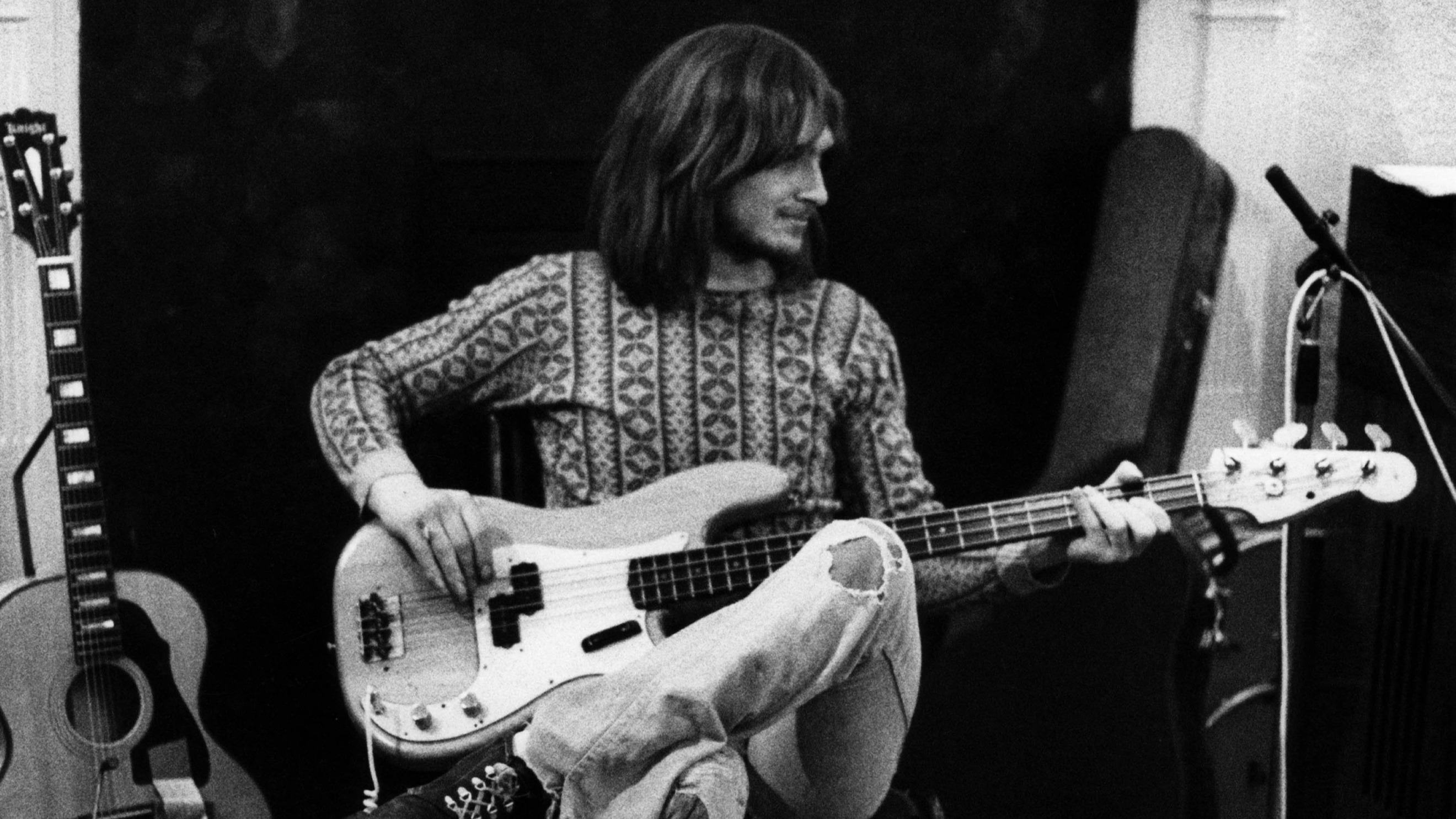
However, there was one problem: record companies weren’t particularly interested.
An album consisting of two long instrumental pieces didn’t seem like an obvious commercial success. Radio stations generally preferred shorter songs, while record companies wanted music that was easier to sell.
Fortunately, Oldfield eventually met Richard Branson, a young businessman who was preparing to establish a new record label called Virgin Records.
Branson recognised the potential of the unusual composition and gave Oldfield the opportunity to record it.
The result was Tubular Bells, released on 25 May 1973. It became the very first album issued by Virgin Records, helping to establish a company that would later become one of the most famous names in the music industry.
Oldfield had just turned twenty.
An Orchestra of One
One of the most remarkable things about Tubular Bells is the way it was recorded.
Instead of working with a large orchestra, Oldfield played most of the instruments himself. Using a technique called overdubbing, he recorded one instrument and then added another on top of it. Slowly, layer by layer, the music became more complex.
The album included acoustic and electric guitars, organs, piano, percussion instruments and, of course, tubular bells.
These bells are large metal tubes that produce deep, powerful musical notes when struck.
The finished album lasted almost fifty minutes and was divided into two parts, one on each side of the original vinyl record.
The music constantly changes direction. Sometimes it sounds peaceful and beautiful. At other moments, it becomes dramatic, energetic or even slightly disturbing.
Towards the end of the first part, musician Vivian Stanshall introduces the instruments one by one, almost like a presenter announcing performers on a stage. Eventually, the tubular bells make their grand entrance.
It was an extraordinary musical experiment, especially considering that most of it had been created by one young musician.
But its greatest moment of fame was still to come.
An Unexpected Meeting with Hollywood
Later in 1973, American director William Friedkin was finishing a film based on William Peter Blatty’s bestselling novel The Exorcist.
The story concerned a young girl who appeared to be possessed by a demonic force. Friedkin wanted the film to feel realistic, disturbing and deeply unsettling.
Music was an important part of creating that atmosphere.
Initially, composer Lalo Schifrin had been asked to write music for the film, but Friedkin wasn’t satisfied with the result. He wanted something different, something more mysterious and perhaps less obviously frightening.
While searching for suitable music, he came across Mike Oldfield’s Tubular Bells.
According to Friedkin’s own account, he discovered the recording among a collection of music provided for consideration. When he listened to its opening piano melody, he immediately recognised its potential.
The music had not been written for a horror film, but somehow it seemed to fit perfectly.
Friedkin decided to use a short section of the composition in The Exorcist, which was released in December 1973.
The melody appears only briefly in the film, yet it became one of its most memorable musical elements.
Suddenly, a composition by a young British musician had become associated with one of the most frightening films ever made.
But Was It Really Scary?
Here comes perhaps the most interesting part of the story.
Mike Oldfield never intended Tubular Bells to sound frightening.
In later interviews, he explained that he had imagined something much closer to experimental, progressive and atmospheric music. The composition was influenced by the sounds and musical ideas that interested him at the time, rather than by horror cinema.
There is also something unusual about the opening melody itself.
Most popular music follows a regular rhythm, often with four beats in each bar. The famous opening of Tubular Bells, however, uses an unusual 15/8 time signature.
This creates a slightly irregular pattern. The notes seem familiar, but the rhythm never feels completely balanced.
Perhaps this is part of what makes the melody so mysterious. There is nothing particularly terrifying about the notes themselves, but they create a feeling that something is not quite right.
Interestingly, Oldfield didn’t even see The Exorcist when it first appeared in cinemas. He only watched it many years later.
He also wasn’t especially enthusiastic about the film itself. Although he recognised that it had introduced his music to a much wider audience, he never considered Tubular Bells simply a piece of horror music.
For him, it was something much bigger.
The Album That Changed Everything
The connection with The Exorcist helped Tubular Bells become an international success, particularly in the United States.
In 1974, an edited version of the opening section was released as a single in America, reaching number seven on the Billboard Hot 100.
Oldfield subsequently received a Grammy Award for Best Instrumental Composition in 1975.
Over the following decades, the album sold millions of copies worldwide and became one of the most successful instrumental recordings in popular music history.
It also inspired several follow-up projects, including Tubular Bells II in 1992 and Tubular Bells III in 1998.
The original recording was inducted into the Grammy Hall of Fame in 2018, recognising its lasting importance.
And its influence extended far beyond music. The album helped launch Virgin Records, which became the foundation of Richard Branson’s growing business empire.
Not bad for an experimental composition that several record companies had originally rejected.
More Than a Horror Theme
Today, more than fifty years after its release, Tubular Bells remains a fascinating piece of musical history.
For some listeners, its opening notes immediately bring back memories of The Exorcist: dark rooms, frightening images and the unsettling atmosphere of 1970s horror cinema.
For others, however, the same melody represents something completely different. It is a beautiful, unusual and ambitious musical experiment, created by a young artist who refused to follow the rules of conventional popular music.
And perhaps that is what makes the story so extraordinary.
The music itself never changed. The notes are exactly the same as they were in 1973. What changed was the meaning people attached to them.
A peaceful melody became frightening because of the images that accompanied it.
So, the next time you hear those famous opening notes, try listening without thinking about The Exorcist.
You might discover that behind one of cinema’s most recognisable horror themes lies something rather unexpected: a remarkable piece of music that was never meant to frighten anyone.

