An apple peel falls onto the floor. A group of young women gather around it, trying to decide which letter its twisted shape resembles. Could it be an M? Perhaps an S? For the girl who has just thrown it over her shoulder, the answer might reveal the first letter of her future husband’s name.
It may sound like a strange party game, but a century ago, scenes like this were a familiar part of Halloween celebrations. Long before horror films, plastic skeletons and mountains of sweets became the main attractions, Halloween had another, rather unexpected side: romance.
A Night for Finding Love
Today, we usually associate Halloween with ghosts, witches and frightening costumes. However, during the Victorian era and the early 20th century, many Halloween celebrations in Britain, Ireland and the United States included games designed to predict people’s romantic futures.
This tradition was much older than the Victorians themselves. In Scotland, for example, the famous poet Robert Burns described several Halloween fortune-telling customs in his poem Halloween, published in 1785.
For young unmarried people, October 31 was believed to be a particularly suitable night for discovering whom they might marry. Some took these predictions seriously, while others simply enjoyed the excitement and laughter they brought to parties.
The Secret Messages of Apples
Apples played an important role in these romantic traditions. One popular custom involved peeling an apple in a single, unbroken strip. The person then threw the peel over their shoulder and examined the shape it made when it landed. According to superstition, it would form the first letter of their future partner’s name.
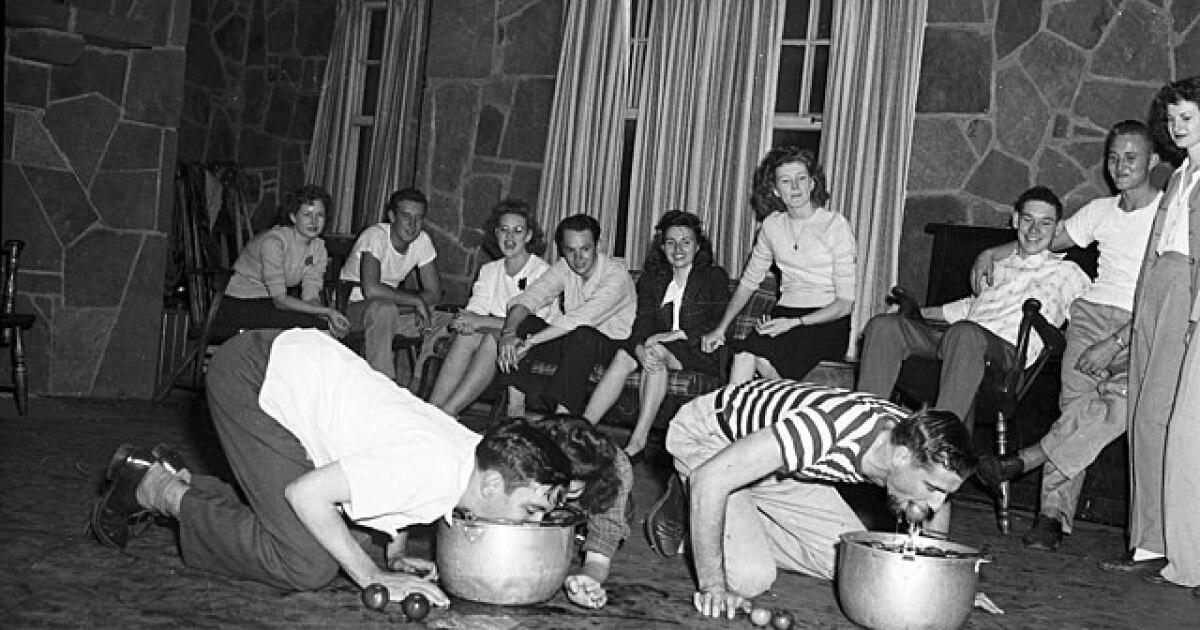
Another familiar Halloween activity was bobbing for apples. Participants tried to catch floating apples with their teeth, without using their hands. In some versions of the game, the apples represented different potential romantic partners. Catching a particular apple could supposedly reveal whom a person would marry.
These games combined the autumn harvest with people’s curiosity about the future. They also provided an excellent excuse for young men and women to laugh, compete and spend time together.
A Face in the Mirror
Some Halloween love rituals were rather more mysterious.
One old belief suggested that a young woman could see her future husband’s face by looking into a mirror on Halloween night. Different versions of the tradition involved candles, darkness, moonlight or walking backwards while holding a mirror.
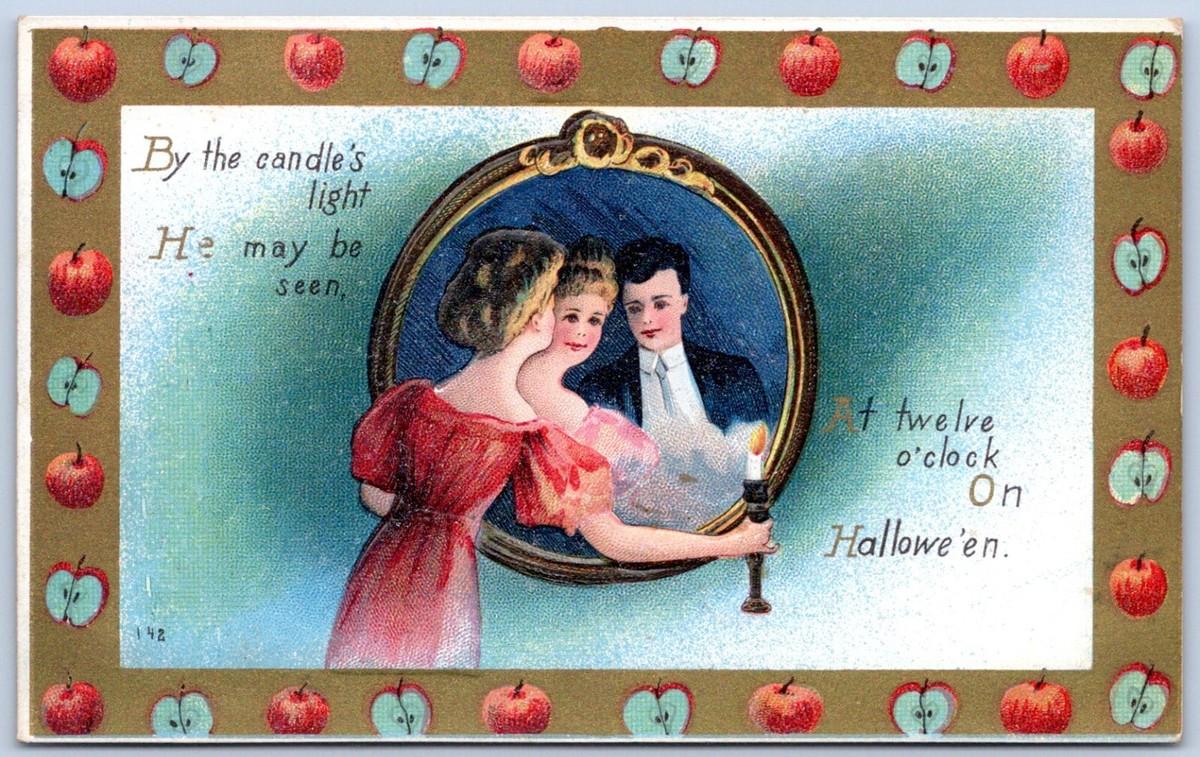
Imagine standing in a dark room, watching the reflection of a flickering candle and waiting for a mysterious face to appear behind your shoulder. It sounds more like the beginning of a horror film than a romantic tradition!
Yet the purpose of these rituals was not necessarily to frighten people. They were supposed to offer a glimpse of the future, especially in a society where marriage was an important part of social and economic life.
When Vegetables Predicted Marriage
Perhaps one of the strangest matchmaking traditions came from Scotland, where young people used kale, a type of leafy cabbage, to predict their future marriages.
Blindfolded participants were led into a garden and asked to pull a kale plant from the ground. The appearance of the plant supposedly revealed something about their future husband or wife.
A tall, healthy plant might suggest an attractive partner, while a small or crooked one could indicate someone with similar physical characteristics. Even the amount of soil attached to the roots was important: more soil could mean greater wealth.
It was certainly an unusual way of choosing a future partner!
A Wedding Ring in a Cake
Ireland had its own romantic Halloween customs, many of which involved traditional food.
One of the best-known examples was barmbrack, a sweet bread containing dried fruit. Small objects were sometimes hidden inside it, each representing a different prediction.
Finding a ring meant that marriage was in your future, while discovering a coin suggested wealth. Other objects could predict less fortunate events.
The tradition has survived in Ireland, although modern versions usually focus on the ring. It remains a fascinating reminder of Halloween’s connection with fortune-telling.
From Romance to Fright Night
By the early 20th century, Halloween parties in the United States often featured costumes, games and seasonal food. Romantic fortune-telling was still popular, as demonstrated by American newspaper articles published as late as 1914.
However, Halloween gradually changed. Community celebrations became increasingly important, and trick-or-treating developed into a widespread tradition during the following decades. Children, sweets and costumes eventually became much more central to the holiday.
The romantic games did not disappear overnight, but many slowly faded from everyday celebrations.
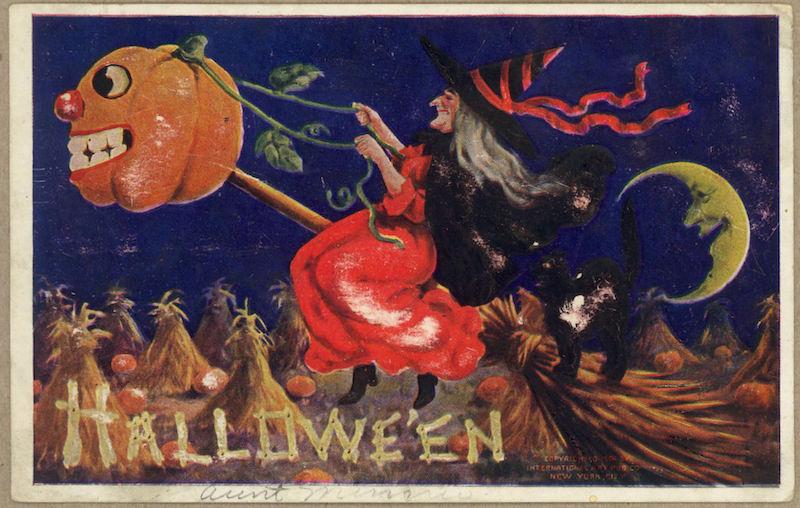
Today, few people would seriously expect an apple peel or a cabbage to reveal their future spouse. Nevertheless, these forgotten traditions remind us that Halloween has never been just one thing. Fear, fun, superstition and romance have existed side by side for centuries.
And perhaps there is something rather charming about the idea that, on a night when people expected to encounter ghosts, they were also hoping to meet the love of their lives.

