Walk through almost any British town, and you might still come across one of those famous red telephone boxes. Some look as good as new, while others have clearly seen better days. They are so closely associated with Britain that it’s difficult to imagine the country without them. Yet not so long ago, these little red boxes were much more than charming landmarks or popular subjects for tourist photographs. They were an ordinary, but essential, part of everyday life.
Today, most of us carry a phone everywhere we go. Those little red boxes are no longer necessary for everyday communication, yet they remain one of Britain’s most recognisable symbols. Along with double-decker buses, black taxis and postboxes, they have become an essential part of the country’s visual identity.
But where did they come from, why were they painted red, and what is happening to them now?
A British Icon Is Born
The story of Britain’s famous red telephone boxes began in the 1920s. The first standard public telephone kiosk, known as the K1, appeared in 1921. However, its design was unpopular, and the General Post Office wanted something more attractive.
In 1924, a competition was organised to find a better design. The winner was Sir Giles Gilbert Scott, a British architect who also worked on Liverpool Cathedral and London’s Battersea Power Station.
Interestingly, Scott did not originally intend his telephone box to be red. He imagined a silver structure with a blue-green interior. However, the Post Office preferred bright red, making the boxes easy to recognise from a distance.
The first cast-iron K2 telephone box was installed in London in 1926. Its elegant shape, glass windows and rounded roof soon became familiar features of the capital.
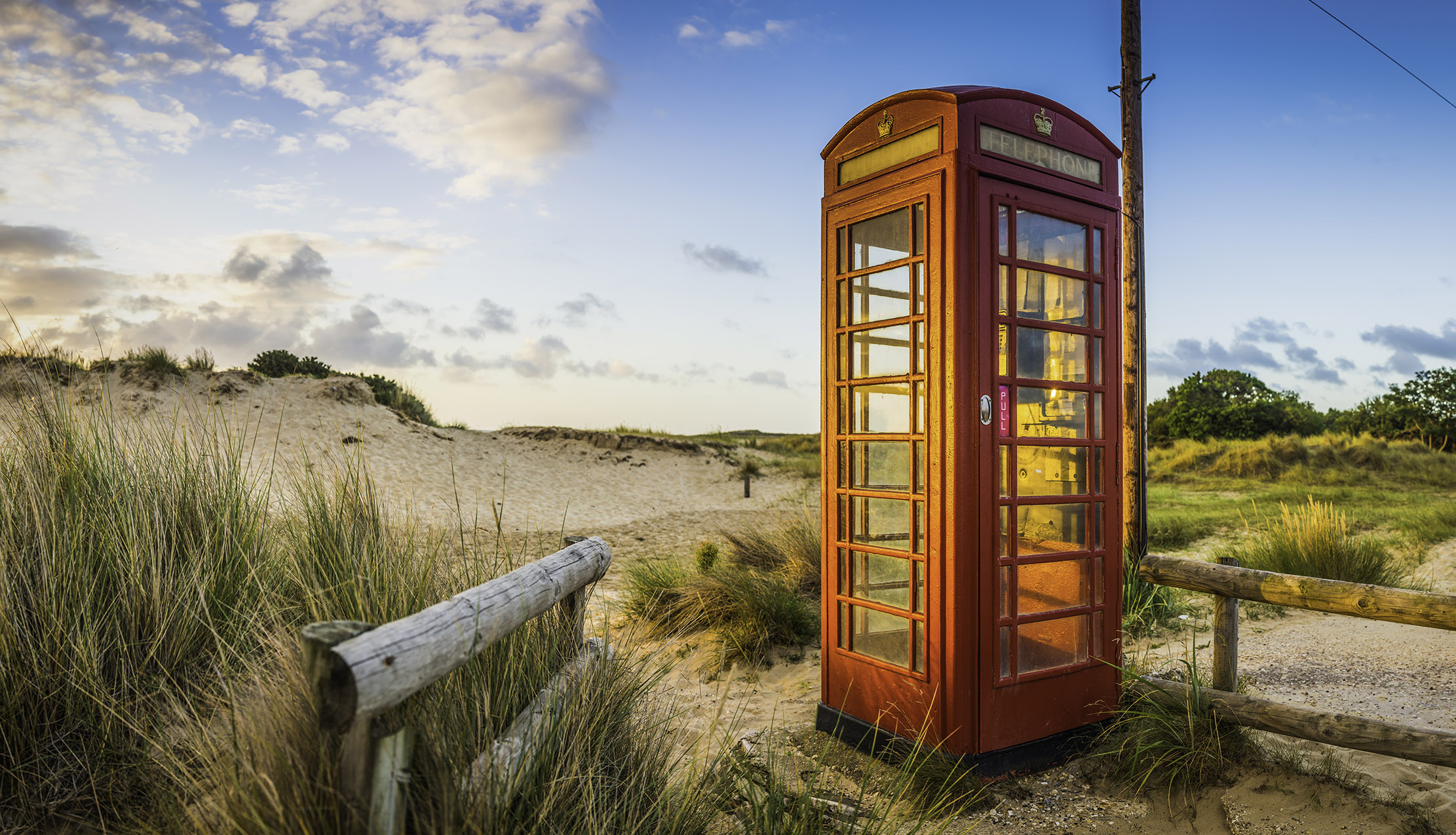
The design was partly inspired by the work of architect Sir John Soane, particularly a tomb he had designed in London.
Scott’s original K2 boxes were beautiful but expensive to produce. A smaller, cheaper version was needed.
That version arrived in 1935, when Scott designed the K6 to celebrate the Silver Jubilee of King George V. Introduced the following year, it became the most famous of all British telephone boxes. Around 60,000 K6 kiosks were installed across the country over the following decades.
When Telephone Boxes Were Everywhere
For much of the twentieth century, public telephone boxes were an important part of everyday British life.
Not every household had a telephone, and mobile phones were still a distant dream. If you needed to contact someone while away from home, a public telephone was often your only option.
Telephone boxes stood outside railway stations, beside village shops, on busy city streets and even in remote rural communities.
They also offered a little privacy. Behind the glass door, people shared good news, argued with relatives, arranged dates and sometimes received heartbreaking information.
By the 1990s, the number of public telephone boxes of different designs across Britain had reached approximately 100,000.
However, their golden age was already coming to an end.
The Mobile Phone Revolution
The arrival of mobile phones changed everything.
During the late 1990s and early 2000s, mobile phones became increasingly affordable. Suddenly, people no longer needed to search for a telephone box or carry coins to make a call.
As smartphones became part of everyday life, public telephones lost even more of their importance.
According to BT, by 2023 only around 20,000 working public payphones remained across the United Kingdom, and just 3,000 of these were housed in traditional red kiosks.

Many boxes were removed, while others were left unused. Some became damaged or covered in graffiti.
For those who remembered their importance, watching them disappear was like losing a small piece of British history.
However, not everyone agreed that they should simply be preserved as historical objects. Maintaining old telephone boxes costs money, and modern communication has made many of them unnecessary.
The question was whether these familiar structures could find a new purpose.
A Second Life for the Red Telephone Box
Fortunately, the story does not end with disappearance.
In 2008, BT introduced its Adopt a Kiosk scheme, allowing eligible local councils and community organisations to adopt unused red telephone boxes for just £1.
The telephone equipment is removed, and the community takes responsibility for the structure.
The results have been surprisingly creative.
Some boxes have become tiny libraries, where residents can borrow and exchange books. Others have been transformed into miniature art galleries, tourist information points, food banks or even small coffee shops.
Perhaps the most useful transformation involves defibrillators, medical devices that can help save someone experiencing a cardiac arrest. Former telephone boxes provide visible and accessible places to keep this emergency equipment.
In the Scottish village of Strathkinness, near St Andrews, an unused telephone box became the 201 Telephone Box Gallery, displaying artwork in a wonderfully unusual setting.
Meanwhile, residents of Compton in Surrey have used their adopted telephone box for colourful seasonal decorations, celebrating everything from royal weddings to international sporting events.
By August 2023, more than 7,200 kiosks had been adopted across the UK.
What once connected people through telephone conversations is now bringing communities together in entirely different ways.
Will They Disappear Completely?
Although their numbers have fallen dramatically, Britain’s red telephone boxes are unlikely to vanish altogether.
Many historic examples are officially protected because of their architectural and cultural importance.
Public telephones also continue to serve an important purpose in certain places. In rural areas with poor mobile reception, they may still provide a vital connection to emergency services.
Since 2022, British communications regulator Ofcom has applied stronger rules to protect public telephone boxes that communities still genuinely need.
For tourists, meanwhile, the red telephone box remains a favourite photographic subject. Few visitors to London can resist taking a picture beside one, particularly with Big Ben or another famous landmark in the background.
And perhaps that is the most interesting part of their story.
The red telephone box was created to solve a practical problem: helping people communicate. Almost a century later, technology has largely taken over that job.
Yet these small red structures still have something to offer. They remind us of a slower world, when making a telephone call required a little more effort and communication was not always available at the touch of a screen.
Britain may no longer need thousands of red telephone boxes, but it seems unwilling to say goodbye to them completely.
After all, some things are worth keeping, even when their original purpose has disappeared.

