On 3 November 1957, a small dog from the streets of Moscow became one of the most famous animals in history. Her name was Laika, and she was about to travel further than any dog had ever travelled before. While millions of people around the world celebrated an extraordinary scientific achievement, few realised that her journey had been designed without a return ticket.
Sixty-nine years later, Laika’s story remains one of the most moving and controversial chapters in the history of space exploration.
From the Streets of Moscow to the Stars
In the late 1950s, the Soviet Union and the United States were competing to become the world’s leading space power. On 4 October 1957, the Soviets successfully launched Sputnik 1, the first artificial satellite to orbit Earth. It was an enormous achievement, but Soviet leader Nikita Khrushchev wanted another success as soon as possible.
Scientists were given only a few weeks to prepare the next mission. This time, however, the spacecraft would carry a living passenger.
The Soviet space programme had already sent dogs on shorter flights, but none had completed an orbit around Earth. Scientists wanted to understand how a living creature would react to the enormous forces of a rocket launch and the strange conditions of weightlessness.
They began looking for suitable dogs among Moscow’s stray animals. Small female dogs were preferred because they needed less space and were generally easier to handle. Scientists also believed that animals accustomed to surviving on the streets might be better prepared for difficult conditions.
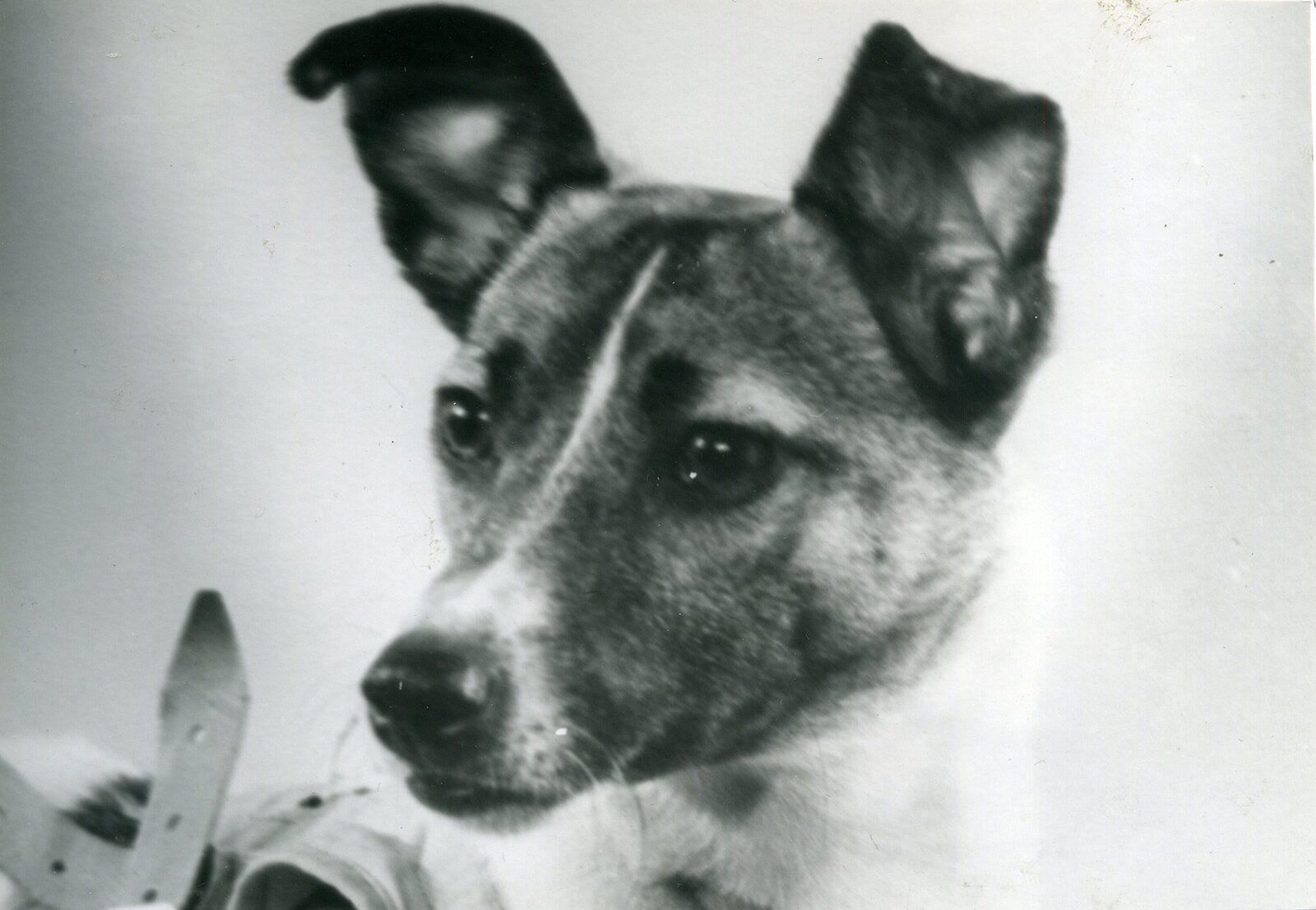
One of the dogs they selected was a small mixed-breed female originally called Kudryavka, meaning “Little Curly”. She later became known as Laika, a Russian word meaning “Barker”.
Laika was calm, friendly and obedient. Unfortunately, these qualities helped determine her tragic future.
Preparing for an Impossible Journey
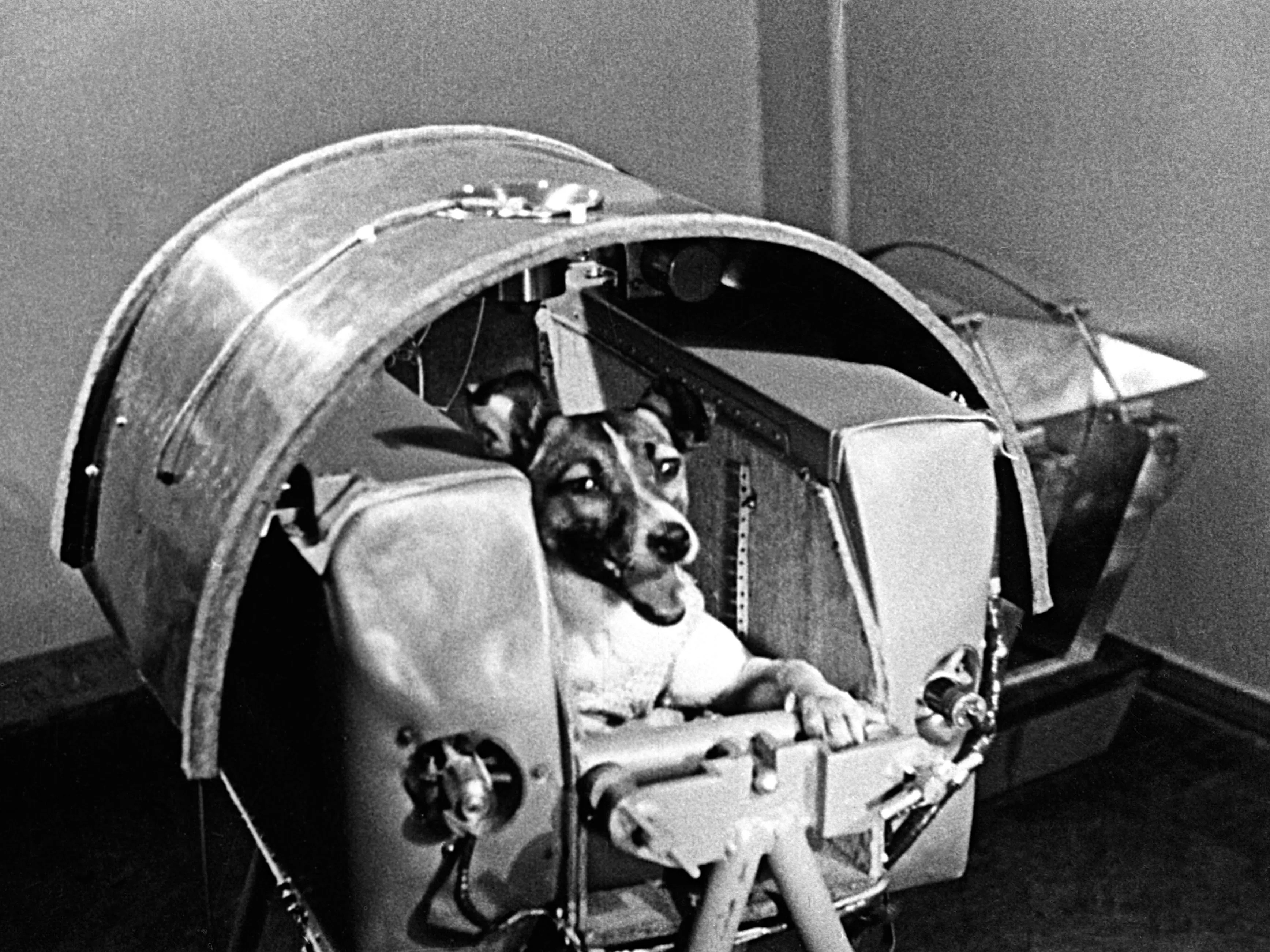
Laika and the other dogs underwent demanding training. They were placed inside increasingly small containers to help them become accustomed to the limited space available in the spacecraft. They were also exposed to loud noises and other conditions designed to prepare them for the launch.
The scientists developed special equipment to monitor the animals’ heart rates, breathing and blood pressure. Laika would wear sensors throughout her journey, allowing researchers on Earth to study her physical reactions.
Despite the scientific nature of the project, some members of the team became emotionally attached to the animals.
One of the doctors, Vladimir Yazdovsky, reportedly took Laika home shortly before the launch so that she could spend some time in a comfortable, family environment. He knew that the little dog would never return.
This was perhaps the saddest detail of the entire mission: Laika’s death was not an unexpected possibility. It was part of the original plan.
The technology needed to bring a spacecraft safely back to Earth had not yet been developed. Sputnik 2 was designed to travel into orbit, but not to return its passenger alive.
The Historic Launch
On the morning of 3 November 1957, Sputnik 2 was launched from the Baikonur launch site in what is now Kazakhstan.
Inside the spacecraft, Laika was secured in a tiny cabin equipped with oxygen, food and instruments to monitor her condition.
The launch placed enormous pressure on her body. Her heartbeat increased dramatically, and her breathing became much faster than normal. However, she survived the launch and reached orbit.
For the first time in history, an animal was travelling around Earth.
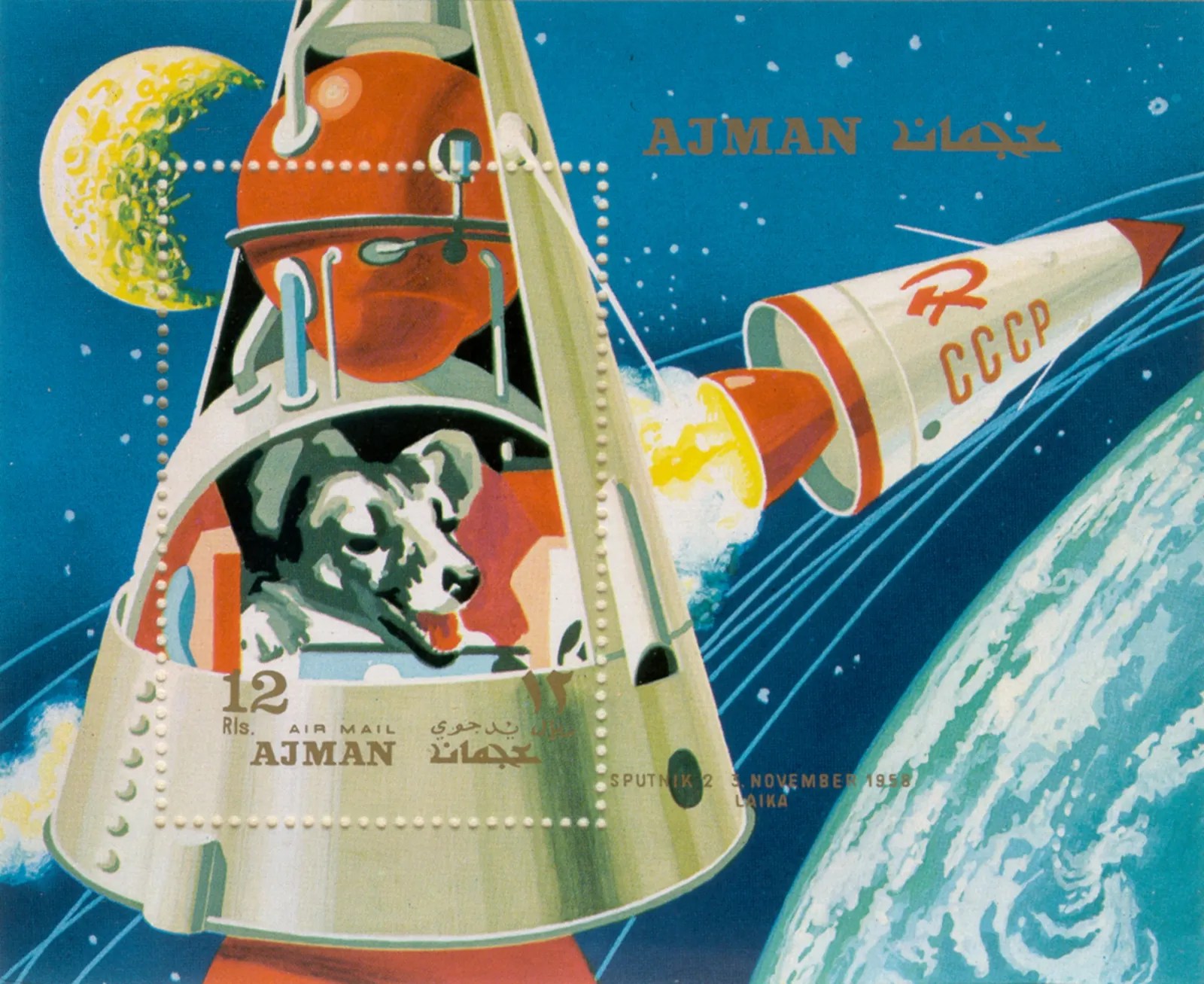
The news quickly spread across the world. Soviet newspapers celebrated the achievement, and Laika became an international celebrity. Her picture appeared in newspapers, magazines and eventually on postage stamps.
Yet behind the celebrations, something had gone terribly wrong.
The Truth Behind Laika’s Death
For decades, the Soviet authorities gave the impression that Laika had survived for several days in space. Some accounts suggested that she had eventually died when her oxygen supply ran out, while others claimed she had been given a special meal to end her life peacefully.
The reality was very different.
In 2002, Russian researchers revealed that Laika had died only a few hours after the launch. Problems with the spacecraft’s temperature-control system had caused the cabin to become dangerously hot. Combined with the stress of the flight, the extreme heat proved fatal.
Later examination of previously secret documents provided further details, although the exact moment of her death remains uncertain.
Sputnik 2 continued orbiting Earth without its living passenger. On 14 April 1958, more than five months after the launch, the spacecraft finally re-entered Earth’s atmosphere and burned up.
Laika never came home.
A Hero or a Victim?
Laika’s journey represented an important step towards human spaceflight. The information collected during the mission helped scientists understand how living organisms reacted to launch conditions and weightlessness.
In August 1960, two other Soviet dogs, Belka and Strelka, successfully travelled into orbit and returned alive. Less than a year later, on 12 April 1961, Yuri Gagarin became the first human to orbit Earth.
But Laika’s mission also raised serious ethical questions.
Even in 1957, animal welfare organisations protested against the decision to send a dog into space without any possibility of returning. Critics argued that scientific progress should not justify unnecessary suffering.
Years later, Oleg Gazenko, one of the scientists involved in the Soviet space programme, expressed regret about Laika’s fate. He came to question whether the knowledge gained from the mission had justified the sacrifice.
Today, Laika is remembered in books, documentaries, works of art and memorials. Her image has become an enduring symbol of the early Space Age.
Her story is not simply about scientific progress or the rivalry between two superpowers. It is also about the living creatures whose lives were used to make that progress possible.
Laika became a pioneer of space exploration, but she never chose to be one.
And perhaps that is why, almost seven decades later, the world still remembers the little dog who travelled among the stars but was never given the chance to return home.

