Magyar nosztalgia angolul.
Every country has certain things that can open the door to the past in just a few seconds. A familiar taste, an old television theme, a colourful shop sign or even the sound of an old bus can suddenly bring back memories of childhood.
Hungary is no different. For people who grew up in the 1970s, 1980s, 1990s or early 2000s, there are products, TV programmes and brands that are much more than simple memories. They are small pieces of everyday Hungarian history.
So, get ready for a journey back to a world before smartphones, streaming services and online shopping. Here are eleven unforgettable pieces of Hungarian retro.
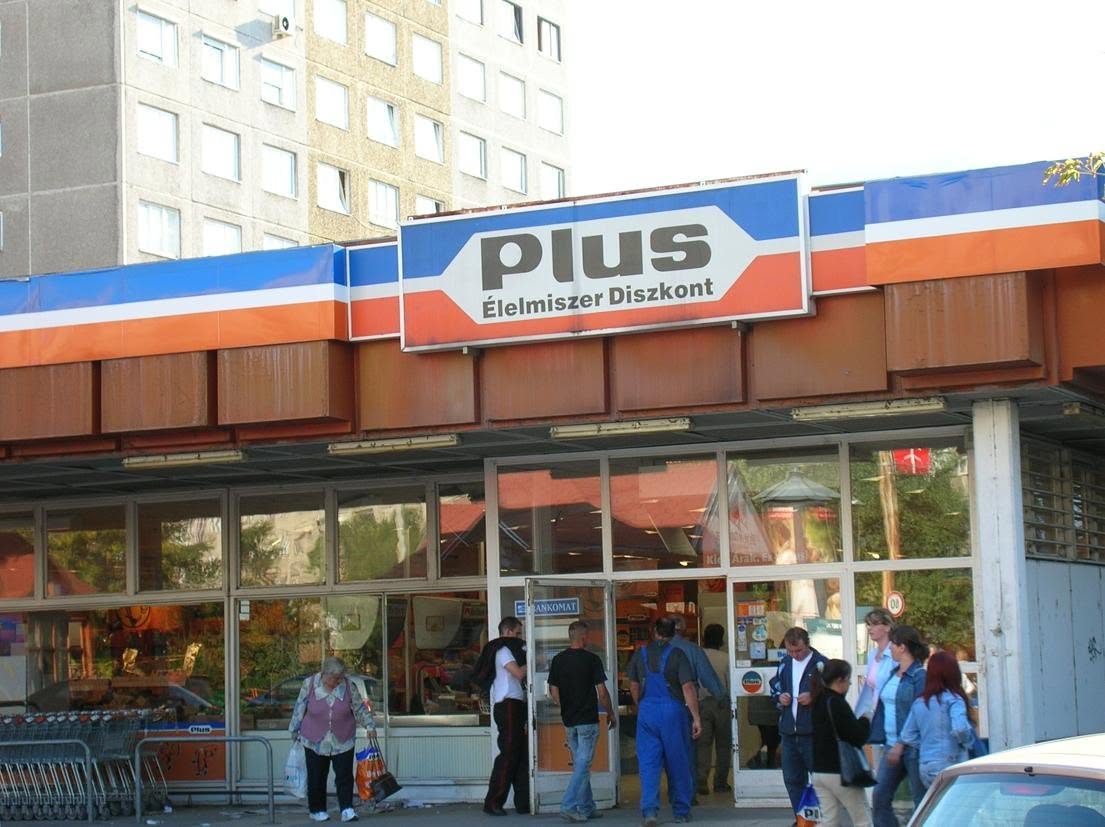
Plus Supermarket – When the Orange and Blue Sign Was Everywhere
Before Lidl and Aldi became part of everyday Hungarian life, Plus was one of the best-known discount supermarket chains in the country.
The German-owned company entered Hungary in 1992, opening its first Hungarian store in Tatabánya. It quickly expanded: by 1997, it already had more than 70 stores, and by the end of its Hungarian story the network had grown to around 174 shops.
For many people, Plus meant simple shops, low prices and shelves full of products that were sometimes presented directly in cardboard boxes. Today this does not sound unusual, but during the 1990s it was still a relatively new shopping experience in Hungary.
And, of course, there was the famous blue and orange Plus logo. If you grew up near one of these shops, you probably still remember it.
In 2008, SPAR took over the entire Hungarian Plus network. The stores were gradually converted, and by August 2009 the last Hungarian Plus had become a SPAR.
The supermarket may be gone, but mention the word Plus to a Hungarian who remembers the 1990s, and there is a good chance they will immediately picture that colourful sign.
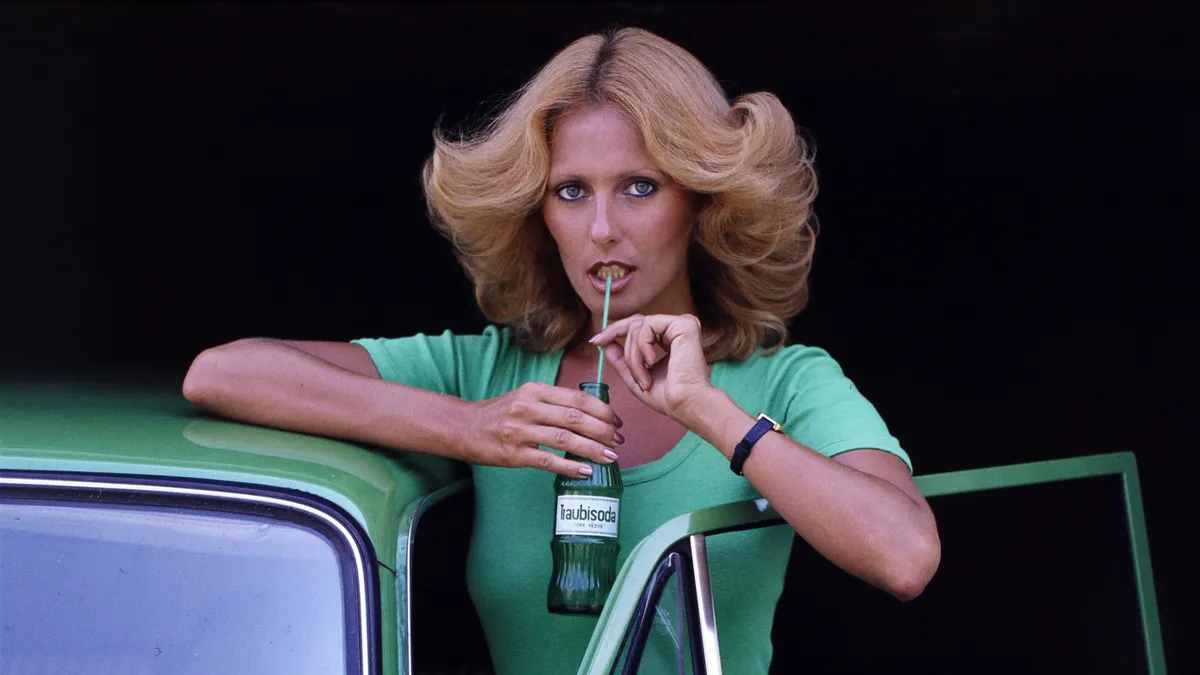
Traubisoda – The Taste of a Hungarian Summer
Few drinks say “retro Hungary” as strongly as Traubisoda.
Interestingly, its origins were not completely Hungarian. The drink was based on an Austrian idea developed by winemaker Lenz Moser. The Badacsony State Farm obtained the licence, and Hungarian production began in 1971 at Balatonvilágos. The drink was made using Hungarian grape must concentrate.
Traubi was sweet, fizzy and unmistakably grape-flavoured. During the 1970s and 1980s, it became one of the most popular soft drinks in Hungary.
But Traubisoda was not only about the taste. Its advertising also became part of popular culture. For generations of Hungarians, the green bottle and the Traubi name meant summer holidays, restaurants, family trips and childhood.
After the political and economic changes of the 1990s, the brand entered a much more complicated period involving different manufacturers and long legal disputes over the name.
That complicated history has not destroyed its nostalgic power. For many Hungarians, one sip is still enough to travel several decades back in time.
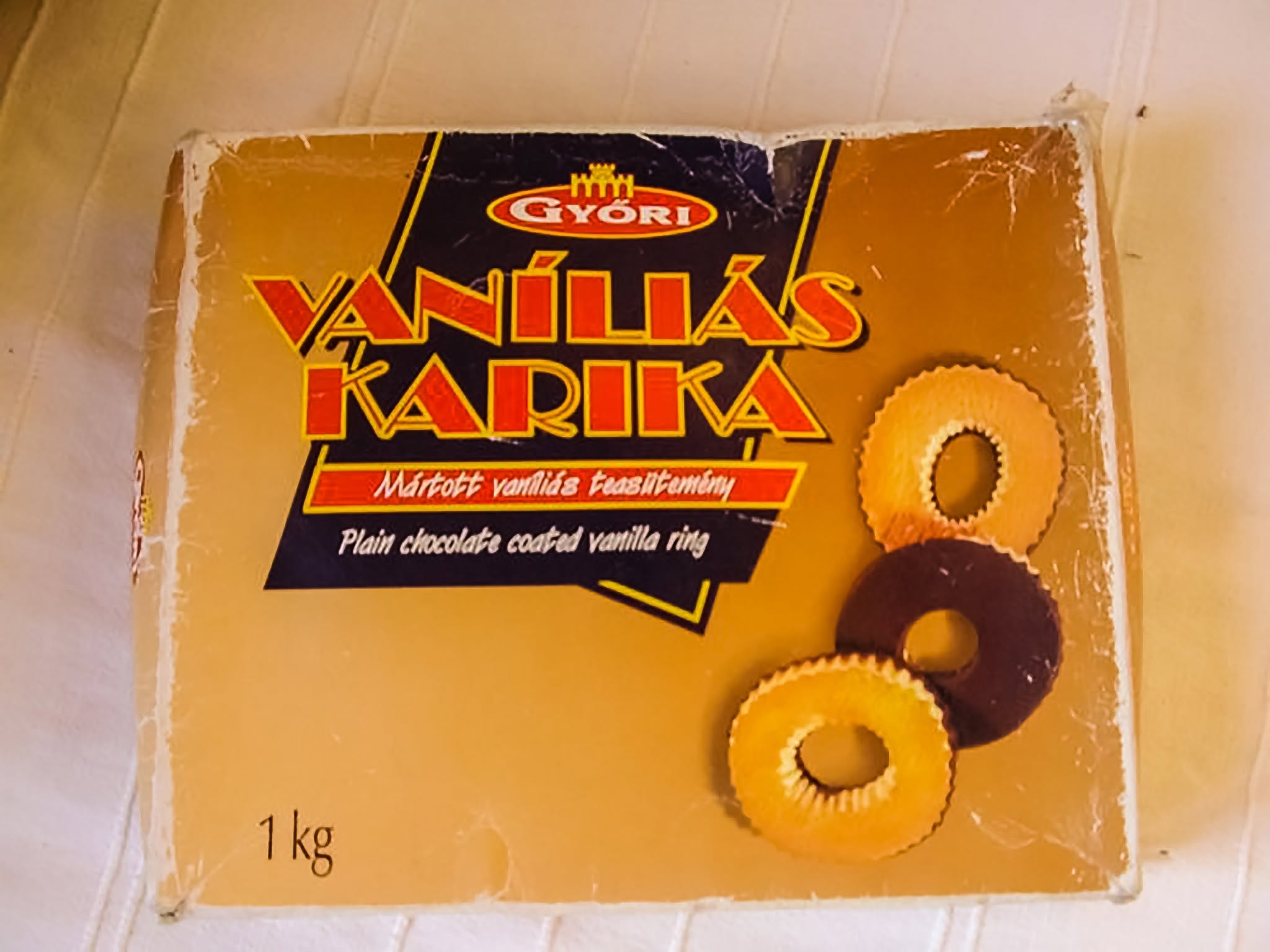
Vaníliás Karika – The Biscuit You Could Wear on Your Finger
Some childhood snacks were made to be eaten. Vaníliás karika was made to be played with first.
At least that is how many Hungarian children treated it.
The famous ring-shaped biscuit was created by Emil Horváth in 1963. Its flavour was based on an older vanilla crescent biscuit recipe, while the bottom of the new biscuit was covered in chocolate.
The result was simple but brilliant: a soft, crumbly biscuit with its unforgettable shape and chocolate-covered bottom.
And because there was a hole in the middle, generations of children discovered the same important fact: you could put the biscuits on your fingers before eating them.
Vaníliás karika became closely connected with the famous Győri biscuit factory. Győr had a long tradition of biscuit production, with industrial biscuit-making there going back to the late nineteenth century.
The product survived socialism, the political transformation of 1989–90 and later changes in ownership and production. It is still available today.
That makes it more than a retro product. It is one of those rare Hungarian sweets that grandparents, parents and children can all recognise.
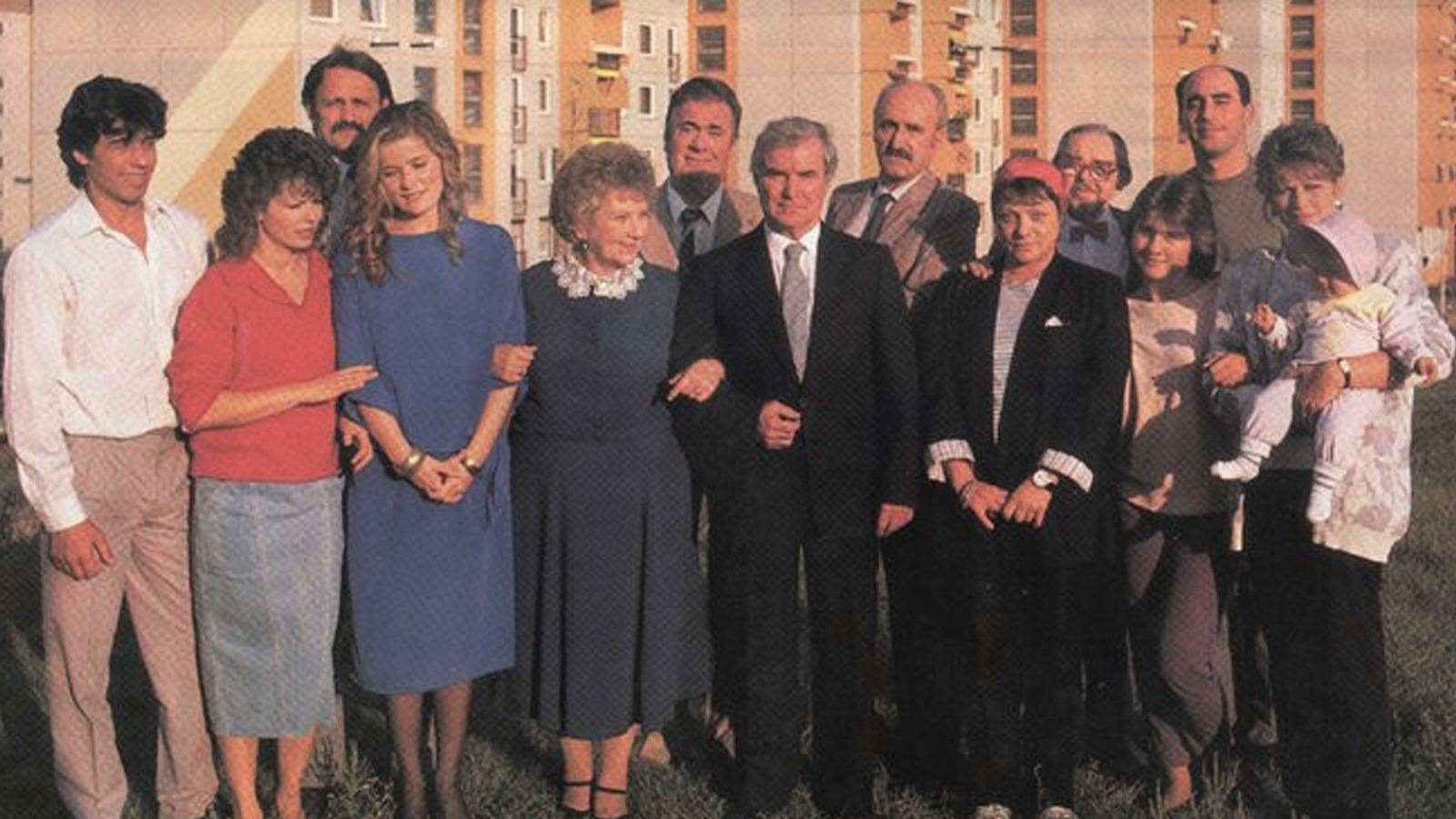
Szomszédok – When Half the Country Had the Same Neighbours
If Hungary had to choose one television programme to place in a time capsule from the late 1980s and 1990s, Szomszédok would be a very strong candidate.
The series started in 1987 and followed several families living in the Gazdagrét housing estate in Budapest. It continued until 1999, ending after 331 episodes.
There were the Takács family, the Mágenheims, the Vágásis and a long list of unforgettable supporting characters. Viewers followed their marriages, jobs, money problems, illnesses, family arguments and everyday worries.
Not much happened by modern television standards – and that was exactly the point.
Szomszédok was about ordinary life.
The programme reacted to real social problems and the enormous changes Hungary experienced before and after the fall of socialism. Rising prices, unemployment, crime, education, healthcare and even the arrival of the internet found their way into the story.
At the end of many episodes, characters looked directly into the camera and gave a short moral or social comment. Today these scenes are often shared as memes, but they also make the programme a fascinating time capsule.
Characters such as Vágási Feri, Taki bácsi, Lenke néni, Janka néni, Etus and Mágenheim doktor became almost like real people to the audience.
For twelve years, they were not just television characters.
They really were Hungary’s neighbours.
Buci Maci – A Magazine Waiting in the Newsagent’s
Long before children could open a tablet and find thousands of videos, games and stories, getting a new magazine could feel like a major event.
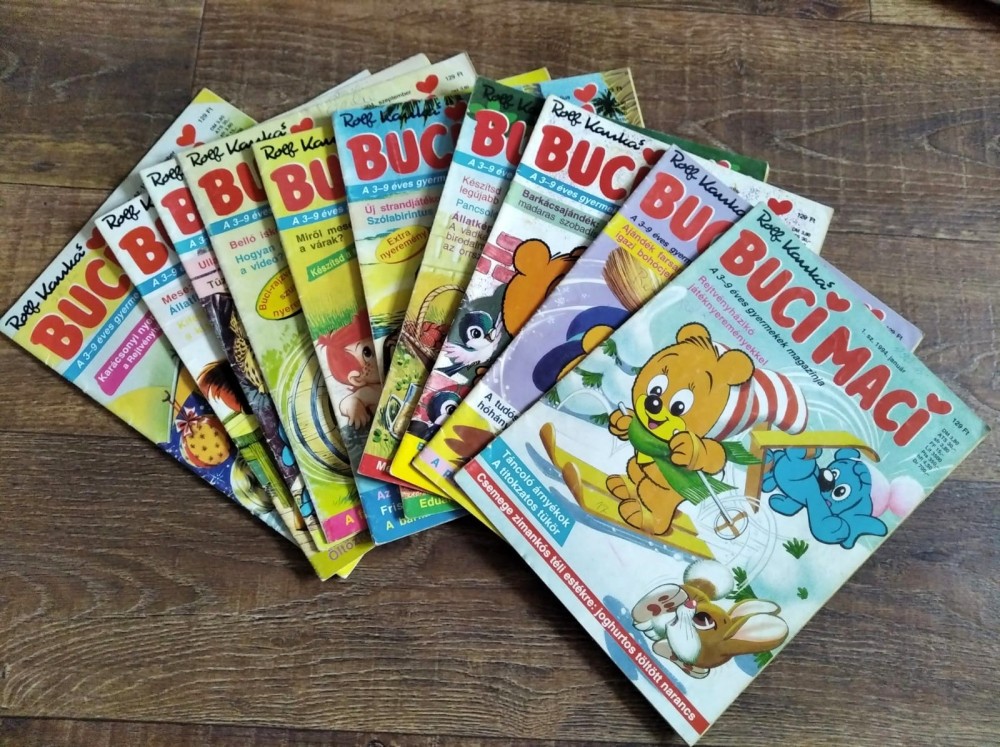
For many Hungarian children in the 1990s, that magazine was Buci Maci.
The first Hungarian issue appeared in October 1990. It was presented as a magazine for children aged three to nine and was connected to German cartoon creator Rolf Kauka.
Buci Maci was not simply a comic.
The colourful magazine included stories, educational sections, activities, recipes and things children could cut out and make. An early issue, for example, even showed children how to prepare a simple potato dish together with Buci Maci.
And that was part of its charm.
You did not simply read it and throw it away. You coloured things in, cut things out, solved puzzles and returned to favourite pages again and again.
Old copies from the 1990s are still sold by second-hand booksellers today, and seeing one of those colourful covers can instantly bring back the feeling of sitting on the floor as a child with a new magazine.
Gazdálkodj Okosan! – Building the Perfect Socialist Home
Imagine a board game where your greatest dream is not to destroy your opponents or become a millionaire.
You simply want a flat, some furniture, a television, a washing machine and maybe a vacuum cleaner.
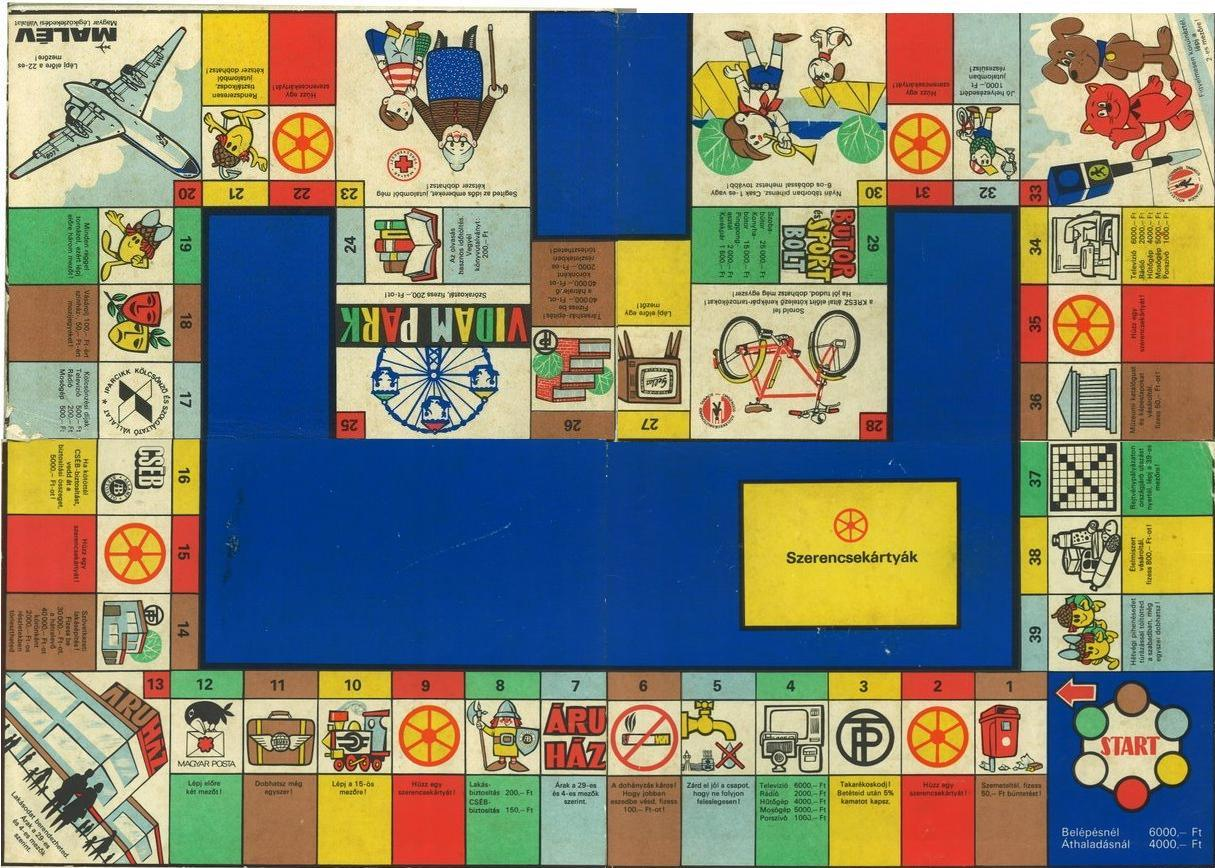
Welcome to Gazdálkodj Okosan!
The famous Hungarian board game became a classic during the socialist period. The best-known early version is generally associated with the 1960s, with many sources dating the classic edition to 1966, although archive research has found references to the game as early as 1961.
The basic idea was simple. Players moved around the board, collected money and tried to create a comfortable home. Unlike Monopoly, the aim was not to buy streets, charge other players rent and eventually bankrupt everybody else.
Instead, Gazdálkodj Okosan! encouraged saving, insurance, sensible spending and socially responsible behaviour.
Some squares even taught good habits such as not wasting water, exercising or visiting the library.
Looking at the old game today is like looking at a catalogue of what a comfortable Hungarian home was supposed to contain at the time.
Children wanted that flat.
They wanted that washing machine.
They wanted every little piece on their board.
And strangely enough, getting them with toy money sometimes felt like a major life achievement.
Mindent vagy semmit! – Vágó István Before the Millionaire
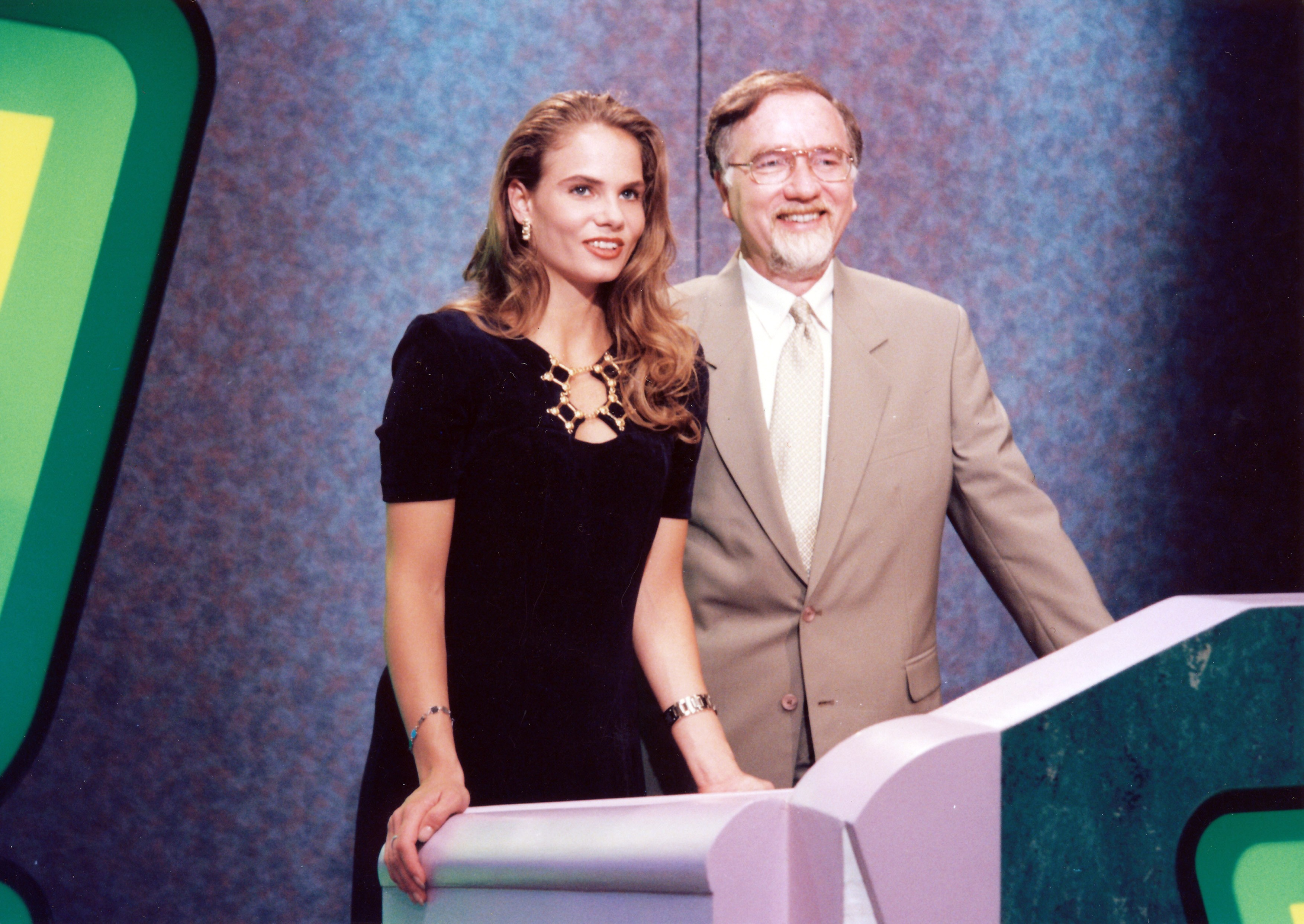
Before most Hungarians connected István Vágó with Legyen Ön is milliomos! (Who Wants to Be a Millionare!?), there was another legendary quiz show:
Mindent vagy semmit!
The programme began on Hungarian Television in 1993 and ran until 1999. Vágó later continued presenting it for a short period on TV2.
The format included elements inspired by two successful American quiz shows, Jeopardy! and Sale of the Century. Contestants answered increasingly difficult questions from different categories and collected points.
But the most exciting moment came at the end.
The winner had a decision to make.
They could use their points to take prizes – or risk everything, return for another programme and try to win something much bigger.
Hence the title: Everything or Nothing.
The prizes themselves now feel wonderfully 1990s. Some objects that seemed modern and luxurious at the time would probably confuse younger viewers today.
But the real star was István Vágó. Calm, intelligent and sometimes wonderfully serious, he made general knowledge exciting.
For many viewers, television quizzes were never quite the same without him.
Gyerekszáj – When Children Told Friderikusz What They Really Thought
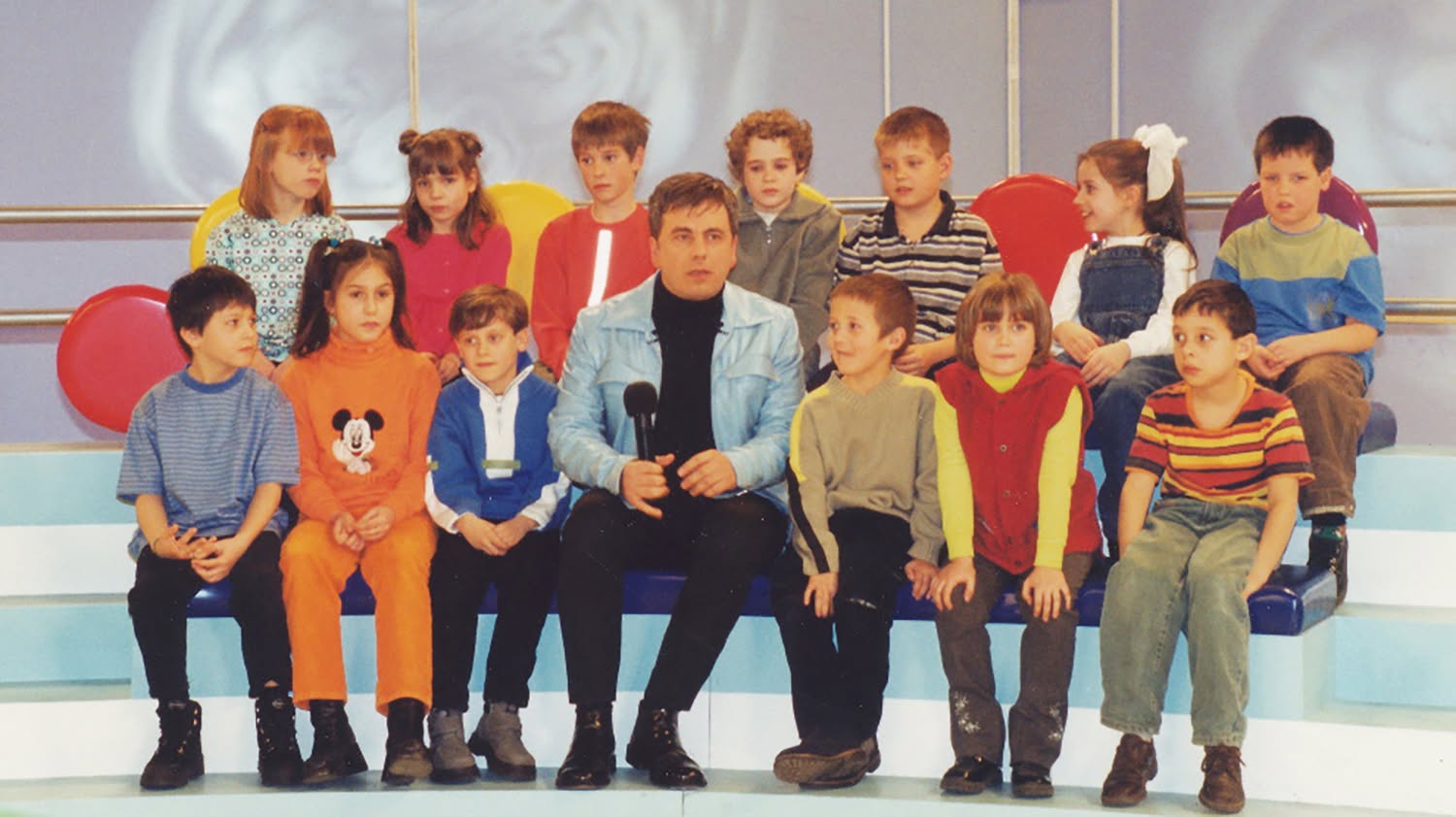
Put three young children in a television studio.
Ask them serious questions about adults, love, money, relationships or life.
Then wait.
That was basically the magic of Gyerekszáj.
The TV2 programme was hosted by Friderikusz Sándor, one of the biggest television personalities in Hungary. Usually, three young children appeared in each short episode and discussed a particular subject with him. More than 200 episodes were made, and the programme was shown regularly around 2000.
Its strength was the children’s honesty.
They were not professional actors, and according to former participants, their answers were not written for them. They were encouraged simply to be themselves.
That created wonderful television.
Sometimes the children were sweet. Sometimes surprisingly intelligent. Sometimes they completely misunderstood the adult world.
And sometimes they gave Friderikusz an answer so unexpected that even he did not know how to react.
That was the whole point.
Adults spend years learning how to give careful, polite answers.
Children usually haven’t learned that skill yet.
And Gyerekszáj turned that honesty into entertainment.
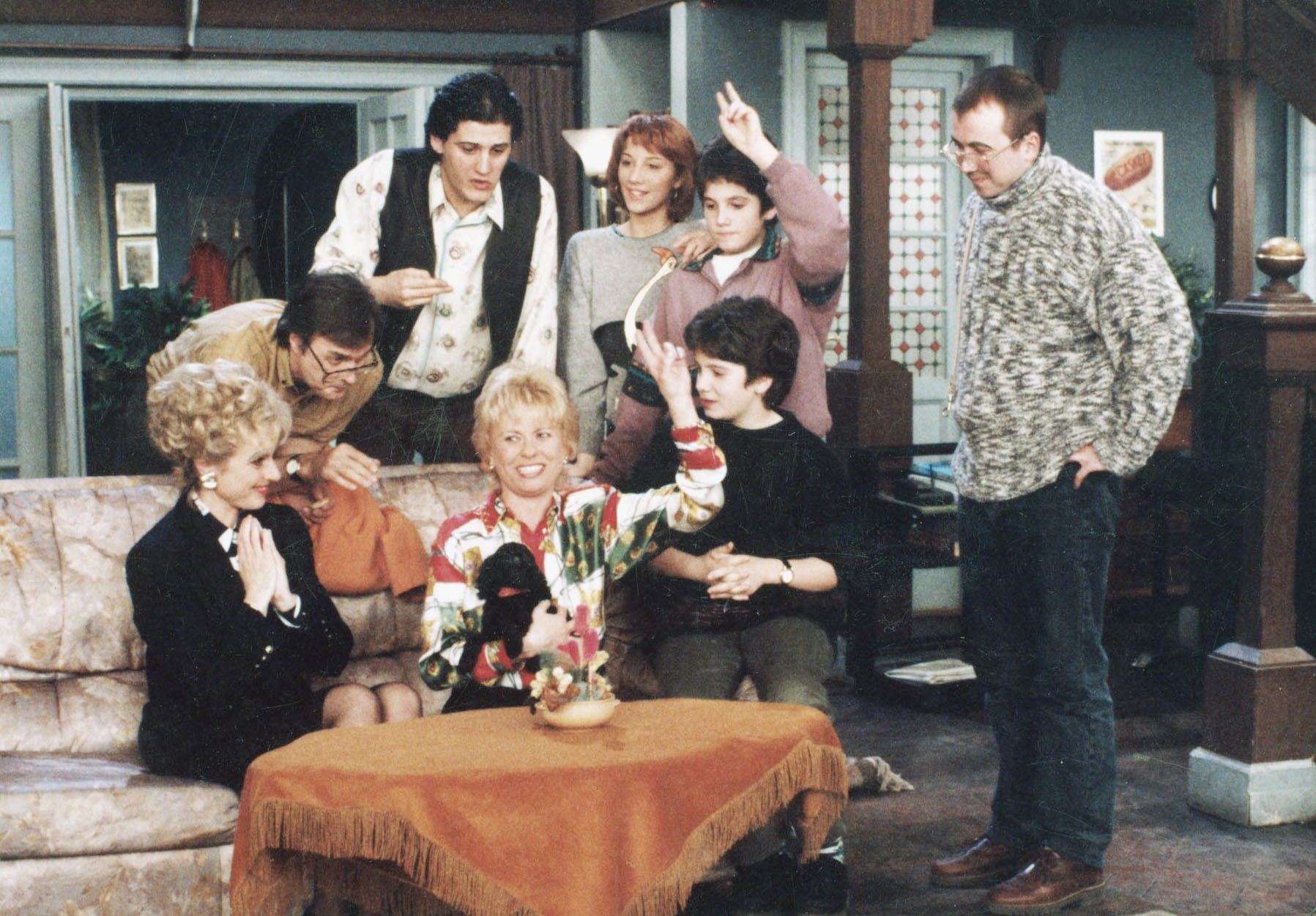
Família Kft. – The Hungarian Sitcom TV Family
If Szomszédok represented the everyday worries of Hungary, Família Kft. offered a louder, faster and more colourful version of family life.
The series began in 1991 and continued until 1999. It centred on the Szép family and became one of the most recognisable Hungarian television comedies of the decade.
Its world was filled with misunderstandings, relatives, neighbours, unusual situations and characters who became instantly recognisable to viewers.
The cast included actors such as Cecília Esztergályos, Tamás Ádám (Sándor Tamás Nagy), Barbara Xantus, András Csonka, and many others who became strongly connected with the series.
The programme was also very much a product of post-socialist Hungary.
Unlike the earlier television world, advertising and product placement became highly visible in Família Kft. – sometimes very visibly indeed.
Today this is part of its charm.
The clothes, hairstyles, furniture, shops, advertisements and dialogue all scream 1990s Hungary.
Watching an old episode now feels less like watching an old sitcom and more like opening a family photo album that somehow belongs to the entire country.
iWiW – Hungary Had Social Media Before Facebook Took Over
There was a time when receiving an invitation to a website felt genuinely exciting.
That website was iWiW.
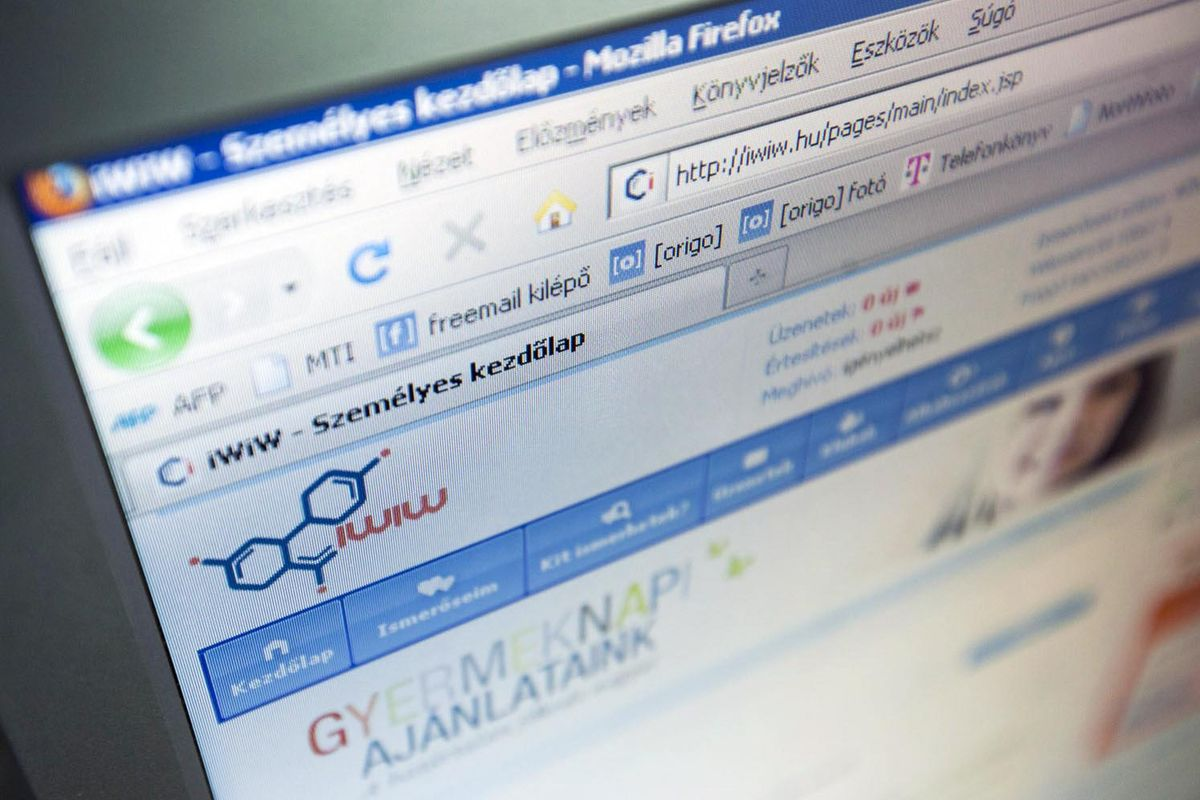
It originally launched as WiW – Who Is Who – on 14 April 2002, years before Facebook became part of everyday Hungarian life. The service was created by Hungarian software developer Zsolt Várady. In 2005, the site was redesigned and renamed iWiW, meaning International Who Is Who.
Users created profiles, added friends, uploaded photographs and searched for former classmates, colleagues and people they had not seen for years.
There was one important detail: for a long time, you needed an invitation to join.
This made invitations surprisingly valuable. If you had a few available, suddenly everybody wanted to be your friend.
At its peak, iWiW was enormous. Between 2005 and 2010, it was Hungary’s most visited website, and during its strongest period around 1.5 million people visited it every day.
Then Facebook arrived.
Hungarian users gradually moved away, and iWiW finally closed in 2014.
Today it seems almost innocent compared with modern social media.
No influencers. No endless short videos. No algorithm trying to keep you scrolling until 2 a.m.
Mostly just people looking for their old classmates.
Retro culture is not simply about believing that everything was better in the past. Queues were longer, television had fewer channels, the internet was painfully slow when it finally arrived, and an old Ikarus on a hot summer afternoon was not exactly luxury travel. But nostalgia does something interesting. It remembers small details.
 Gergő's English Club