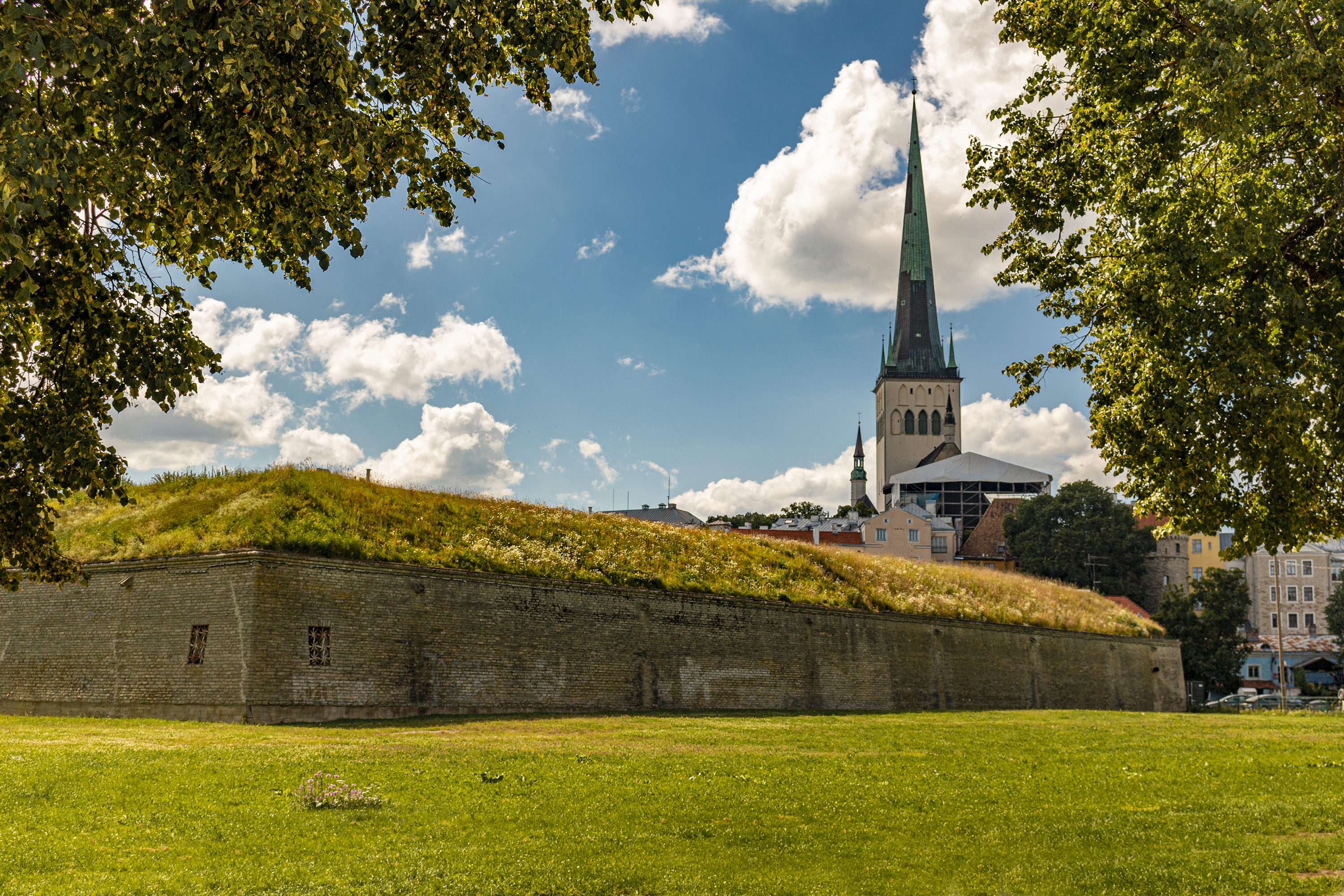
When you walk through Tallinn’s Old Town, there is one landmark that seems to follow you almost everywhere. No matter which narrow street you turn into, sooner or later the tall, dark spire of St Olaf’s Church appears above the rooftops again. It quickly becomes part of the city’s character, almost like a familiar point of reference during your walk.
I had noticed the church from several parts of Tallinn before actually getting close to it, and that is probably what makes it so memorable. St Olaf’s does not need bright colours or heavy decoration to stand out. Its simple Gothic shape and incredibly tall tower are enough.
Located on Lai Street, St Olaf’s Church – Oleviste kirik in Estonian – is one of Tallinn’s most famous historic landmarks. Behind its impressive tower lies more than seven centuries of history, including medieval merchants, Scandinavian connections, devastating fires and a long-standing story that it may once have been the tallest building in the world.
To understand why this church became such an important part of Tallinn’s skyline, we have to go back to the Middle Ages.
A Church from Tallinn’s Earliest Centuries
Nobody knows exactly when the first church stood on this spot. The earliest written record of St Olaf’s dates from 1267, although historians believe that a place of worship may have existed here even earlier.
The church was named after Olaf II Haraldsson, King of Norway, who lived from 995 to 1030 and was later recognised as a saint. St Olaf became an important religious figure across Scandinavia and the Baltic region. Considering Tallinn’s close connections with northern Europe and its role as an important port, the choice of name seems very natural.
The building we see today developed over several centuries. During Tallinn’s wealthy Hanseatic period in the 15th century, the church was extensively rebuilt and became an impressive Gothic basilica.
Tallinn was an important member of the Hanseatic League, a powerful network of trading cities across northern Europe. Merchants arrived from different parts of the continent, bringing not only goods but also money, ideas and architectural influences. Churches such as St Olaf’s became symbols of the growing wealth and importance of the city.
Its high vaulted ceilings, large interior and enormous tower must have been an extraordinary sight for people living in medieval Tallinn.
Was It Really the Tallest Building in the World?
One story connected with St Olaf’s Church has become especially famous.
For many years, it has been claimed that the church once had a spire reaching around 159 metres and that between the 16th and early 17th centuries it may have been the tallest building in the world.
You can still find this story in many travel guides, and there is no doubt that St Olaf’s tower was exceptionally high for its time. However, historians are not completely certain about the exact height of the original spire.
The famous figure of 159 metres comes from an old historical document, but the measurement used in it is difficult to interpret with complete certainty. Because of this, it is probably safer to say that St Olaf’s was one of the tallest and most remarkable buildings in Europe during that period.
Even without the record, its height had an important practical purpose.
Tallinn was a major trading port, and the tower could be seen from ships approaching the city from the Baltic Sea. For sailors and merchants, the enormous spire became an important landmark showing them that Tallinn was close.
In a way, it worked as a medieval lighthouse – although without the light.
Lightning, Fire and a Difficult History
Being one of the tallest structures in the region also caused problems.
The tower was an easy target for lightning, and St Olaf’s Church suffered several serious fires during its long history. Two particularly destructive fires occurred in 1625 and 1820, causing major damage and forcing large parts of the church to be rebuilt.
During reconstruction work following the 1820 fire, lightning struck the tower again in 1831. Fortunately, this time the fire was brought under control.
Today, the church tower reaches approximately 124 metres, which is still impressive enough to dominate Tallinn’s Old Town skyline.
The church also experienced major religious changes.
Originally a Roman Catholic church, St Olaf’s became Lutheran during the Reformation in the 16th century. The Reformation reached Tallinn in 1524 and completely changed the religious life of the city.
For centuries, the church was mainly used by a German-speaking Lutheran congregation. Later, especially during the 20th century, its role changed again. Today, St Olaf’s is used by an Evangelical Christian congregation and remains an active place of worship.
This long and sometimes difficult history makes the church much more than simply a medieval monument. It has survived fires, political changes, religious transformations and centuries of rebuilding.
Inside St Olaf’s
From the outside, the tower naturally gets most of the attention. Inside, however, the atmosphere is completely different.
The church feels spacious, calm and surprisingly simple. Its Gothic architecture, tall columns and high vaulted ceiling create an impressive sense of space, but the interior is not overloaded with decoration.
Compared with some of Europe’s richly decorated cathedrals, St Olaf’s can almost feel modest.
And that simplicity suits Tallinn.
There is something very northern about the white walls, the high Gothic archesand the quiet atmosphere. Instead of trying to impress visitors with gold, paintings and endless decoration, the building allows its architecture to speak for itself.
Looking upwards towards the ceiling also gives you a sense of how ambitious medieval builders were. Creating a structure of this size hundreds of years ago, without modern machinery, must have required incredible skill.
But for many visitors, the most memorable experience still waits above.
232 Steps Above Tallinn
One of the highlights of visiting St Olaf’s Church is climbing the tower.
The observation platform is reached by around 232 steps, and the journey upwards is part of the experience. The staircase becomes narrow and steep in places, so it is certainly not the easiest climb in Tallinn.
But once you reach the top, it is easy to understand why so many visitors make the effort.
The view is spectacular.
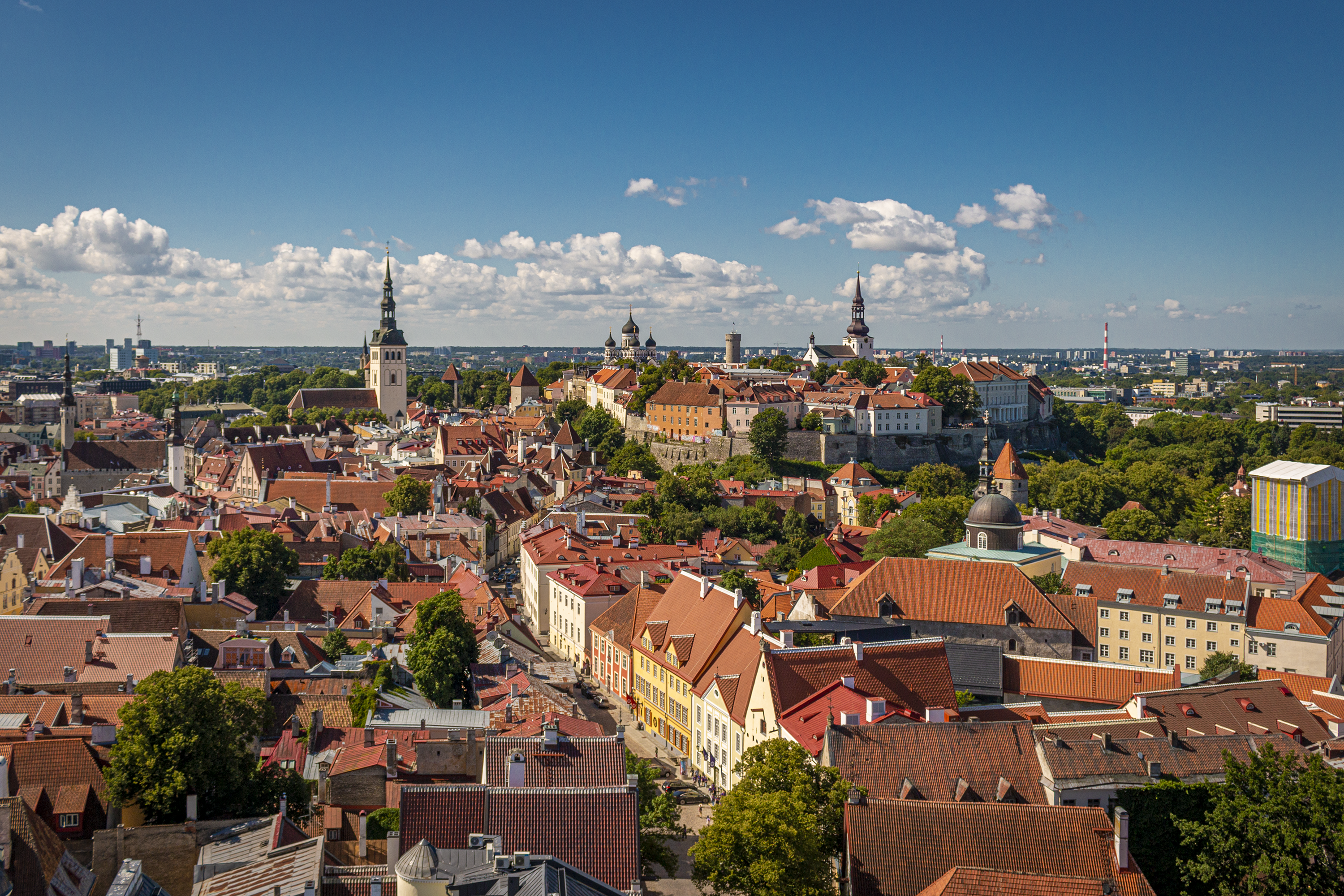
Below you, Tallinn’s Old Town spreads out like a miniature medieval city. Red rooftops, church towers and winding streets fill the landscape. Toompea rises in one direction, while in another you can see Tallinn’s modern buildings, the harbour and the Gulf of Finland.
It is one of those places where you can really understand the structure of the city.
From street level, Tallinn’s Old Town can sometimes feel like a maze of narrow streets and hidden courtyards. From St Olaf’s tower, everything suddenly makes sense.
You can also see how close the historic centre is to the sea, which helps explain why Tallinn developed into such an important trading city.
For anyone interested in photography, it is naturally an excellent location. The red roofs, medieval towers and modern city in the distance create endless possibilities, especially when the light is good.
It is difficult to put the camera away.
A Different Side of Tallinn
Tallinn has many buildings that immediately attract attention.
Alexander Nevsky Cathedral has its colourful onion domes. Tallinn Town Hall gives Raekoja plats its unmistakable medieval atmosphere. The old city walls and defensive towers make parts of the city look almost like a film set.
St Olaf’s offers something slightly different.
Standing directly in front of it, the church may not seem as colourful or decorative as some of Tallinn’s other famous sights. But as you continue walking through the Old Town, you begin to understand its importance.
Its spire keeps returning.
You see it behind rooftops, between buildings and at the end of streets. Sometimes only the very top of the tower is visible, but it is almost always somewhere nearby.
Perhaps that is why St Olaf’s becomes such a memorable part of Tallinn.
It has watched the city change from a medieval trading centre into a modern European capital, while remaining one of the strongest elements of its skyline.
And that is also what makes it worth visiting.
St Olaf’s is not simply another old church to tick off a sightseeing list. It tells part of Tallinn’s story – its connection with the sea, its medieval wealth, its Scandinavian links and its remarkable ability to survive centuries of change.
When you finally step back onto Lai Street after visiting the church, that familiar dark spire will probably look a little different.
And during the rest of your walk through Tallinn, there is a good chance you will keep finding it above the rooftops.
 Gergő's English Club