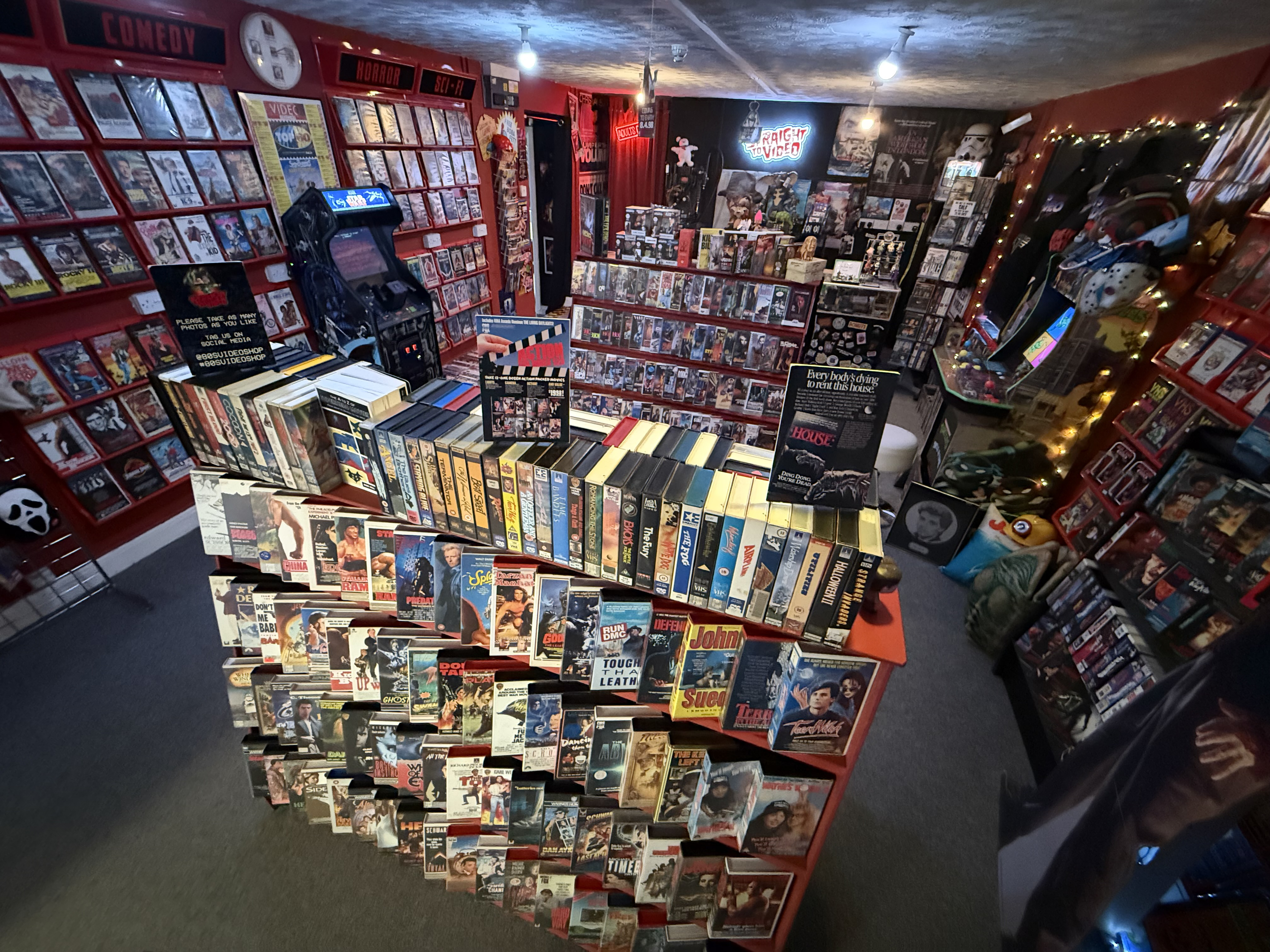
There was a time when choosing a film meant leaving the house. On a Friday afternoon, you would walk into your local video rental store, look through hundreds of colourful VHS covers and try to find something worth watching. Perhaps you already knew which film you wanted, or perhaps you had absolutely no idea. Either way, you could easily spend half an hour walking between the shelves.
For millions of people who grew up in the 1980s, 1990s and early 2000s, this was a familiar weekend tradition. Long before Netflix, Disney+ and other streaming services, video rental stores were an important part of everyday life. Today, most of them have disappeared, but the memories remain.
A Whole World of Films on the Shelves
Video rental stores became increasingly popular during the late 1970s and especially throughout the 1980s, as more families bought video cassette recorders, commonly known as VCRs. For the first time, people could easily watch a wide variety of films at home without waiting for them to appear on television.
By the 1990s, almost every town had at least one video rental store. Some were small, independent businesses, while others belonged to large international chains.
Inside, the films were usually organised into categories such as comedy, horror, action, romance and science fiction. New releases often had their own special section near the entrance. The covers were designed to attract attention, and sometimes a dramatic picture or an interesting title was enough to convince someone to rent a film.
Of course, there was always the possibility that the film you wanted was already rented out. Popular new releases could disappear from the shelves very quickly, especially on Friday and Saturday evenings. If you were unlucky, you had to choose something else or return another day.
Interestingly, this sometimes led people to discover films they would never have chosen otherwise.
The Rise of Blockbuster
No company represents the golden age of video rental stores better than Blockbuster.
The first Blockbuster store opened in Dallas, Texas, on 19 October 1985. It was founded by David Cook and offered an unusually large selection of films. Unlike many smaller video shops, Blockbuster used computer systems to manage rentals and created a bright, organised shopping environment.
The idea was extremely successful. During the following years, Blockbuster expanded across the United States and eventually into other countries. At its height, the company operated thousands of stores around the world.
Its famous blue-and-yellow logo became a familiar sight, and visiting Blockbuster was almost a weekend activity in itself.
For many families, the experience followed a similar routine: visit the store, choose a couple of films, buy some snacks and return home for an evening in front of the television.
However, Blockbuster was only part of the story. Independent video shops played an equally important role in many communities. Their owners often knew their regular customers and could recommend films based on personal taste. Some stores even became meeting places where people discussed the latest releases.
The Little Problems We All Remember
Naturally, renting a film was not always as simple as it sounds.
First, there were the late fees. Films had to be returned by a certain date, and forgetting to bring them back could result in an extra charge. A cheap weekend rental could suddenly become more expensive than expected.
Then there was the problem of rewinding VHS tapes. Unlike DVDs, videotapes had to be physically rewound before they could be watched again. Some rental stores reminded customers to do this before returning their films.
The picture quality was another issue. Older tapes could become damaged or worn out after years of use. Sometimes the picture looked strange, the sound was unclear, or the film suddenly stopped playing properly.
And who could forget the frustration of taking a film home, only to discover that the wrong cassette was inside the box?
Despite these small problems, the experience had its own charm. In fact, many of these inconveniences have become part of the nostalgia surrounding the VHS era.
When DVDs Changed Everything
Towards the end of the 1990s, DVDs began to replace VHS tapes. They offered better picture and sound quality, took up less space and, perhaps most importantly, did not need rewinding.
Video rental stores quickly adapted to the new technology. VHS shelves gradually became DVD shelves, and customers started renting films on shiny discs instead of bulky plastic cassettes.
For a while, business continued as usual. Many people still enjoyed visiting their local rental shops, and renting DVDs remained popular throughout much of the 2000s.
But a much bigger change was already on its way.
The Internet Arrives – And Everything Changes
Netflix was founded in 1997, originally offering a completely different service from the one we know today. Instead of watching films online, customers could rent DVDs through the company’s website and receive them by post.
This was already a serious challenge to traditional video rental stores. Customers no longer had to travel to a shop or worry about the same kind of late fees.
Then, in 2007, Netflix introduced its streaming service, allowing subscribers to watch films and television programmes directly over the internet.
As internet connections became faster and smart televisions became more common, streaming grew into one of the most popular forms of home entertainment.
Traditional rental stores found it increasingly difficult to compete. Customers could now choose films without leaving their sofas, and there was no need to return anything the following morning.
Blockbuster struggled to adapt to these changes and eventually filed for bankruptcy in 2010. Most of its stores closed during the following years.
The era of the video rental giant was coming to an end.
The Last Blockbuster
Surprisingly, the Blockbuster name has not completely disappeared.
One store in Bend, Oregon, has managed to survive and is now famous as the last remaining Blockbuster location in the world.
The shop has become something of a tourist attraction. Visitors travel there to see the familiar blue-and-yellow signs, browse physical movie collections and experience something that was once completely ordinary.
For older customers, it is a journey back to their childhood or teenage years. For younger visitors, it is a chance to discover a world that existed before streaming services took over.
And Blockbuster is not the only survivor. A small number of independent rental stores still operate in different parts of the world, often serving film collectors and people who love physical media.
Why Do We Miss Video Rental Stores?
From a practical point of view, streaming is clearly more convenient. We can watch thousands of films and television programmes whenever we want, often without even getting out of bed.
So why do so many people still miss video rental stores?
Perhaps because the experience was about much more than watching a film.
Going to the video shop was an event. You might go with your parents, your friends or your partner. You would walk around, discuss different titles, read the descriptions on the back of the boxes and sometimes disagree about what to watch.
There was also something exciting about discovering an unfamiliar film simply because its cover looked interesting.
Today, streaming platforms use algorithms to recommend films based on our viewing habits. Although these systems can be useful, they are quite different from receiving a recommendation from a friendly shop assistant or accidentally discovering an unusual film on a forgotten shelf.
Video rental stores also made films feel more physical. You could hold the box, examine the artwork and take the cassette or DVD home. And because you only had a limited time to watch it, choosing the right film sometimes felt surprisingly important.
A Friday Night We Can Never Quite Get Back
Technology has made watching films easier, cheaper in some cases, and certainly more convenient. Few people would seriously want to return to damaged VHS tapes, expensive late fees or finding that every copy of their favourite film had already been rented.
But convenience does not always create the best memories.
For an entire generation, the local video rental store was part of growing up. It was the place where children discovered their favourite cartoons, teenagers rented horror films for sleepovers, and families searched for something everyone could enjoy.
Today, those colourful shelves, plastic membership cards and familiar VHS boxes have largely disappeared. Most have been replaced by digital menus and endless lists of recommendations.
We may have more films available to us than ever before, but there was something special about those Friday evenings when finding a good movie was an adventure in itself.
And perhaps that is what we really miss: not the tapes, the machines or even the shops, but the simple excitement of choosing a film and looking forward to watching it.

