School uniforms, morning assemblies, football on a muddy field and students calling their teacher “Sir” or “Miss” – British schools have a very recognisable image around the world. Films and television series have made some British school traditions famous, but what is everyday school life really like?
The first thing to understand is that there is no completely single British education system. England, Scotland, Wales and Northern Ireland have their own systems, qualifications and rules. Even inside England, individual schools can have different traditions.
Still, there are some things that you are likely to see in many British schools.
The School Uniform
One of the most noticeable differences between British and many other European schools is the uniform.
Uniforms are extremely common, especially in primary and secondary schools. A typical secondary school uniform might include dark trousers or a skirt, a white shirt, a jumper or blazer, and a school tie. The school badge is often shown on the blazer or jumper.
However, there is no single national school uniform. In England, individual schools decide whether they want a uniform and what pupils have to wear. The government says that uniforms can help create a sense of identity and belonging, but they should also be affordable for families.
Some schools are very strict about uniform. They may have rules about shoes, jewellery, hairstyles or even the colour of socks.
There is also a much-loved exception: the non-uniform day. On these special days, pupils can come to school in their normal clothes, sometimes as part of a charity event or school celebration. Official guidance even recognises non-uniform days as something schools may choose to organise.
For students, being allowed to wear jeans and a hoodie instead of a blazer and tie can feel surprisingly exciting.

Registration and Form Time
A British school morning often begins with registration.
In secondary school, pupils usually belong to a form or tutor group. Their form tutor checks who is present and may also give students important information about the day.
This short period is often called form time, registration or tutor time.
Unlike in some European schools, students do not necessarily spend the whole day with the same group of classmates. In secondary school, they may move from classroom to classroom for different subjects.
The length of the school day depends on the individual school. In England, mainstream state schools are expected to provide a school week of at least 32.5 hours. Maintained schools normally have 190 school days in an academic year.
Morning Assembly
Another traditional part of British school life is the assembly.
Students may meet in a large hall to hear announcements, celebrate achievements or talk about an important topic. Sometimes the headteacher speaks, while on other occasions teachers or pupils may give a presentation.
Assemblies can also have a religious or reflective element.
In England, there are legal requirements concerning collective worship in state-funded schools, although parents have the right to withdraw their children from it. In practice, the way this is organised can be very different from school to school.
For many pupils, however, assembly simply feels like a moment when the whole school or year group comes together.

Lunch – School Dinner or Packed Lunch?
At lunchtime, British pupils usually have two basic choices: school dinner or a packed lunch brought from home.
Traditional British school dinners have not always had the best reputation. Older generations sometimes joke about overcooked vegetables and rather mysterious desserts. Today, however, schools have rules and standards for the food they provide.
A typical school lunch might include pasta, curry, roast chicken, jacket potatoes, vegetables, fruit or a dessert.
In England, free school meals are also an important part of the education system. In the 2025–26 school year, more than 2.2 million pupils were eligible for free school meals.
Lunch is naturally more than just a time to eat. Like the American school cafeteria, the British lunch hall is an important social place. Friends sit together, talk about the morning and try to enjoy their break before afternoon lessons begin.
PE, Football and Sports Day
Sport has a long connection with British schools.
Football, rugby, cricket, athletics and netball are among the activities traditionally associated with school sport, although modern schools offer a much wider range.
PE – Physical Education – is part of school life, and English government guidance encourages schools to provide at least two hours of high-quality PE and sport each week, together with opportunities for extracurricular activities.
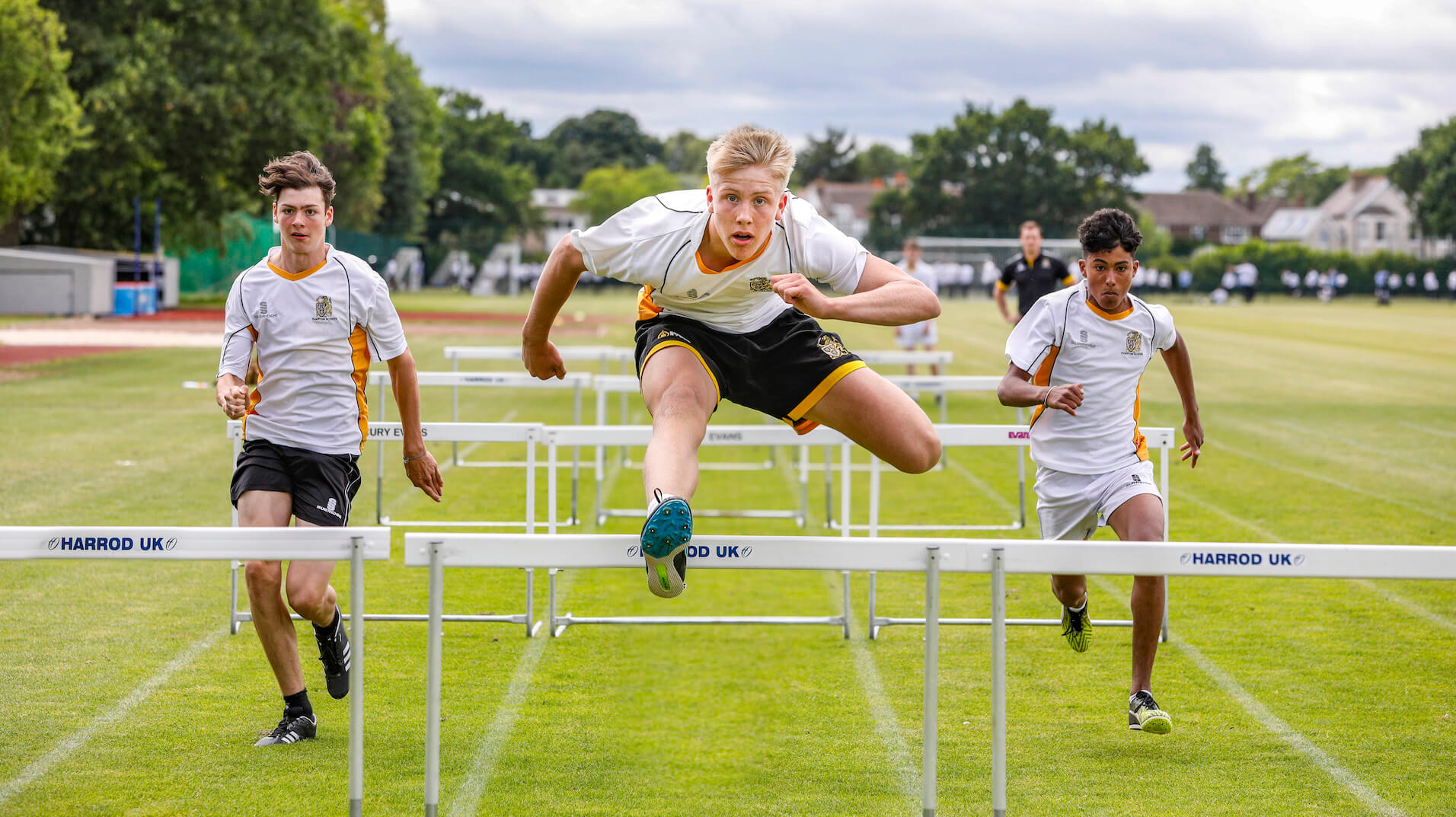
One particularly British school tradition is Sports Day.
Usually held during the warmer months, Sports Day may include running races, relay races, long jump and other competitions. In primary schools, there can also be more playful events such as egg-and-spoon races.
Parents may come to watch, and pupils compete for their class or school house.
Of course, because this is Britain, there is always one possible problem with an outdoor Sports Day: the weather.
School Houses – Not Only at Hogwarts
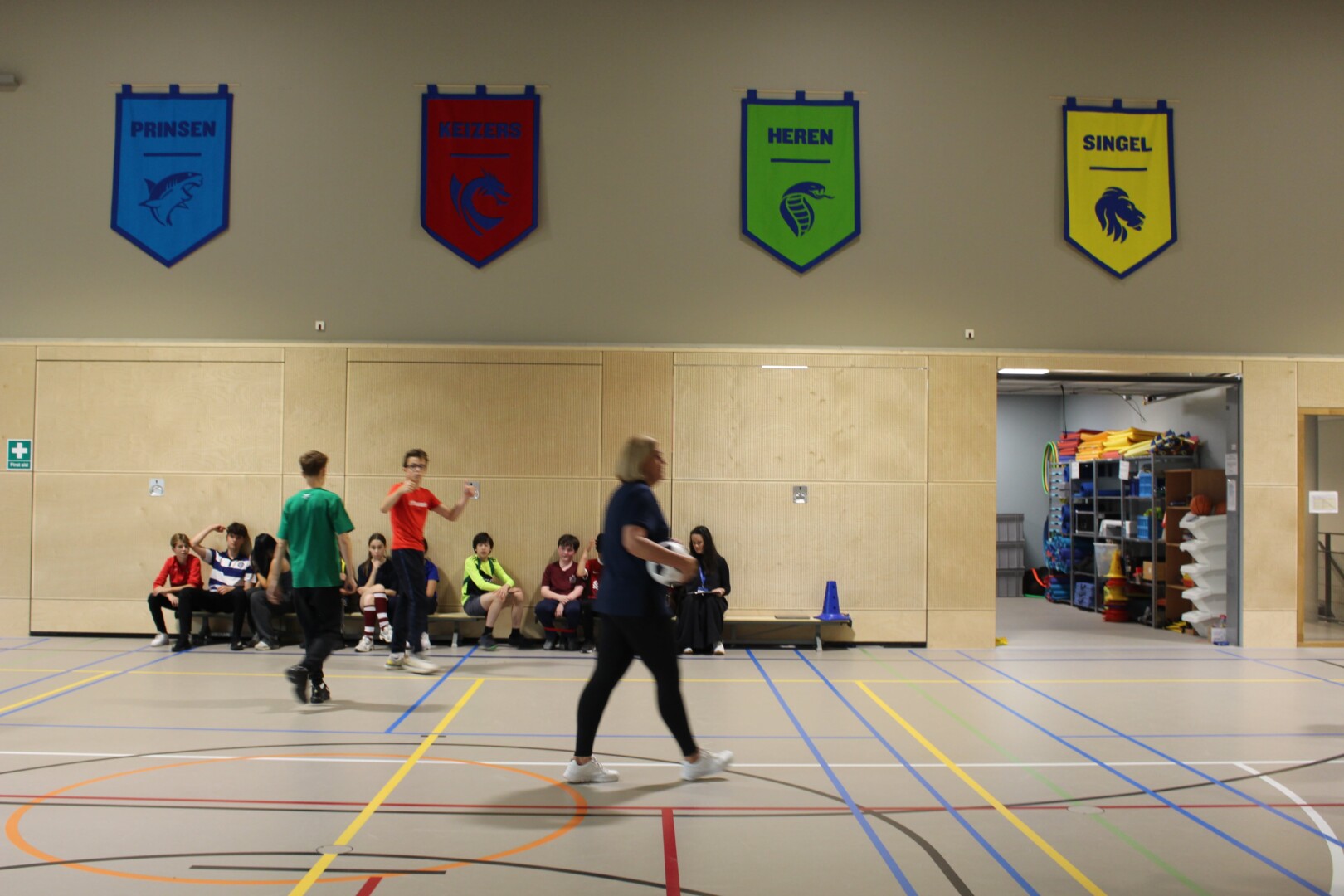
Harry Potter made the idea of school houses famous around the world, but J.K. Rowling did not invent the tradition.
Many British schools really do divide their pupils into different houses.
The houses may be named after famous people, historical figures, local landmarks, colours or important former pupils. Students can win points for their house through good work, sport, competitions or other achievements.
Not every British school uses a house system, and it is generally less dramatic than Gryffindor versus Slytherin. Still, for many pupils, house competitions are a fun part of school life.
Unfortunately, the Sorting Hat is not normally included.
“Sir” and “Miss”
Another small detail can be surprising for foreign visitors.
British pupils may call a male teacher “Sir” and a female teacher “Miss”, especially in secondary schools. They can also use titles such as Mr Smith, Mrs Jones or Miss Brown.
Calling a teacher by their first name is much less common in traditional school settings.
The person in charge of the school is usually called the headteacher or sometimes simply the Head, rather than “principal”, which is more strongly associated with American English.
These little differences in vocabulary are part of what gives British school life its particular character.

GCSEs and the Serious Side of School Life
Of course, school is not only about uniforms, lunch and sports.
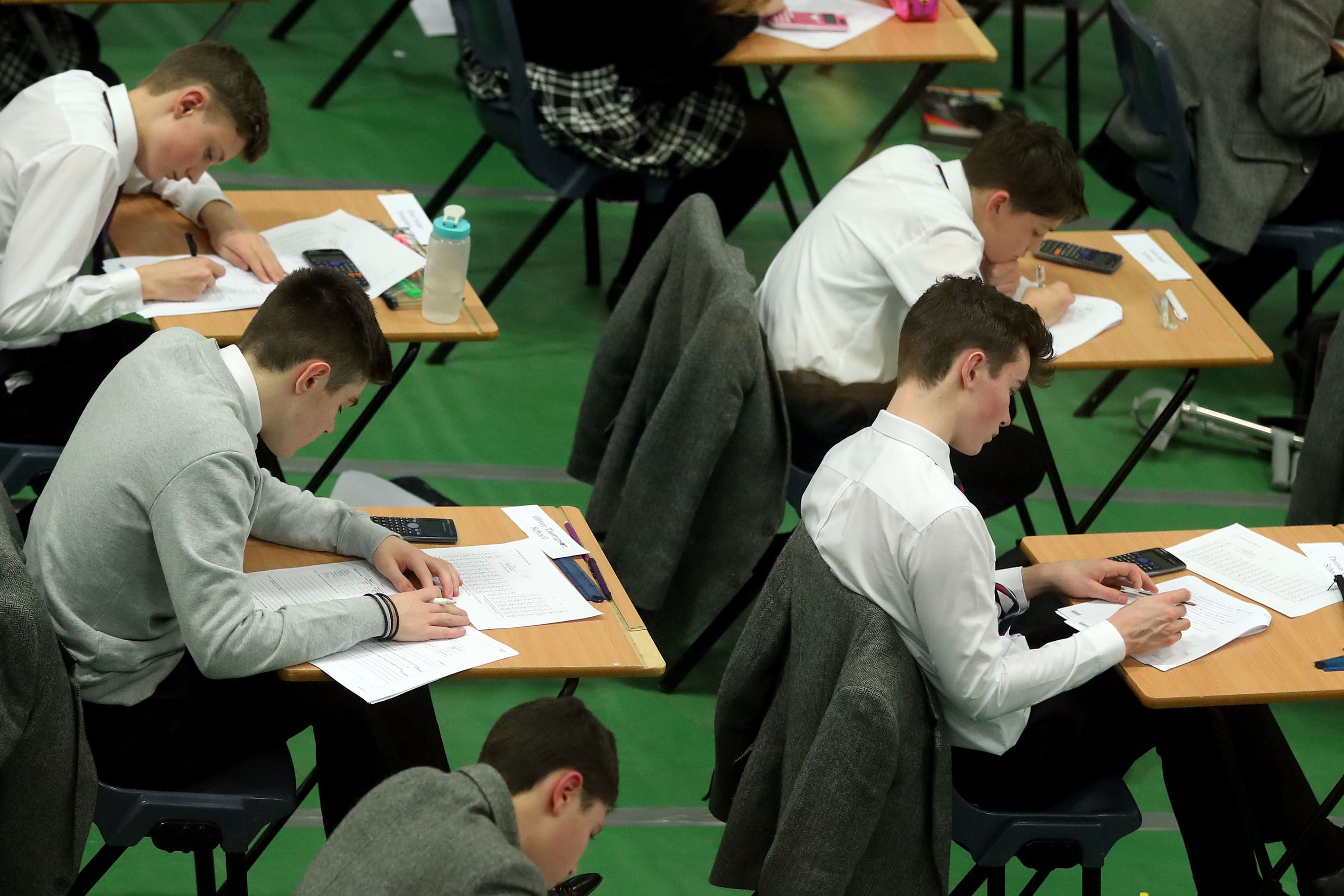
Examinations become especially important towards the end of secondary education.
In England, Wales and Northern Ireland, students usually work towards GCSEs – General Certificates of Secondary Education. They are normally taken around the age of 16.
In England in summer 2026, 16-year-old students took an average of eight GCSEs. Mathematics, English language, English literature and science were among the subjects with the largest numbers of candidates.
Scotland has a different qualification system, which is another reminder that “British education” is not exactly the same everywhere in the United Kingdom.
A Mixture of Tradition and Modern Life
British schools have changed enormously over the years. Classrooms now use digital technology, schools are more culturally diverse, and teaching methods continue to develop.
At the same time, some traditions have survived.
You can still see pupils walking through the school gates in blazers and ties. You can still hear the noise of hundreds of students in a lunch hall. There are still assemblies, football matches, school plays, Sports Days and nervous students waiting for examination results.
So, just like American schools, British schools are not exactly the way we see them in films.
There may be fewer magical staircases than Hogwarts suggests and probably no secret passages behind the headteacher’s office.
 Gergő's English Club