This time, I would like to show you the part of Tallinn that has probably changed the most over the last 15 years. The last time I was here, this area felt like an abandoned, but reborning industrial site. Today, it has become one of the most colourful centres of modern Estonian culture. Telliskivi Creative City is a perfect example of how an old and forgotten part of a city can be given a completely new life without losing its original character.
Telliskivi lies just outside Tallinn’s historic Old Town, close to Balti Jaam railway station and the colourful wooden houses of Kalamaja. At first sight, it could hardly be more different from medieval Tallinn. There are no church towers, narrow cobbled streets or defensive walls here. Instead, you find old factory buildings, huge brick walls, industrial details and colourful street art. And somehow, all of these things work perfectly together.
The industrial history of the area goes back to the 19th century. When the railway connection between Tallinn and St Petersburg opened in 1870, a large railway factory was built nearby. Around 500 people worked there, maintaining railway equipment and rolling stock, making it one of Tallinn’s most important industrial centres at the time. During the following decades, the complex continued to develop and later produced everything from railway equipment to electronic components.
After Estonia regained its independence in 1991, industrial activity gradually disappeared from the area. The factory was eventually moved away from the city centre, and many of its buildings stood empty for years. The transformation that created the Telliskivi we know today began slowly. Development started around 2007, and by 2009 the first long-term cultural organisations had moved in. Instead of demolishing the old buildings and starting again, the people behind the project decided to work with what was already there.
That decision is probably one of the reasons Telliskivi feels so special today.
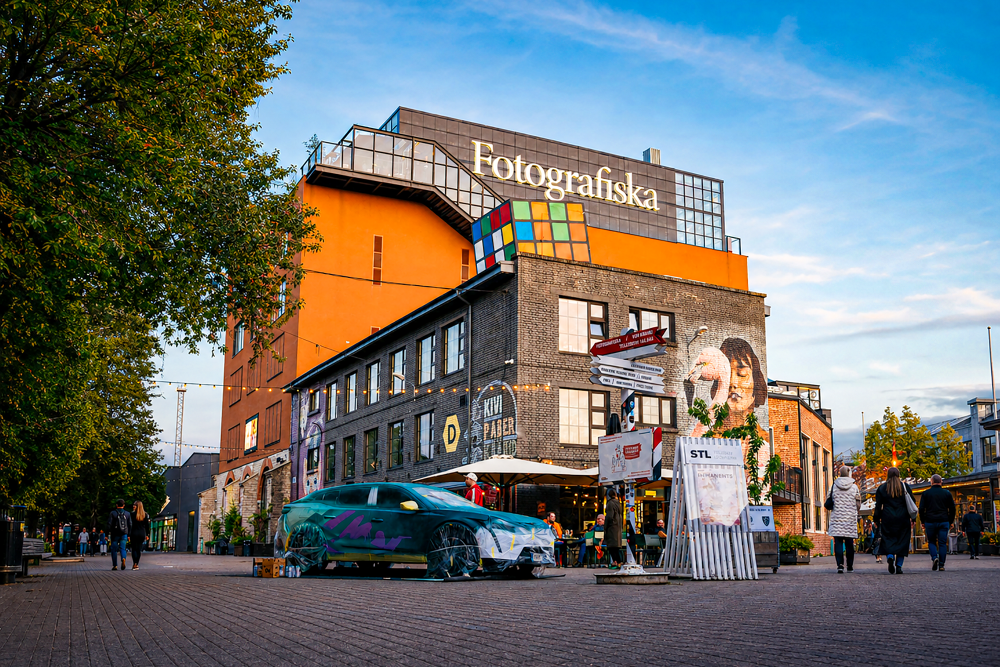
The old industrial atmosphere has not disappeared. You can still see worn brick walls, large factory windows, pipes and other reminders of the area’s past. But these buildings now have completely different purposes. Former factory spaces have become studios, design shops, restaurants, cafés, galleries, theatres and offices for creative companies and start-ups.
One of the first places to help change the area’s image was F-hoone, a restaurant that opened in 2010 in one of the former factory buildings. Even its name keeps a small piece of industrial history alive: the buildings of the old factory were once identified by letters rather than traditional addresses.

But perhaps the most striking part of Telliskivi is outside the buildings.
Almost everywhere you look, there is street art. Huge murals cover the old walls, while smaller works appear in unexpected corners. Some are colourful and playful, others are strange, political or thought-provoking. The artworks make the whole district feel like an open-air gallery, and because the street art keeps changing, you can return later and discover something completely new.
For anyone interested in photography, this makes Telliskivi especially enjoyable. There is an interesting image almost everywhere: old industrial architecture next to modern design, colourful murals against grey concrete, cafés hidden inside former workshops, and people simply enjoying the relaxed atmosphere.

Photography also has a more permanent home here. One of Telliskivi’s best-known cultural attractions is Fotografiska Tallinn, the local branch of the photography centre that was originally founded in Stockholm. Together with theatres, galleries and event spaces, it has helped turn Telliskivi into one of Tallinn’s most important cultural meeting points.
What I enjoyed most, however, was not one particular building or attraction. It was simply the feeling of the neighbourhood.
Telliskivi does not feel like a carefully designed tourist attraction. It feels alive. People come here to have coffee, meet friends, work, visit exhibitions, shop for Estonian design or simply sit outside and enjoy the atmosphere. It is creative without trying too hard to look creative, and modern without completely hiding its past.
For me, returning after 15 years made the contrast even stronger. I could still recognise the industrial character of the area, but almost everything around it had changed. A place that once seemed forgotten has become somewhere people actively want to spend their time.

And perhaps this transformation also says something about Tallinn itself. The city has developed enormously, but instead of simply replacing everything old with something new, it has often found clever ways to bring the two together.
Telliskivi may no longer be the abandoned industrial area I remember, but traces of that old world are still everywhere. They are simply surrounded now by art, music, cafés, photography and new ideas.
 Gergő's English Club