A completely ordinary day can suddenly become unforgettable. Years later, we may still remember exactly where we were, who was with us or what we were doing when we heard an important piece of news. These moments can stay surprisingly clear in our minds, even while countless everyday memories slowly fade away.
People often say things like: “I remember exactly where I was when I heard the news.” They may remember the room, the person standing next to them, what they were doing or even small details that seem completely unimportant.
Psychologists have a name for this phenomenon: flashbulb memory.
A Photograph Taken by the Mind?
The term was introduced by psychologists Roger Brown and James Kulik in 1977. They noticed that people often had unusually vivid memories of the circumstances in which they first heard about an important and shocking public event.
The name “flashbulb” comes from old-fashioned photography. It suggests that the brain somehow takes a mental photograph at an emotionally powerful moment. However, as researchers later discovered, the reality is more complicated.
A flashbulb memory is usually not the memory of the public event itself. Instead, it is the memory of the moment when we first learned about it.
For example, someone may not remember every detail of the September 11 attacks, but they may clearly remember where they were when they first heard that a plane had hit the World Trade Center. They might remember who told them, what they were doing, how they reacted and who they spoke to afterwards.
These kinds of details are typical parts of flashbulb memories.
Why Do Some Moments Become So Powerful?
Emotion clearly plays an important role.
Events that produce shock, fear, sadness, excitement or surprise attract our attention. Our brain understands that something unusual and important is happening. As a result, we may pay much more attention to the situation than we normally would.
But emotion is only part of the story.
Modern research suggests that flashbulb memories are created through a combination of emotional, cognitive and social factors. How important the event feels to us matters, but so does what happens afterwards: how often we think about it, talk about it with other people or see it again in the media.
This may explain why the same event can create a very strong memory for one person but not for another.
A major political event, natural disaster or celebrity death may deeply affect one group of people while having much less emotional importance for another. Research has shown that the personal and social importance of an event can strongly influence whether a flashbulb memory develops.
Flashbulb memories do not even have to be connected to tragedy. Important positive events, such as major sporting victories, can create similar memories.

Vivid Does Not Always Mean Accurate
This is where flashbulb memories become especially fascinating.
We often trust them.
Because the memory feels so clear, we naturally assume that it must also be correct. But psychologists have repeatedly shown that confidence and accuracy are not the same thing.
One famous example comes from the 1986 Challenger space shuttle disaster.
Psychologists Ulric Neisser and Nicole Harsch asked university students shortly after the disaster how they had first heard about it. About two and a half years later, they asked some of the same people again.
Many participants still had extremely vivid memories and were confident that they remembered the moment correctly. However, some of their later stories were very different from what they had originally reported.
In other words, the memory still felt real even when some of its details had changed.
Perhaps the most famous modern research into this effect followed the terrorist attacks of September 11, 2001.
On September 12, researchers Jennifer Talarico and David Rubin asked 54 university students to describe both their memory of hearing about the attacks and a normal everyday event that had recently happened to them. The participants were tested again later.
The result was surprising.
The accuracy and consistency of both types of memories decreased over time. However, something important was different: people’s confidence in their memories of September 11 remained extremely strong. Their ordinary memories felt less reliable with time, while the flashbulb memories continued to feel vivid and trustworthy.
This led the researchers to an important conclusion: what makes flashbulb memories special may not be extraordinary accuracy, but extraordinary confidence.
September 11 and Collective Memory
The attacks of September 11 have become one of the most studied examples of flashbulb memory.
In another large study, more than 3,000 people in seven American cities were asked about their memories of the attacks approximately one week, eleven months and thirty-five months afterwards.
Once again, researchers found that the memories were not perfect. Details changed and some information was forgotten.
Interestingly, people’s memories of their own emotional reactions were particularly unreliable. They were often better at remembering where they were or who told them the news than exactly how frightened, angry or shocked they had originally felt.

The study also showed something else: talking about the event and following media coverage were connected with people’s confidence in their memories.
And this points to an important social side of memory.
After a major event, we rarely keep the experience to ourselves. We talk to family members, friends and colleagues. We watch television reports, read articles, look at photographs and hear other people’s stories.
Every time we return to the memory, we may strengthen parts of it. But we may also slightly reshape it.
The DuckTales Generation – A Hungarian Flashbulb Memory
Hungary has its own unusual example of a shared flashbulb memory, and for many people who grew up in the early 1990s, it is connected to something as innocent as a Disney cartoon.
On Sunday, 12 December 1993, thousands of Hungarian children were watching the popular afternoon programme Walt Disney bemutatja on Hungarian Television. One of the cartoons being shown was an episode of DuckTales, known in Hungary as Kacsamesék.
Then, without warning, the programme was interrupted.
The screen changed, funeral music was played, and instead of returning to Scrooge McDuck and his adventures, viewers were given serious news. Péter Boross, Hungary’s interior minister at the time, announced that Prime Minister József Antall had died.
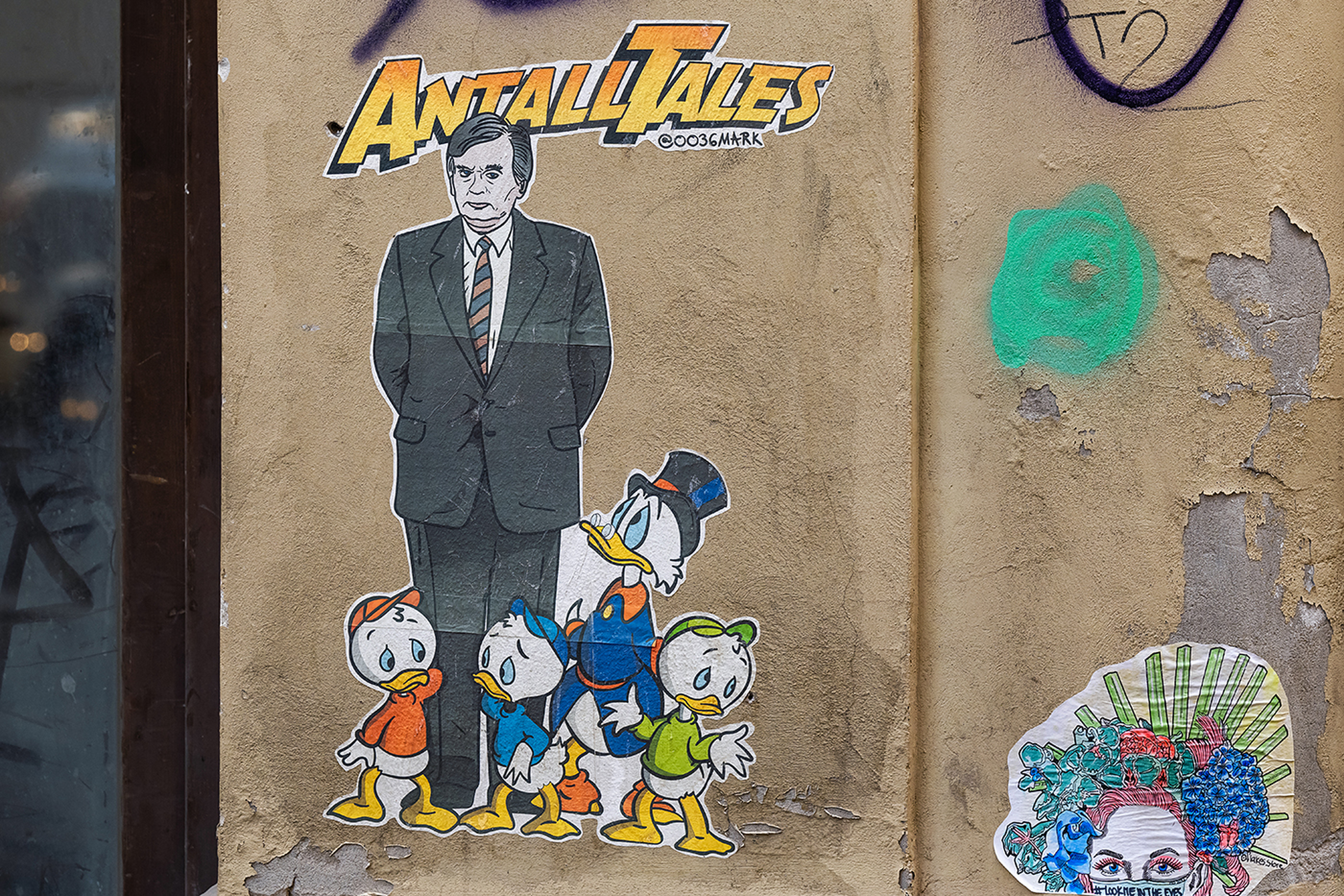
Antall was the first freely elected prime minister of Hungary after the fall of communism. His death was therefore an important political event. But for many children watching television that afternoon, politics was probably the last thing on their minds.
The contrast could hardly have been stronger: one moment they were watching a colourful Disney cartoon, and a few minutes later they were faced with funeral music, serious-looking adults and the announcement of a death.
For many members of this generation, the moment stayed with them for decades. Adults later described remembering where they were sitting, who was watching television with them and even which part of DuckTales was playing when the programme suddenly disappeared.
This is why the event has often been described in Hungary as a generational flashbulb memory.
Interestingly, the most important event for the children was not necessarily the death of the prime minister itself. Many of them were too young to understand who Antall was or why his death was historically important. What they remembered was the sudden interruption of something familiar and safe.
The story is a particularly good example of how flashbulb memories work. An event does not always have to be personally connected to us. A sudden emotional change, surprise and an unusual situation can be enough to create a memory that stays unusually vivid.
Decades later, the event is still so well known in Hungary that people who experienced it are sometimes informally called the “Kacsamesék generation” – the DuckTales generation.
Memory Is Not a Video Recording
This may sound surprising, but our memories do not work like files stored on a computer.
Remembering is an active process.
When we recall an event, our brain reconstructs it from pieces of information. Most of the time, this system works remarkably well, but it also means that memories can slowly change.
Later information can become mixed with what we originally experienced. A television image, another person’s story or something we learned years later can sometimes become part of the memory itself.
That does not mean that a flashbulb memory is “false”. Much of it may be perfectly correct. The important point is that the feeling of certainty is not proof that every detail is accurate.
Research on emotional autobiographical memory consistently shows that emotional memories can remain extremely vivid while their details become less consistent over time.
Why Do Flashbulb Memories Matter?
Flashbulb memories are interesting because they sit somewhere between individual experience and history.
A major historical event may be shared by millions of people, but everyone experiences the news from a different place.
History tells us what happened.
Flashbulb memory tells us where we were when history reached us.
That difference makes these memories deeply personal. The assassination of John F. Kennedy, the Challenger disaster, the death of József Antall and the September 11 attacks have all created memories that connect public history with private moments.
People remember not only the event itself, but also the ordinary room, street, classroom or workplace where they first heard about it.
They become small personal stories attached to much larger historical ones.
Perhaps that is the most interesting thing about flashbulb memories. They show how closely memory, emotion and identity are connected. A world-changing event can suddenly enter an ordinary day, and decades later we may still feel as if we can return to that exact moment.
But psychology also gives us a useful warning.
The picture in our mind may be incredibly bright.
That does not necessarily mean that every detail in the picture is exactly the same as it was when the flash first went off.
 Gergő's English Club