Forty years, millions of spectators, unforgettable music and one mysterious man hiding beneath the Paris Opera House. As Andrew Lloyd Webber’s legendary musical celebrates its 40th anniversary in 2026, we look back at the story that changed musical theatre forever.
There is a moment in The Phantom of the Opera that audiences never seem to forget. The lights change, the famous chandelier begins to move, and Andrew Lloyd Webber’s powerful organ music fills the theatre. Even people who have never seen the musical can probably recognise its opening notes. It is difficult to believe that this extraordinary production is now forty years old. On 9 October 1986, the curtain rose on The Phantom of the Opera at Her Majesty’s Theatre in London. Nobody could have known that the mysterious masked character would still be performing on the very same stage four decades later. Yet here we are in October 2026, celebrating one of the greatest success stories in musical theatre history.
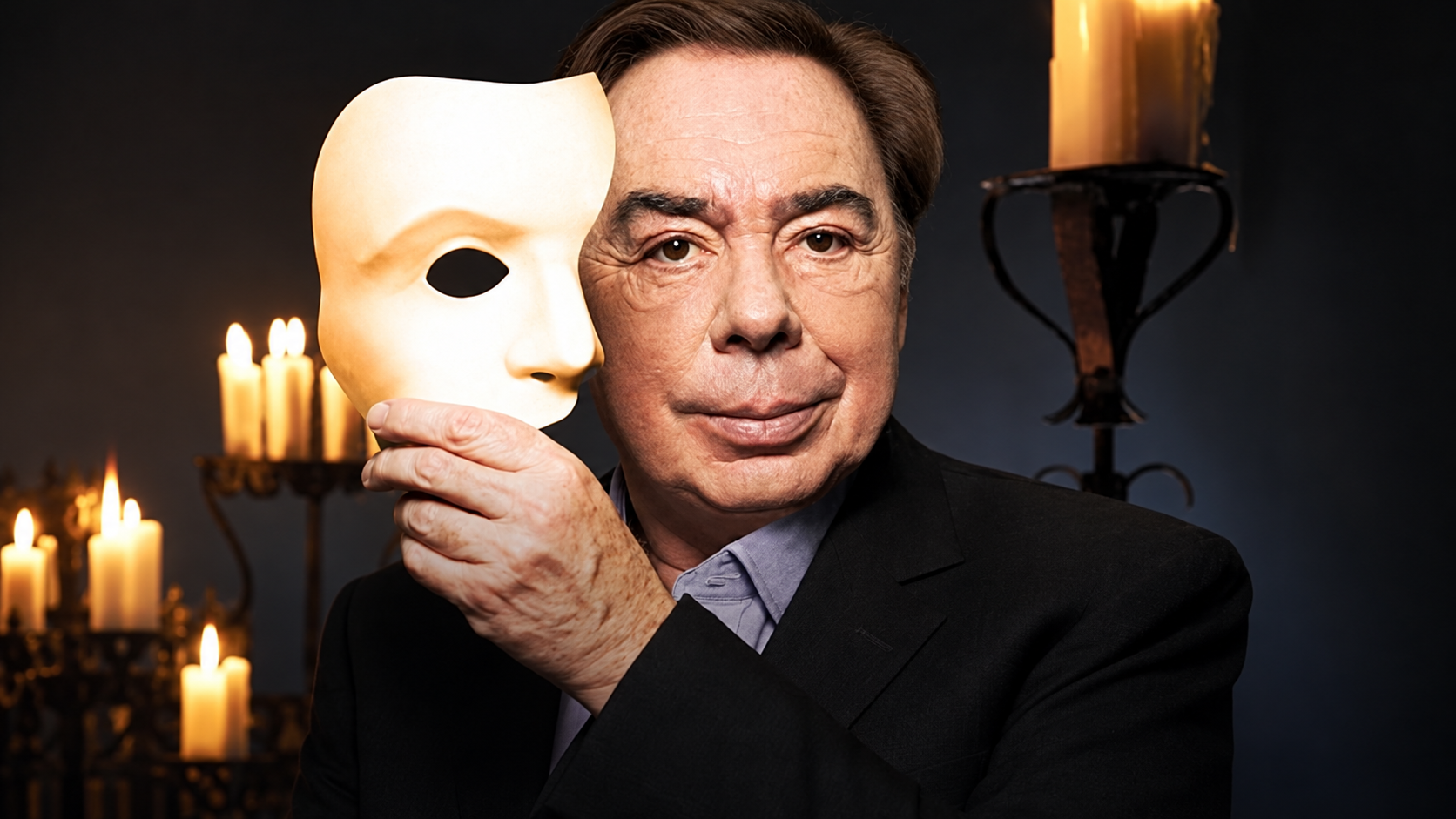
From a French Novel to a West End Legend
The story of The Phantom of the Opera did not begin with Andrew Lloyd Webber. Its origins go back to 1910, when French writer Gaston Leroux published his Gothic novel of the same name. The book tells the story of a mysterious and disfigured musical genius who lives beneath the Paris Opera House. Hidden from society, he develops an obsession with a talented young singer named Christine Daaé.
Over the years, Leroux’s novel inspired several film and theatre adaptations, including the famous 1925 silent horror film starring Lon Chaney. However, it was Andrew Lloyd Webber who transformed the story into the romantic musical that millions of people know today.
In the mid-1980s, Lloyd Webber began developing his own version with producer Cameron Mackintosh. They wanted to create something different from a traditional horror story. Although the Phantom could be frightening, they were equally interested in his loneliness, his love of music and his desperate wish to be accepted.
The production brought together an impressive creative team. Harold Prince directed the show, Gillian Lynne created the choreography, while Maria Björnson designed the extraordinary scenery and costumes. Charles Hart wrote most of the lyrics, with additional contributions from Richard Stilgoe.
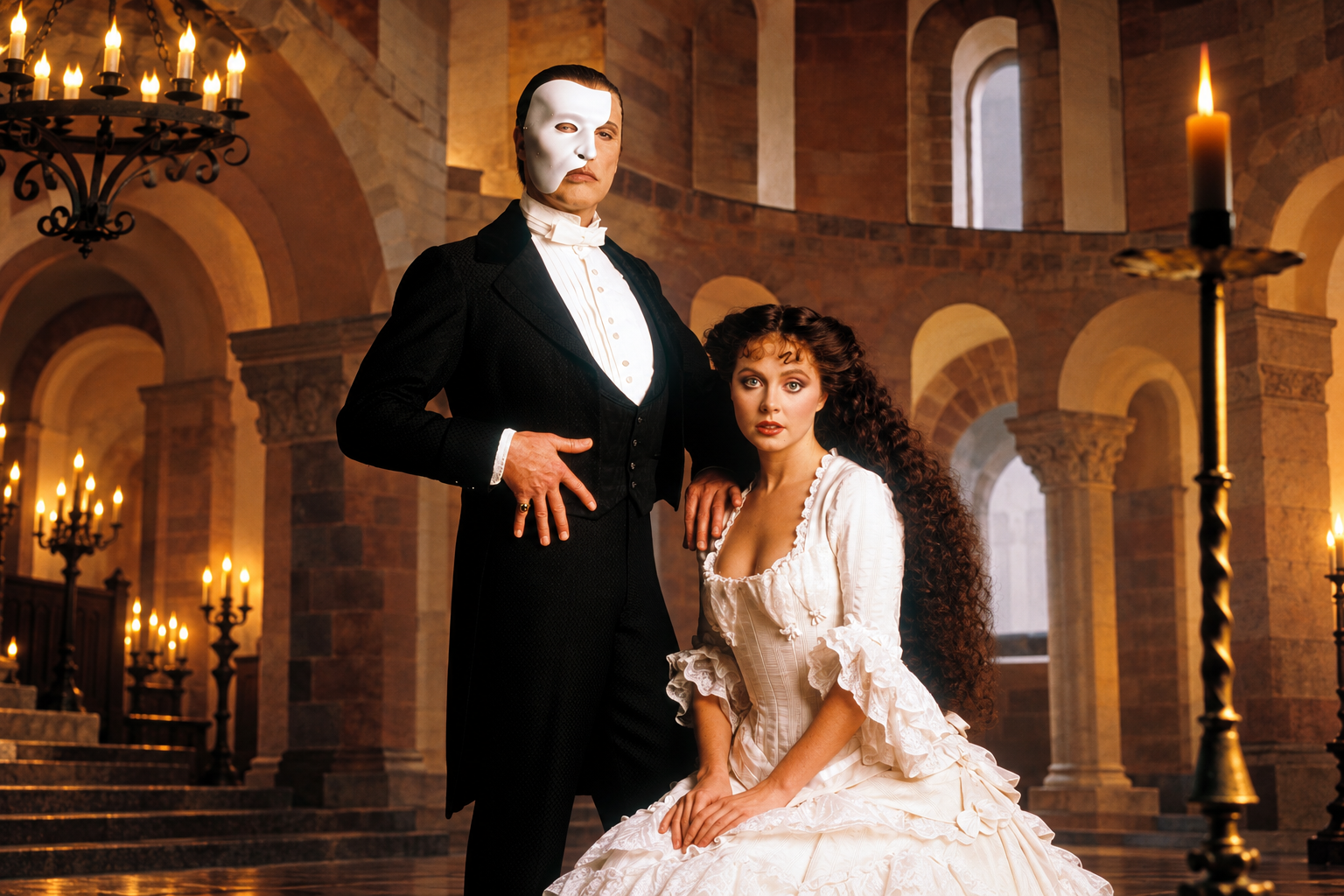
When the musical officially opened on 9 October 1986, Michael Crawford played the Phantom, Sarah Brightman appeared as Christine Daaé, and Steve Barton took the role of Raoul. Their performances helped establish the characters that future generations of actors would interpret in their own ways.
Interestingly, the original reviews were not all enthusiastic. Some critics questioned the enormous production and its dramatic style. Audiences, however, had a very different opinion. They fell in love with the music, the atmosphere and the tragic story of the man behind the mask.
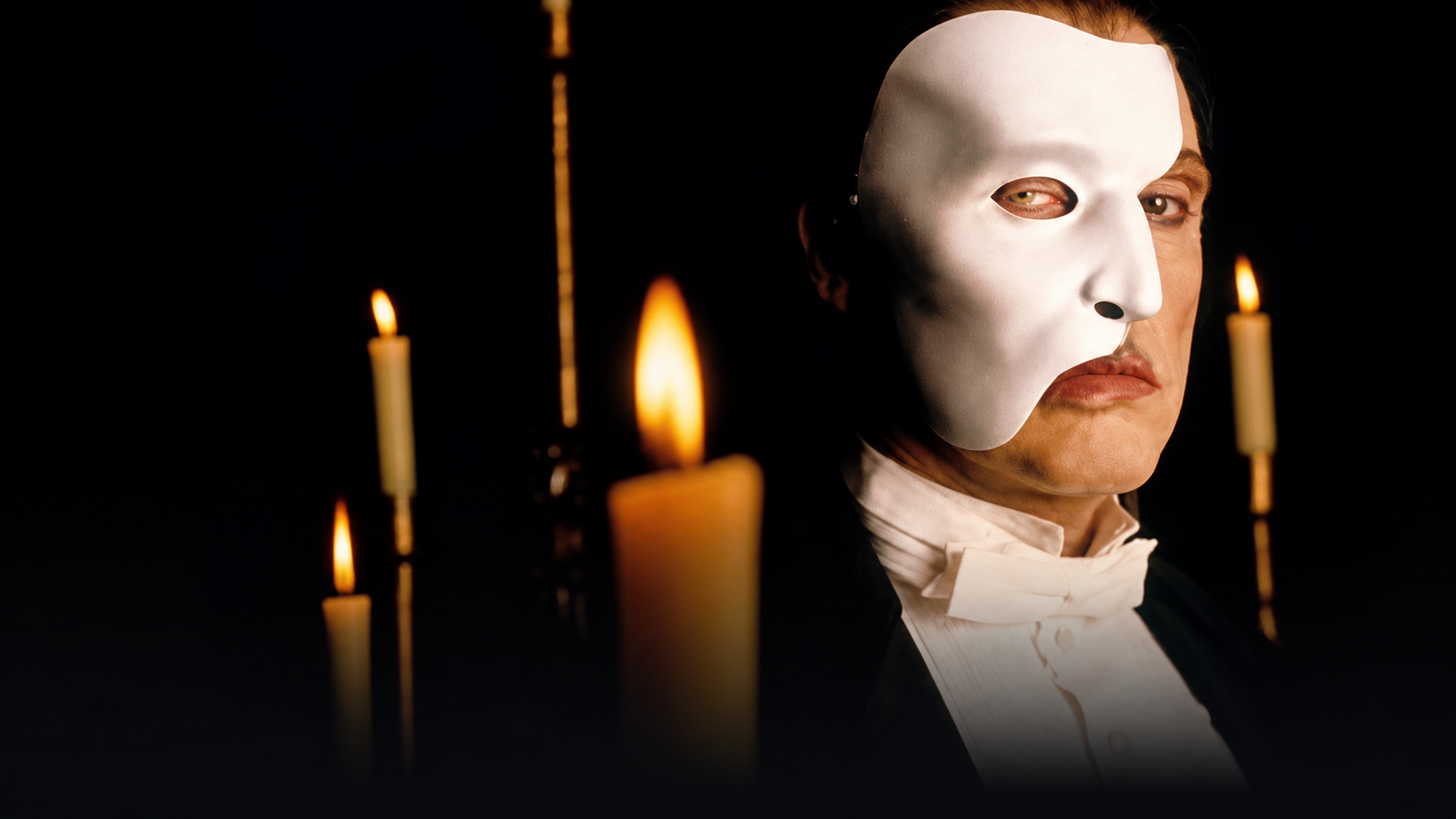
A Love Story That Is Not Really a Love Story
At the centre of the musical is Christine Daaé, a young singer working at the Paris Opera House. She believes that a mysterious voice, which she calls the Angel of Music, has been helping her develop her extraordinary singing talent.
The voice belongs to the Phantom, a brilliant but deeply troubled man who secretly lives beneath the building. He teaches Christine, protects her career and gradually becomes obsessed with her.
Things become more complicated when Christine meets Raoul, her childhood sweetheart. The two young people fall in love, leaving Christine caught between the man who offers her a normal future and the mysterious figure who has become such an important part of her musical life.
What makes the story fascinating is that the Phantom is neither a traditional hero nor a simple villain. He is lonely, intelligent and capable of creating beautiful music, but he is also dangerous, controlling and sometimes violent.
We may feel sorry for him without agreeing with his actions. His behaviour raises an uncomfortable question: can someone truly love another person while trying to control their life?
Perhaps this emotional conflict is one of the reasons why the musical continues to attract audiences. Beneath its spectacular costumes and romantic songs, The Phantom of the Opera explores rejection, jealousy, beauty, loneliness and our need to be loved.
The Music That Made the Phantom Immortal
It would be impossible to discuss the musical’s success without talking about its extraordinary soundtrack. Andrew Lloyd Webber created a score that combines romantic melodies, classical influences and the powerful sounds of 1980s musical theatre.
Songs such as The Music of the Night, Think of Me, All I Ask of You and Wishing You Were Somehow Here Again have become classics.
Each of them reveals something different about the characters. Think of Me introduces Christine as a remarkable singer, while All I Ask of You expresses the tenderness and security she finds with Raoul. The Music of the Night, meanwhile, takes listeners into the Phantom’s mysterious world, where beauty and danger seem to exist together.
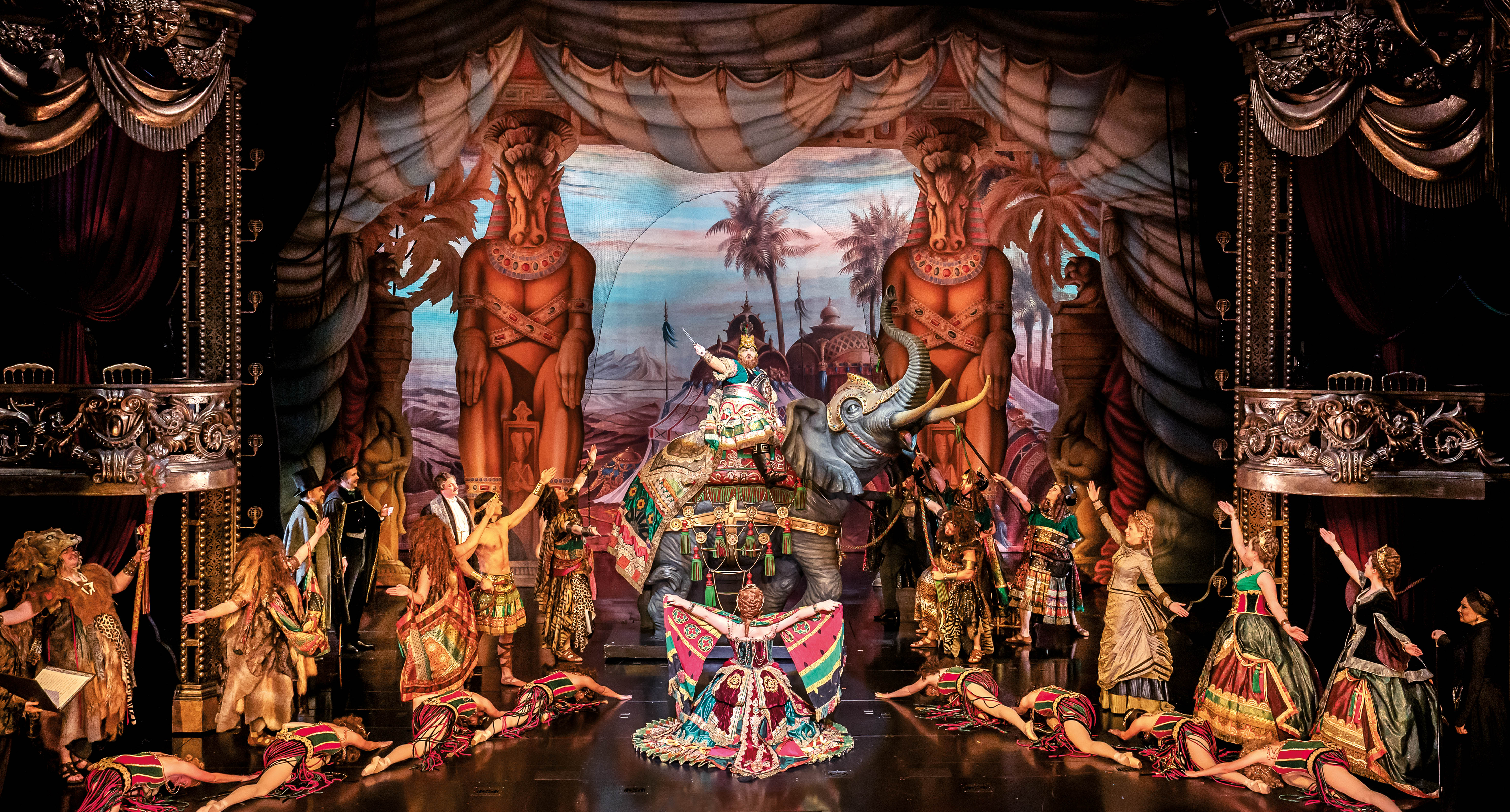
And then there is Masquerade, one of the production’s most spectacular moments, bringing together colourful costumes, impressive choreography and an unforgettable melody.
The music also plays an important role in the show’s atmosphere. From its dramatic opening to its emotional finale, the score helps the audience understand feelings that the characters cannot always express in words.
In many ways, the musical’s greatest achievement is that its songs have become famous far beyond the theatre. Even people who have never watched the complete production may recognise several of its melodies.
Forty Years of Extraordinary Success
After its London premiere, The Phantom of the Opera quickly became an international phenomenon.
The musical opened on Broadway at the Majestic Theatre in New York on 26 January 1988, again starring Michael Crawford and Sarah Brightman. It went on to win seven Tony Awards, including Best Musical.
Over the following decades, productions appeared around the world, introducing the Phantom to audiences from different countries and cultures.
By its 40th anniversary in 2026, the musical had been seen by approximately 160 million people, performed in more than 200 cities and presented in 23 languages.
Its Broadway production eventually closed on 16 April 2023, after 35 years and 13,981 performances. At the time, it was the longest-running show in Broadway history.
London’s production, however, has remained at its original home throughout its forty-year history, apart from temporary closures, including the interruption caused by the COVID-19 pandemic.
Even the theatre’s name has changed. What was once Her Majesty’s Theatre is now His Majesty’s Theatre, following the accession of King Charles III.
The musical has survived changes in fashion, technology and audience expectations. New musicals have arrived, popular productions have disappeared, and generations of performers have come and gone. But the Phantom has remained.
2026: A Very Special Birthday for the Phantom
The 40th anniversary is much more than an opportunity to look back at the musical’s history. It is also being celebrated with several special events.
On Friday, 9 October 2026, exactly forty years after its original London premiere, His Majesty’s Theatre will host a special anniversary gala performance.
For this occasion, an international cast has been assembled. Broadway star Jordan Donica takes the role of the Phantom, with Beatrice Penny-Touré playing Christine Daaé and Rhys Whitfield appearing as Raoul.
Another exciting addition is Sierra Boggess, one of the most familiar names in the musical’s history. After famously playing Christine in the 25th anniversary production at London’s Royal Albert Hall in 2011, she returns to the world of the Phantom in a different role: the opera diva Carlotta Giudicelli.
The gala will also bring together former cast members from productions around the world. They will join the anniversary company for a special curtain call, celebrating the performers who have helped keep the show alive over the past four decades.
There is also a charitable purpose behind the celebration. Proceeds from gala ticket sales will be matched by the Andrew Lloyd Webber Foundation and the Mackintosh Foundation to establish a new scholarship programme. The aim is to support talented young people who might otherwise struggle to afford professional training in music and the performing arts.
It is a fitting way to celebrate a musical built around the extraordinary power of musical talent.
A New Recording and a Return to the Cinema
One of the most interesting anniversary projects is a new version of the original London cast recording.
Andrew Lloyd Webber has returned to the original analogue master tapes from 1986 and prepared a newly remixed and remastered edition of the soundtrack.
Entitled The Phantom of the Opera (The Andrew Lloyd Webber 2026 Mix), it is scheduled for digital release on 9 October 2026, with CD and vinyl editions following in November.
The new release includes previously unavailable musical sections and rare recordings from Lloyd Webber’s personal archive. For long-time admirers, it offers an opportunity to hear familiar performances in a new way, while discovering parts of the musical’s creative history that were previously unknown.
There is even more exciting news for cinema audiences.
On 7 October 2026, the musical’s producers announced that the anniversary production would be filmed live at His Majesty’s Theatre and released internationally in cinemas in 2027.
This will be the first time the musical has been professionally filmed for such a release at its original London home. Unlike a traditional film adaptation, the recording will allow audiences to experience the actual stage production, including its famous scenery, choreography and theatrical effects.
It will also preserve the special 40th anniversary gala for future generations.
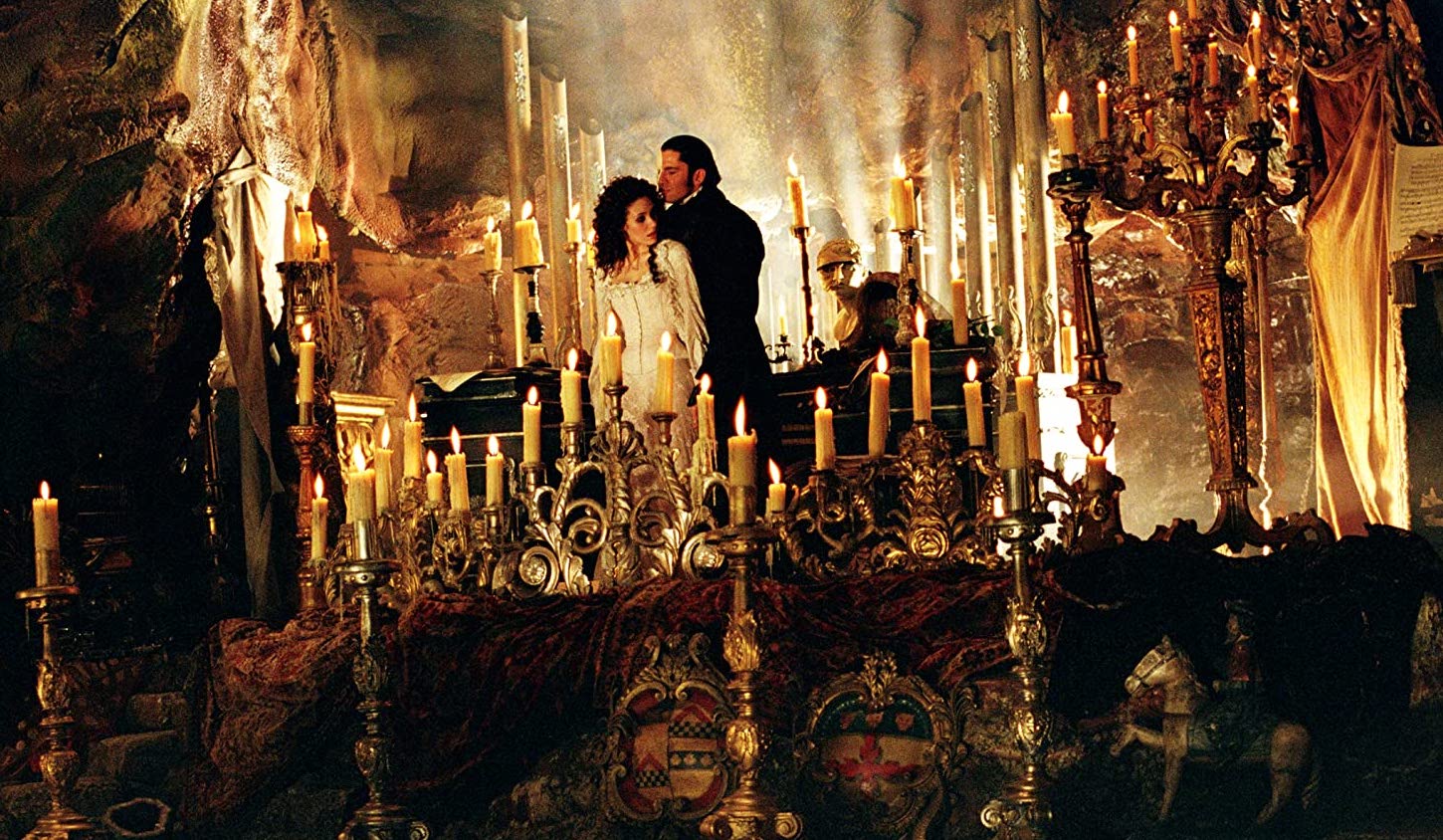
The Phantom on the Big Screen: The 2004 Film
Although The Phantom of the Opera became famous as a stage musical, its story also reached a new generation through the 2004 film adaptation.
Directed by Joel Schumacher and produced in collaboration with Andrew Lloyd Webber, the film brought the musical’s elaborate world to cinemas.
Gerard Butler played the Phantom, Emmy Rossum appeared as Christine, and Patrick Wilson took the role of Raoul. The supporting cast included Minnie Driver as Carlotta and Miranda Richardson as Madame Giry.
The film followed the basic story of the stage production but used the possibilities of cinema to explore the Paris Opera House in greater detail. Audiences could see its enormous corridors, dressing rooms, impressive staircases and the mysterious underground world where the Phantom lived.
The film also allowed viewers to get closer to the characters. Facial expressions, small gestures and intimate scenes sometimes communicated emotions differently from the stage.
Nevertheless, the adaptation divided opinion. Some viewers admired its beautiful scenery, costumes and romantic atmosphere, while others felt that it could not reproduce the vocal power and emotional intensity of the original theatrical performances.
Gerard Butler’s interpretation of the Phantom was particularly different from Michael Crawford’s. His voice was rougher and less traditionally theatrical, giving the character a more physical and sometimes more aggressive presence.
Despite the mixed response, the film found its own audience and received three Academy Award nominations, including one for the original song Learn to Be Lonely.
For many younger viewers, the 2004 film became their first introduction to Andrew Lloyd Webber’s musical. It also made the story more accessible to people who were unable to travel to London or New York to see the stage production.
More than twenty years later, it remains an important part of the Phantom’s history.
Love Never Dies: What Happened After the Final Curtain?
For many years, the ending of The Phantom of the Opera seemed to be the end of the story. However, Andrew Lloyd Webber eventually decided to explore what might have happened to the characters afterwards.
The result was Love Never Dies, a sequel musical that premiered at London’s Adelphi Theatre on 9 March 2010.
The story takes place approximately ten years after the events of the original production. The Phantom has left Paris and started a new life in New York, where he becomes involved in the entertainment world of Coney Island.
Although he has built a new life, he has never forgotten Christine.
When he discovers that she is travelling to America with her husband Raoul and their young son Gustave, he arranges for her to perform again. Their reunion brings back old feelings and reveals secrets that have remained hidden for years.
Musically, Love Never Dies follows a similar romantic style to the original. Songs such as Till I Hear You Sing and the title number, Love Never Dies, demonstrate Lloyd Webber’s talent for writing emotional melodies.
However, the sequel has always been more controversial than its predecessor.
Some fans welcomed the opportunity to return to the Phantom’s world, while others felt that the new storyline changed the characters too much and weakened the powerful ending of the original musical.
Critics also questioned certain developments in the plot, although many praised the music and the visual design.
The production was later revised, most notably in Australia, where a new staging received a warmer response. That version was filmed, allowing international audiences to discover the sequel.
Interestingly, Love Never Dies is also part of the 2026 anniversary celebrations.
A special concert production will take place at the London Palladium from 16 to 18 October, featuring Jamie Muscato as the Phantom and Celinde Schoenmaker as Christine.
It is an opportunity to revisit a musical that has remained both fascinating and divisive since its premiere.
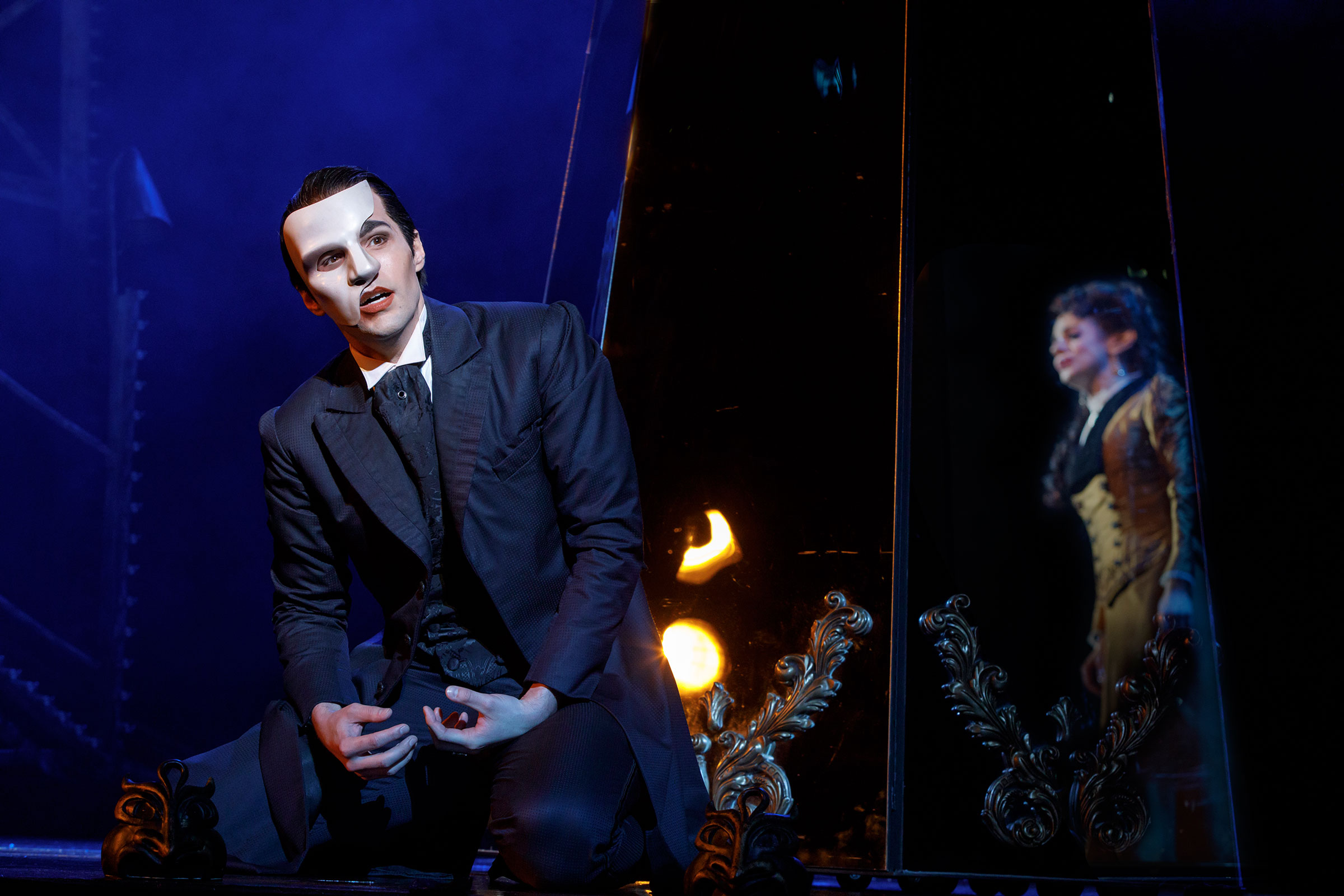
Why Does the Phantom Still Matter After Forty Years?
There are very few musicals that can remain popular for four decades. Even fewer manage to become such an important part of international popular culture.
The secret of The Phantom of the Opera is probably not just its beautiful music or impressive scenery. It is the emotional connection audiences develop with its characters.
Most of us will never live beneath an opera house or hide our faces behind a white mask. However, feelings such as loneliness, jealousy, insecurity and the desire to be loved are familiar to almost everyone.
The Phantom’s story also reminds us that appearances can be misleading. He is rejected because of his physical appearance, but his actions show that suffering does not automatically make someone innocent. The audience is invited to understand him without forgetting the harm he causes.
Christine, meanwhile, must learn to find her own voice, not only as a singer but also as a person who has the right to choose her future.
These themes are just as relevant today as they were in 1986.
The musical has also introduced countless people to the world of theatre. Some discovered it through the original cast recording, others through the 2004 film, the 2011 anniversary production or performances in their own countries.
For others, the first experience may still be waiting.
Forty years after Michael Crawford first appeared beneath the famous white mask, new actors continue to bring the Phantom to life. New audiences continue to discover Christine’s story, and Andrew Lloyd Webber’s melodies continue to fill theatres around the world.
The anniversary is therefore not simply about celebrating the past. It is about recognising how one musical has connected generations of people through music, theatre and storytelling.
And perhaps that is the most remarkable part of the Phantom’s story. Forty years later, we know his secrets, we know his songs, and we know what happens when the chandelier begins to fall.

