There is a scene in The Wizard of Oz where the Wicked Witch of the West disappears in a cloud of smoke and fire. It lasts only a few seconds, and most viewers probably never think twice about it. However, during the filming of this scene, actress Margaret Hamilton suffered serious burns that kept her away from work for weeks. And hers was far from the only accident on the set.
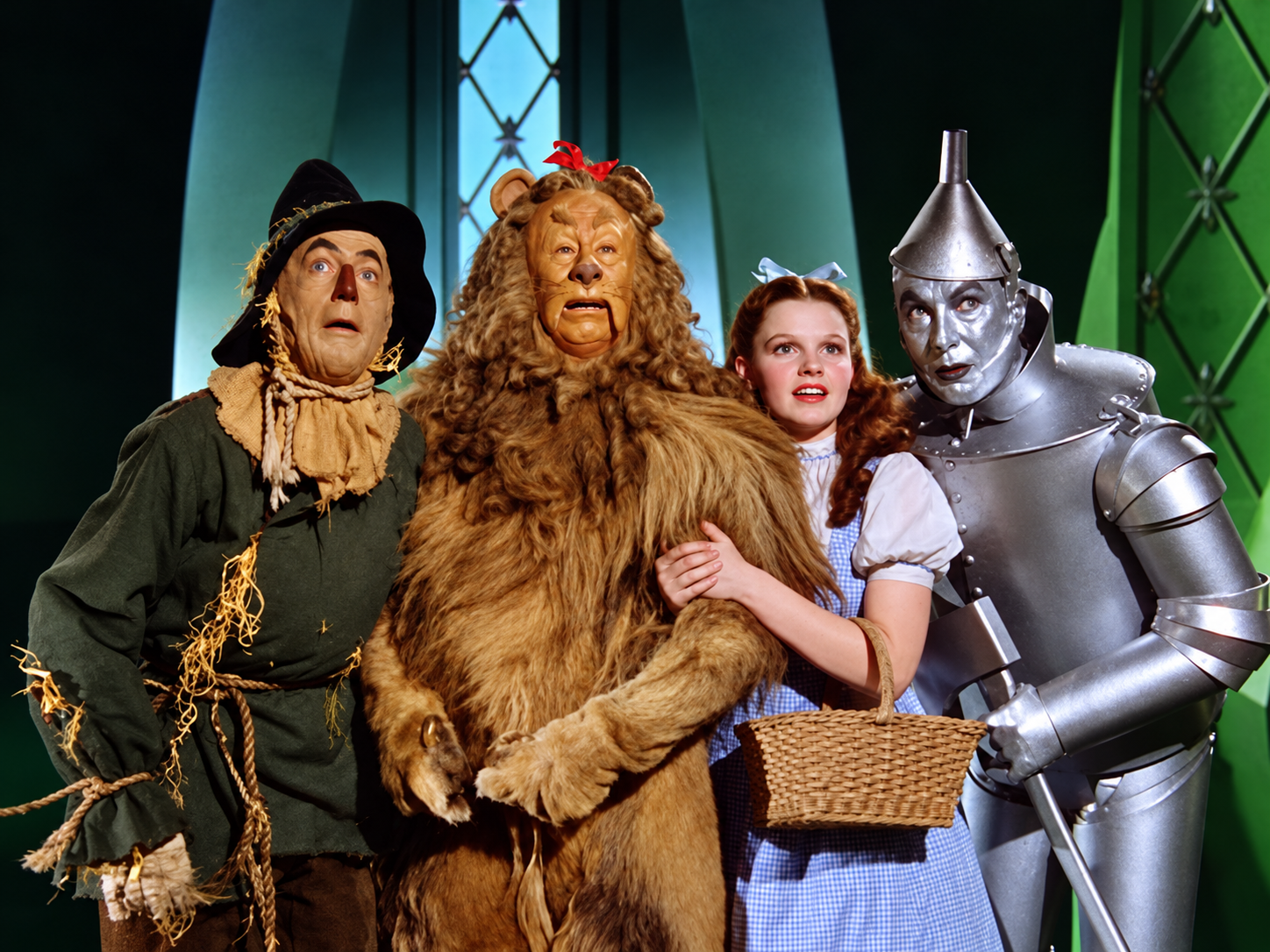
Released in 1939, The Wizard of Oz became one of the most beloved films in cinema history. Its colourful world, unforgettable characters and beautiful songs have entertained generations of viewers. Based on L. Frank Baum’s famous children’s novel, the film follows Dorothy Gale, a young girl who is carried away by a tornado to the magical Land of Oz. Along the Yellow Brick Road, she meets the Scarecrow, the Tin Man and the Cowardly Lion, and together they search for the mysterious Wizard.
It sounds like the perfect family adventure. Behind the cameras, however, things were sometimes frighteningly different. Dangerous special effects, uncomfortable costumes, serious injuries and the difficult treatment of young actors were all part of the production. Over the decades, these events have also inspired some disturbing urban legends.
So what really happened during the making of The Wizard of Oz?
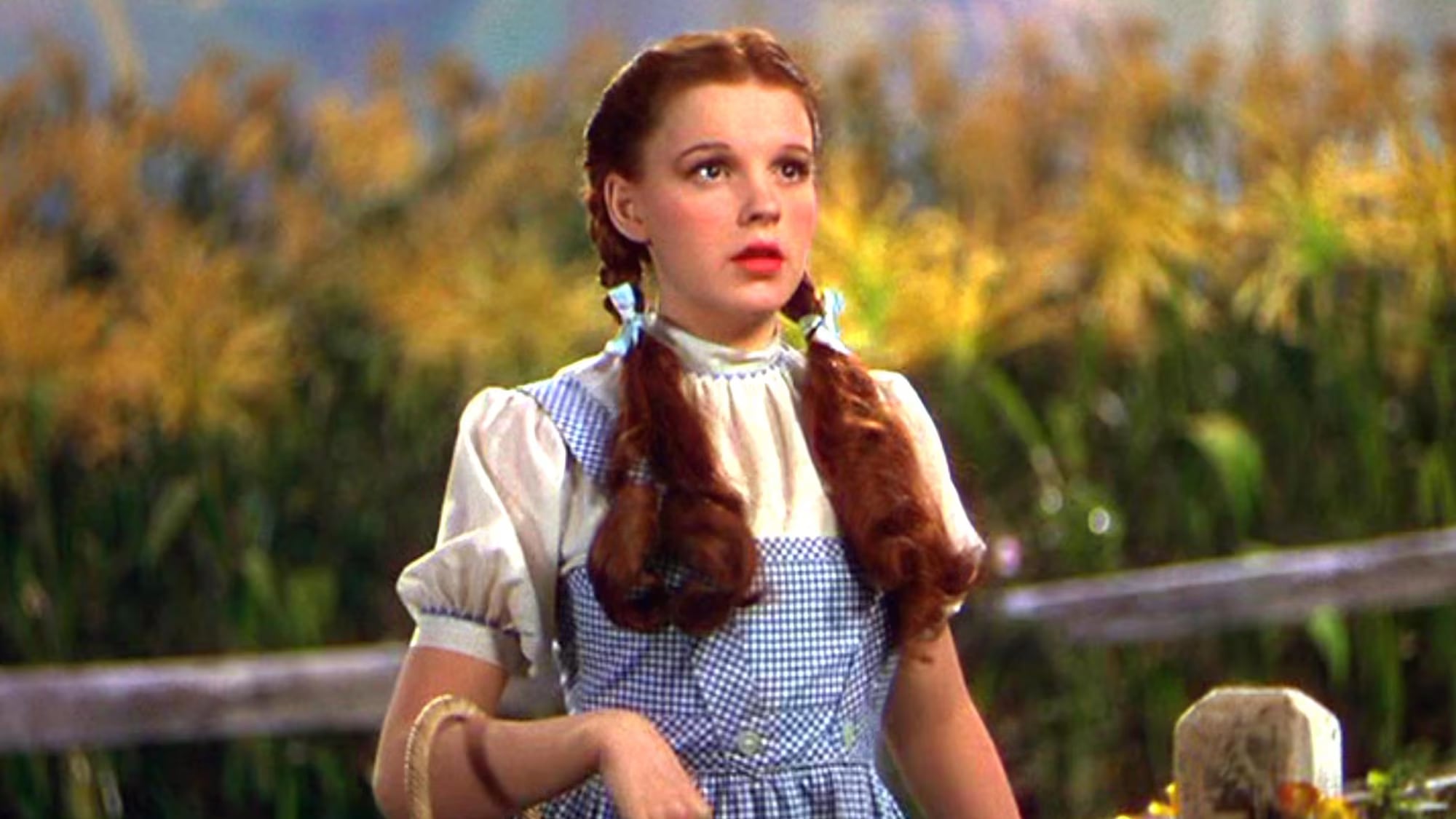
Judy Garland – A Young Star Under Pressure
Judy Garland was just 16 years old when filming began in 1938. Although Dorothy became her most famous role, the young actress was already experiencing the darker side of Hollywood.
At the time, MGM was one of the most powerful film studios in the world. Actors worked under strict contracts, and studio executives had enormous control over their careers, appearances and personal lives.
Garland’s appearance was a particular concern for MGM. Studio executives frequently criticised her weight and placed her on strict diets. According to several biographies, her meals were carefully controlled, and she was encouraged to take pills that reduced her appetite and helped her work long hours.
Garland later described how young performers were given stimulating medication to keep them awake and sleeping pills when they needed to rest. These practices contributed to the health problems and addiction that troubled her throughout her adult life.
There were also efforts to make her look younger. Her costume and hairstyle were carefully chosen to present Dorothy as an innocent Kansas schoolgirl. Interestingly, early photographs show Garland wearing a blonde wig and much heavier makeup. This look was eventually abandoned in favour of the familiar brown hair and blue-and-white dress.
For audiences, Dorothy represented childhood innocence. For the teenager playing her, Hollywood was already becoming a difficult place.
The Tin Man Who Almost Died
One of the most frightening incidents involved an actor who never appeared in the finished film.
Originally, the Tin Man was played by Buddy Ebsen, who would later become famous for his television work. To give his character a metallic appearance, makeup artists covered his face with a silver-coloured powder containing aluminium.
Unfortunately, Ebsen repeatedly breathed in tiny particles of the substance while his makeup was being applied. After several days of filming, he became seriously ill and had difficulty breathing.
His condition was so severe that he had to be hospitalised. The doctors discovered that the aluminium dust had badly affected his lungs.
Ebsen eventually recovered, but he was unable to continue working on the film. MGM replaced him with Jack Haley, whose makeup was applied differently to reduce the danger of breathing in the powder.
The strange thing is that millions of people have watched The Wizard of Oz without ever knowing that another actor almost lost his life playing the Tin Man.
The Wicked Witch’s Terrifying Accident
Margaret Hamilton’s performance as the Wicked Witch of the West remains one of the most memorable in film history. Her green face, sharp voice and frightening laugh made her a nightmare for generations of children.
However, the actress herself had a terrifying experience while bringing the character to life.
During the scene in which the Witch disappears from Munchkinland, Hamilton was supposed to stand on a platform that lowered her through the floor. Flames and smoke would then appear around her.
Unfortunately, the fire effect started too early, and Hamilton suffered serious burns to her face and hands.
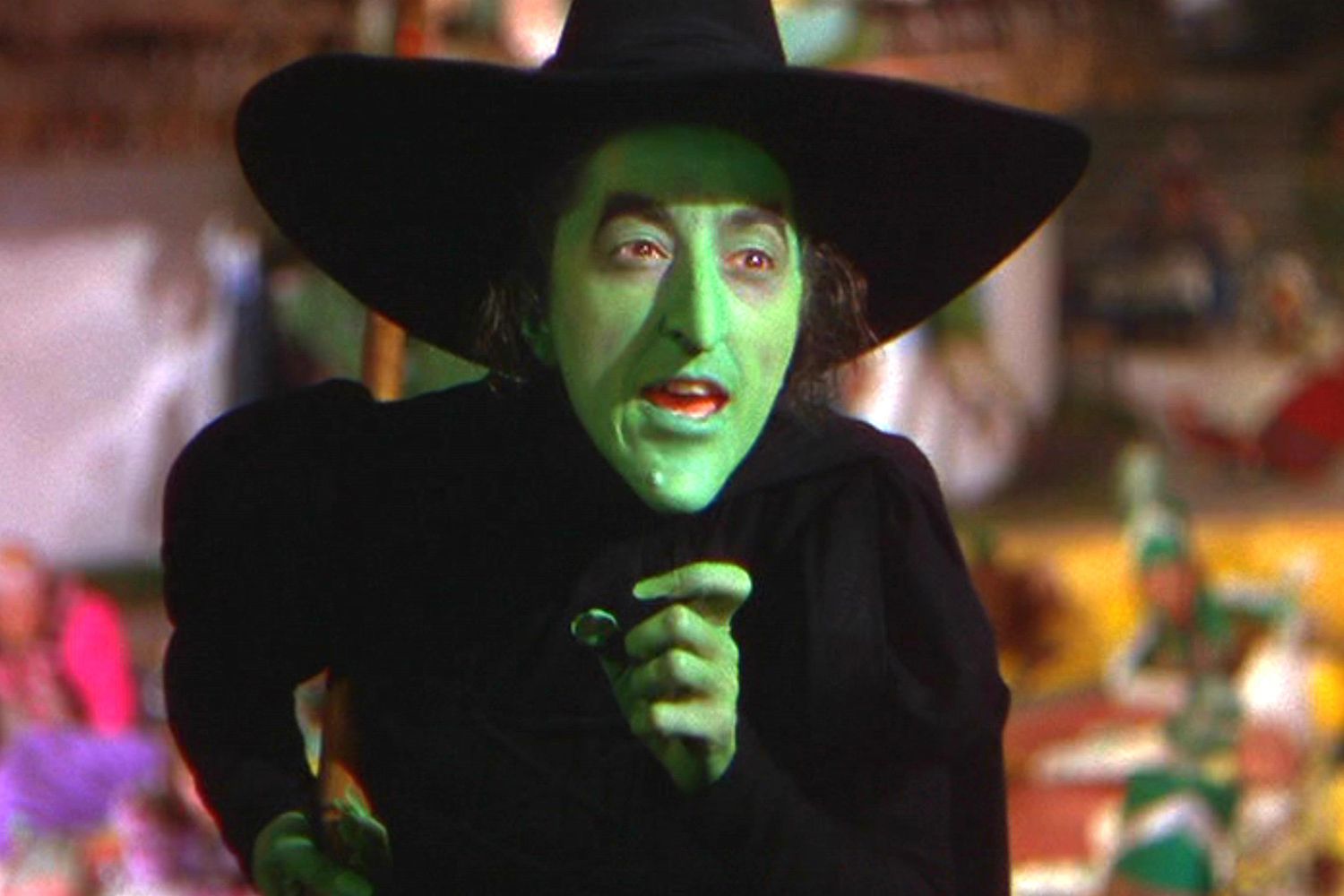
The situation was made even worse by her green makeup, which contained copper compounds. It had to be removed before her burns could be treated properly, causing her considerable pain.
Hamilton spent weeks recovering and later refused to perform dangerous fire-related stunts.
But the problems did not end there.
Her stunt double, Betty Danko, was also badly injured while filming a sequence involving the Witch’s flying broomstick. A special-effects device exploded, leaving her with serious injuries.
For a film remembered as a magical children’s adventure, the number of dangerous accidents was extraordinary.
Uncomfortable Costumes and Unbearable Heat
Today, actors often work in studios with sophisticated digital effects and comfortable working conditions. In 1939, things were very different.
The spectacular colours of The Wizard of Oz required powerful lighting equipment. The lights produced enormous amounts of heat, making the studio extremely uncomfortable.
The actors had to perform long scenes while wearing heavy makeup and complicated costumes.
Bert Lahr, who played the Cowardly Lion, probably had one of the worst experiences. His large, furry costume was extremely heavy and became almost unbearable under the hot lights.
Between takes, he had to remove the costume so that he and the outfit could be cooled down before filming continued.
The working conditions were so difficult that people sometimes fainted on the set.
Ray Bolger, who played the Scarecrow, also faced problems with his makeup and costume. During a scene involving fire, he even wore a special costume containing asbestos, a material widely used at the time because of its resistance to heat.
Another popular story claims that the artificial snow falling on Dorothy and her friends in the poppy field was made from asbestos. However, film historians have challenged this claim. According to the recollections of MGM makeup artist Charles Schram, the snow was actually made from crushed gypsum, a mineral commonly used in plaster.
The truth is therefore a little more complicated than the internet legends suggest: asbestos was used in the production, but there is no convincing evidence that it was used for the famous snow scene.
Even Toto Was Injured
The human actors were not the only ones who experienced problems during filming.
Toto, Dorothy’s loyal little dog, was played by a female Cairn Terrier named Terry.
During one scene, an actor dressed as one of the Wicked Witch’s soldiers accidentally landed on the dog and injured her foot.
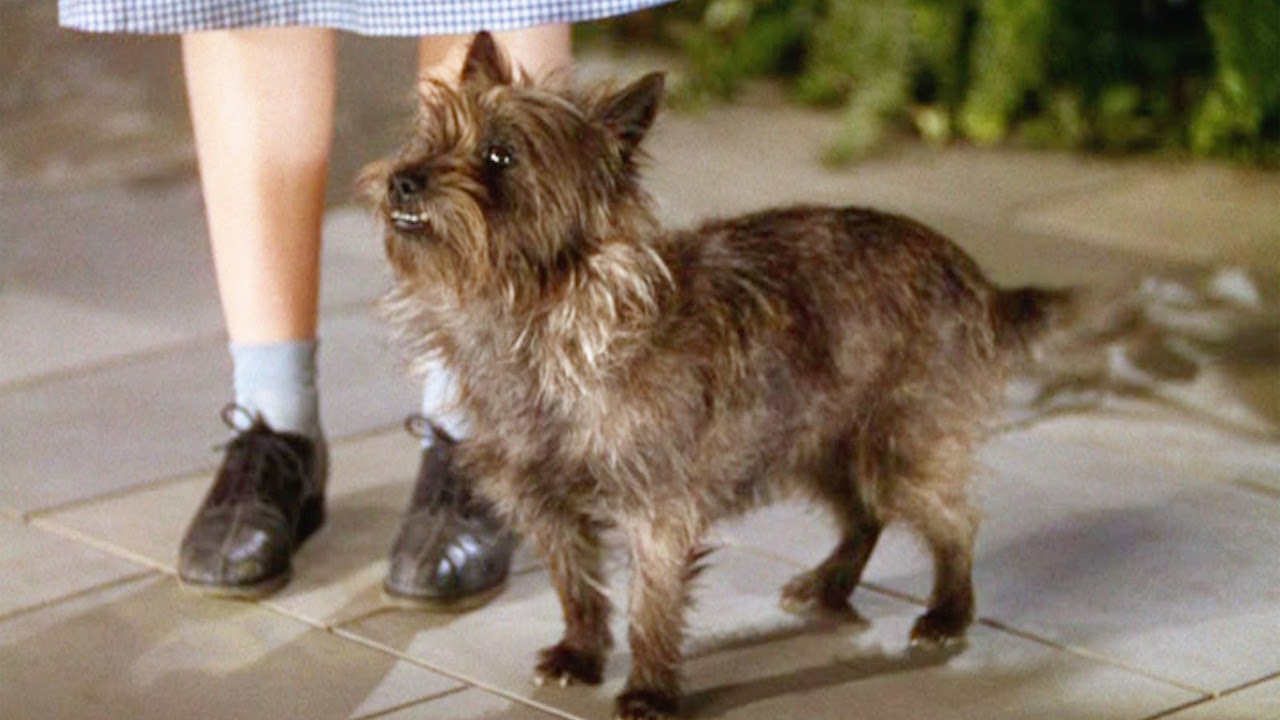
Terry had to stop working while she recovered, and another dog was temporarily used in her place.
Fortunately, she recovered and returned to the production.
It is a small detail in the history of such a famous film, but it shows just how unpredictable filming could be, especially when animals, large groups of performers and complicated action scenes were involved.
The Mystery of the Hanging Munchkin
Perhaps the most disturbing story connected with The Wizard of Oz concerns a mysterious figure supposedly visible in the background of one scene.
For decades, rumours have suggested that an actor playing one of the Munchkins died by suicide during filming and that his body could be seen hanging from a tree.
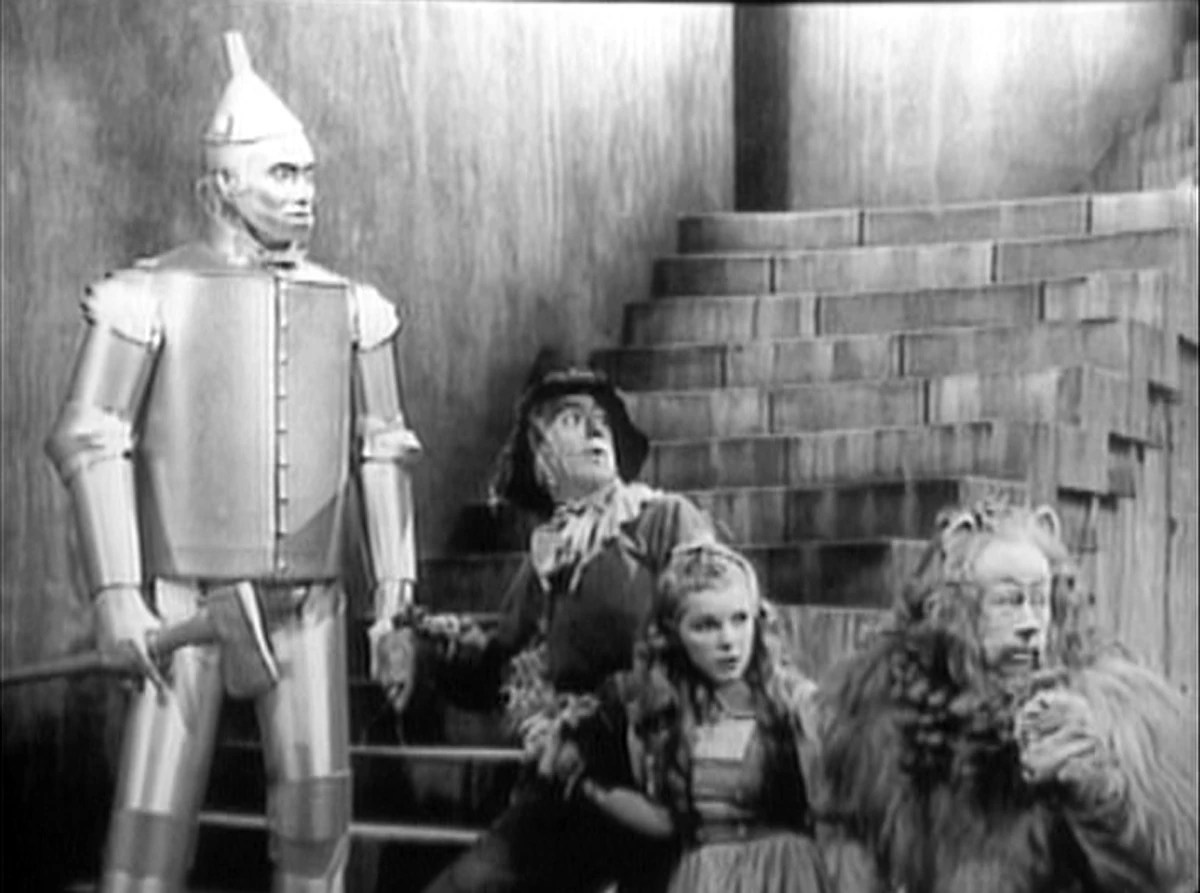
The supposed evidence appears in a forest scene where Dorothy, the Scarecrow and the Tin Man walk along the Yellow Brick Road.
In the background, a dark figure seems to move between the trees. On old television recordings and VHS copies, its shape can look rather strange.
Some viewers became convinced that they were watching something terrible that the filmmakers had accidentally left in the film.
However, the story is false.
The mysterious figure is actually a large bird, generally identified as a crane. MGM had borrowed several exotic birds from the Los Angeles Zoo to make the artificial forest look more realistic.
There is no credible evidence that a Munchkin actor died in this way during production.
Nevertheless, the story continues to appear in online discussions, horror videos and articles about supposedly cursed Hollywood films.
It is a perfect example of how an ordinary detail can become a frightening legend when people watch it without knowing the full story.
Was The Wizard of Oz Really Cursed?
Considering everything that happened, it is perhaps understandable why some people have described The Wizard of Oz as a cursed film.
There were serious accidents, dangerous materials, injuries and a young star who suffered under Hollywood’s demanding studio system.
There were even accidents involving the flying monkeys. During filming, two performers fell when the wires supporting them broke.
Yet there is no reason to believe that anything supernatural was responsible for these events.
The more convincing explanation is that the filmmakers were attempting complicated special effects at a time when safety standards were very different from those used today.
MGM wanted to create a spectacular fantasy world, and the studio was willing to take risks to achieve it.
Some of those risks had terrible consequences.
It is also important to remember that not every shocking story about the film is true. As the film became more famous, real incidents were sometimes exaggerated, while entirely fictional stories were repeated as facts.
The reality of the production is troubling enough without adding events that never happened.
A Film That Became Immortal
Despite its difficult production, The Wizard of Oz eventually became one of Hollywood’s greatest achievements.
Interestingly, it was not the enormous commercial success that MGM had hoped for when it first appeared in cinemas in 1939. Its popularity grew significantly in the following decades, especially after it began appearing on American television in 1956.
For many families, watching Dorothy travel along the Yellow Brick Road became an annual tradition.
The film also helped establish Judy Garland as an international star. Her performance of Over the Rainbow remains one of the most famous musical moments in cinema history.
Garland continued to enjoy extraordinary professional success, although her personal life was often difficult. She died in 1969 at the age of just 47.
Today, The Wizard of Oz is remembered for its music, imagination, characters and wonderful use of colour. It has also influenced countless later productions, including the hugely successful musical Wicked, which explores the story of the witches before Dorothy arrives in Oz.
Knowing what happened behind the cameras does not necessarily destroy the film’s magic. In some ways, it makes the achievement even more remarkable.
After all, those colourful scenes and cheerful songs were created by real people working under conditions that were sometimes exhausting, uncomfortable and genuinely dangerous.
Perhaps that is the strangest thing about The Wizard of Oz: a film that has brought so much happiness to millions of people was created through experiences that were not always happy at all.
And while Dorothy eventually discovered that there was no place like home, some of the people who helped bring her magical world to life probably felt exactly the same way when filming finally ended.

