There is something strange about looking at old family photographs. You might find a picture of your grandparents when they were only thirty, but somehow they look much older. Their clothes, hairstyles and serious expressions make them seem more like people in their forties or fifties. Then you look at people of the same age today, and the difference can be surprising. Many forty-year-olds could easily pass for thirty, while some people in their fifties and sixties look remarkably youthful. So what has changed? Are we really ageing more slowly than previous generations, or have our ideas about age and appearance simply changed?
Are We Really Ageing More Slowly?
Interestingly, there is some scientific evidence that people today may be ageing more slowly in certain ways.
In 2018, researchers Morgan Levine and Eileen Crimmins published a study in the scientific journal Demography. They compared health information from American adults collected between 1988 and 1994 with data from 2007 to 2010.
Instead of simply looking at people’s ages, they examined their biological age. This is a way of measuring how old someone’s body seems based on different health indicators, such as blood pressure, cholesterol levels and lung function.
The results suggested that people in the more recent group were biologically younger than people of the same age in the earlier group. The difference was particularly noticeable among older adults.
However, this does not necessarily mean that everyone today looks younger. The study focused on people’s physical health rather than their faces. Still, it suggests that improvements in health and living conditions may have changed the way our bodies age.
Smoking: One of the Biggest Differences
One important reason why people may look younger today is the decline in smoking.
During the 1950s, 1960s and 1970s, smoking was everywhere. People smoked in offices, restaurants, cinemas, on trains and even on aeroplanes. Cigarettes were often presented as fashionable and attractive, and smoking was a normal part of everyday social life.
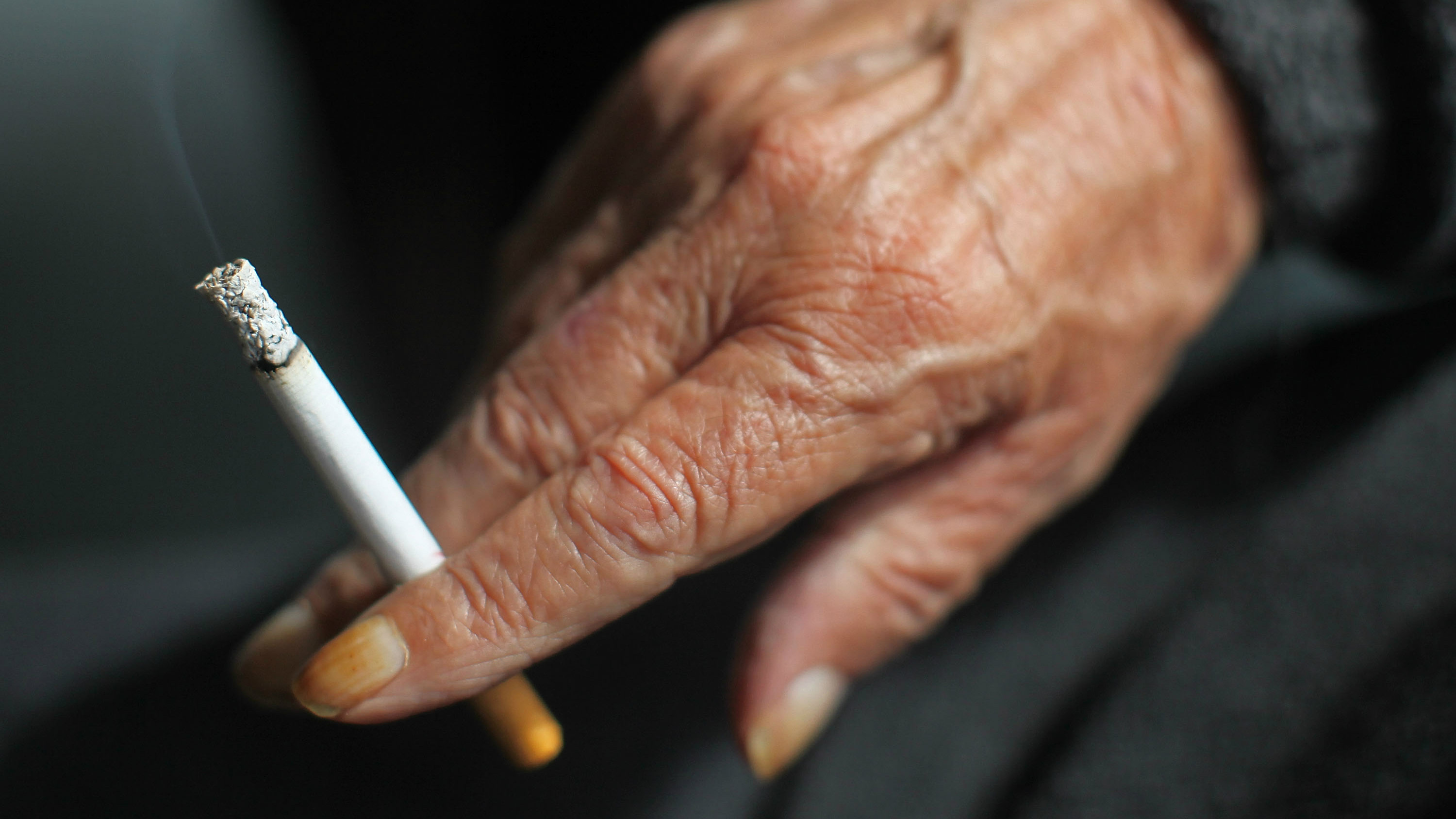
Today, we know much more about the damage cigarettes can cause.
Smoking does not only harm the lungs and heart. It also affects the skin. It reduces blood circulation and damages collagen, a protein that helps keep the skin firm and elastic. Over time, this can lead to deeper wrinkles and an older appearance.
A fascinating study published in 2013 compared the faces of identical twins who had different smoking habits. Because identical twins share almost the same genes, they offer researchers an unusual opportunity to study the effects of lifestyle choices.
The researchers found that twins who had smoked for longer generally showed more visible signs of facial ageing.
According to the World Health Organization, tobacco use has fallen significantly around the world since 2000. Although millions of people still smoke, the decline may be one reason why some people today have healthier, younger-looking skin than previous generations.
We Know Much More About Sun Damage
Another important change is the way we protect our skin from the sun.
For much of the twentieth century, having a deep tan was considered attractive and healthy. People often spent hours sunbathing without using proper protection. Sun creams existed, but they were not always part of everyday life.
Today, scientists know that ultraviolet (UV) radiation is one of the main causes of premature skin ageing.
Too much exposure to the sun can damage the skin’s structure, causing wrinkles, dark spots and a loss of elasticity. This process is often called photoageing.
A study published in the Annals of Internal Medicine in 2013 found that regular sunscreen use could help prevent visible skin ageing. Participants who used sunscreen daily showed less skin ageing over a period of four and a half years than those who used it less regularly.
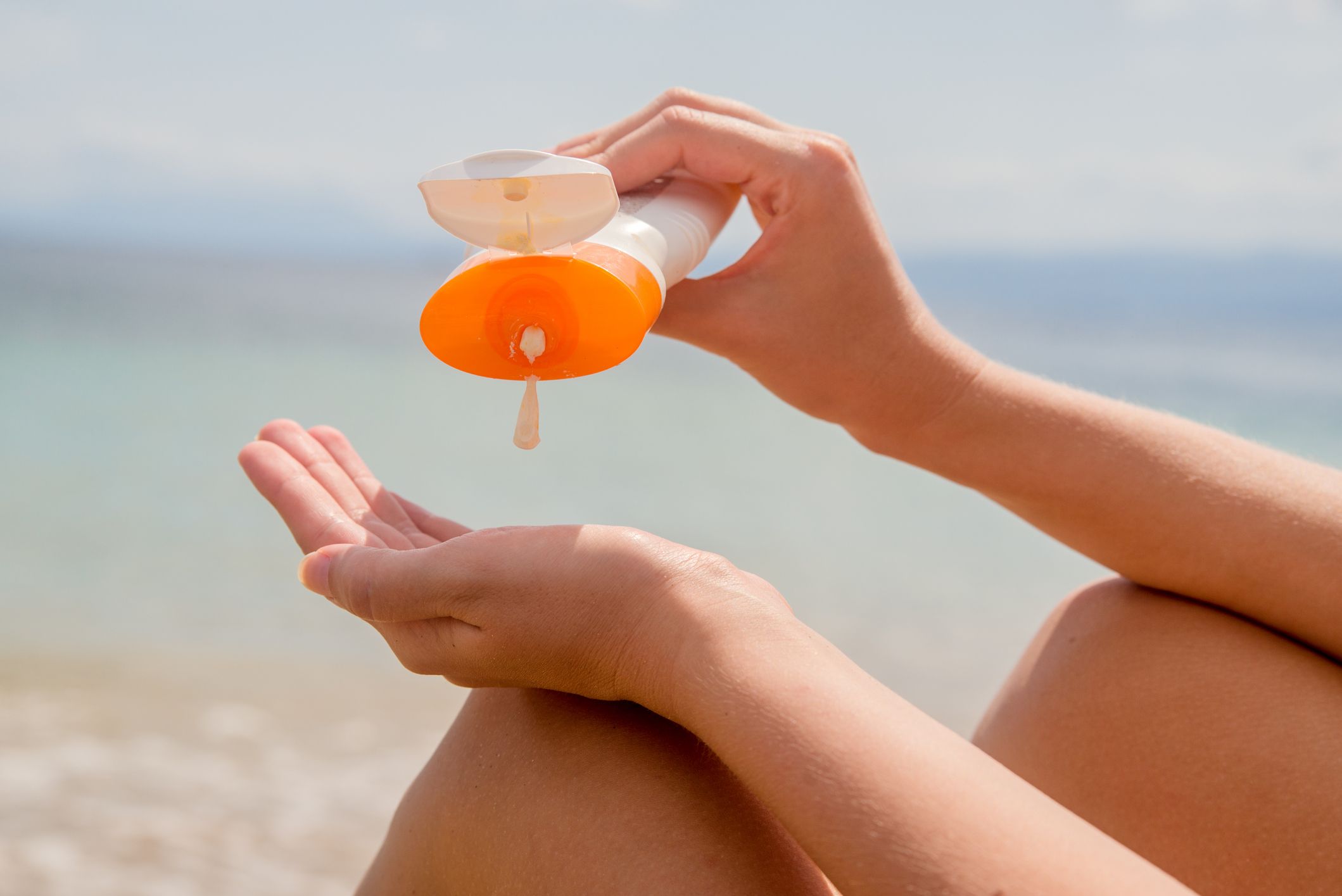
Modern skincare has also become a huge industry. Moisturisers, sunscreens, retinoids and other products are now easily available, while professional beauty treatments have become increasingly common.
Of course, not every expensive cream can make someone look younger. But some skincare methods really can protect the skin and reduce certain signs of ageing.
Better Healthcare and Living Conditions
Life was not necessarily easier for our grandparents and great-grandparents.
Many people spent long hours doing physically demanding work, often outdoors and in difficult weather conditions. Others experienced war, food shortages, poor housing and limited access to medical treatment.
Such experiences could have a serious effect on people’s physical and mental health.
Over the past century, healthcare has improved enormously. Vaccinations, antibiotics, better treatment for chronic diseases and improvements in nutrition have helped people live longer and healthier lives.
Dental care has also made a remarkable difference.
In the past, losing teeth was much more common, even among middle-aged adults. Missing teeth can change the shape of the face, making someone appear older.
Today, modern dentistry, better oral hygiene, orthodontic treatment and dental implants help many people keep healthier teeth for longer.
According to the US Centers for Disease Control and Prevention, the percentage of Americans aged 65 and over who had lost all their natural teeth fell from 27% in 1999–2004 to 17% in 2011–2016.
Naturally, modern life has its own health problems. Stress, obesity, unhealthy diets and a lack of physical activity can all have negative effects. And not everyone has equal access to good healthcare.
Nevertheless, improvements in medicine and everyday living conditions have helped many people stay healthier as they grow older.
Fashion and Hairstyles Can Make a Huge Difference
But biology is only part of the story. Perhaps one of the most interesting explanations has nothing to do with our bodies at all.
Think about the hairstyles and clothes people wore in the past.
A thirty-year-old woman in the 1980s might have had a large, carefully styled hairstyle, strong make-up and a formal jacket with shoulder pads. A man of the same age might have worn a suit, tie and a hairstyle that now seems old-fashioned.
At the time, these styles were perfectly normal and often considered fashionable.
Today, however, we associate many of them with older people. Why? Because the people who wore those styles when they were young have now grown old.
As a result, our brains sometimes connect certain hairstyles, clothes and accessories with a particular age group.
This means that a thirty-year-old person in a photograph from 1975 may appear older to us simply because of their clothes and hairstyle.
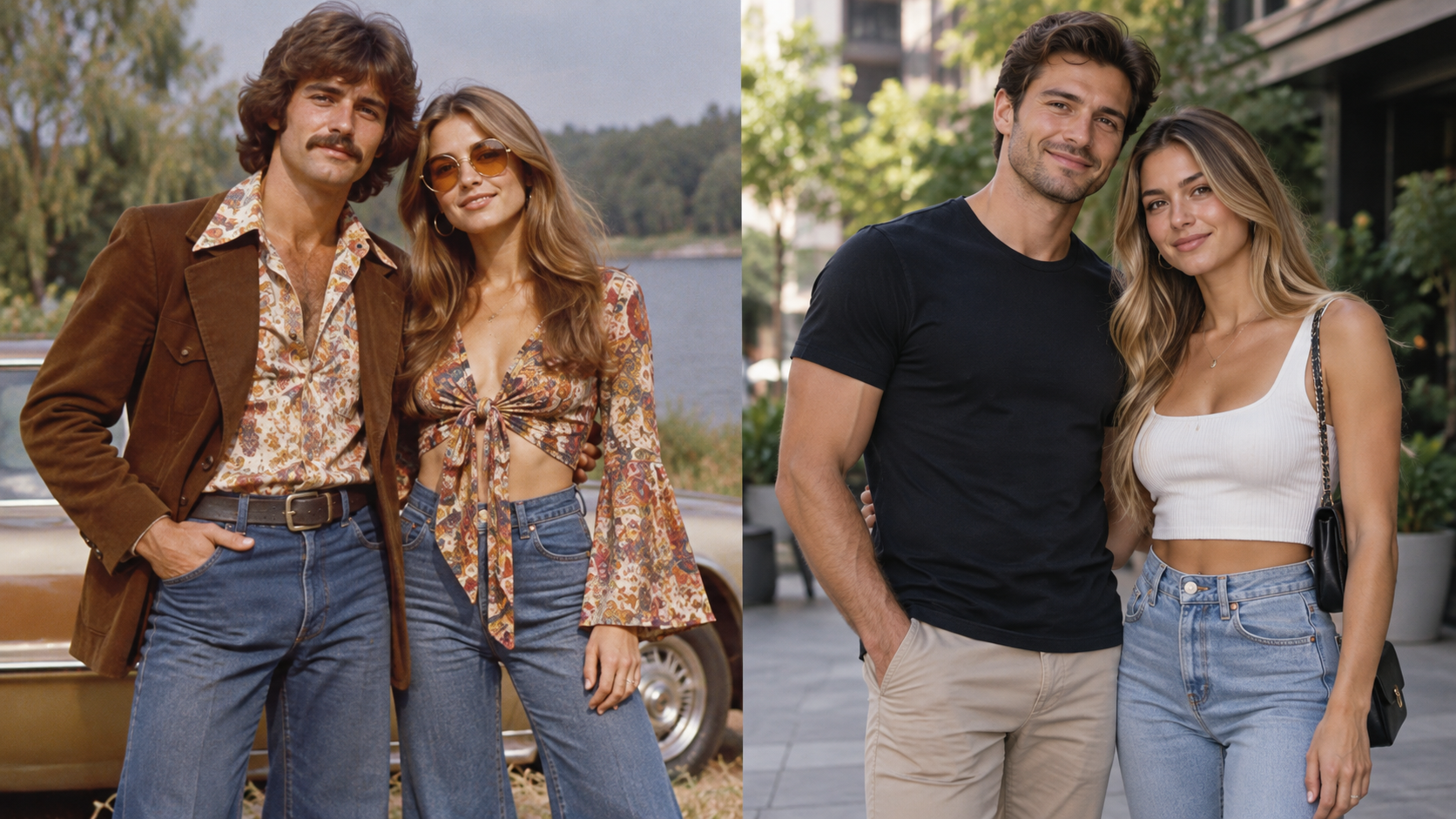
Imagine taking that same person, giving them a modern haircut and dressing them in jeans, trainers and a casual T-shirt. They might suddenly look much closer to their real age.
In other words, people in the past did not necessarily have older faces. They simply looked different from what we now consider youthful.
People Used to Dress Like Adults Much Earlier
Society’s expectations have changed as well.
Several decades ago, becoming an adult often meant adopting a more formal appearance. Men wore suits and ties much more frequently, while women were often expected to dress in a more traditional, mature style.
A thirty-year-old father in the 1950s might have dressed very much like his own father. Today, it is perfectly normal for a fifty-year-old man to wear the same type of jeans, trainers or hoodie as someone in their twenties.
The boundaries between age groups have become less obvious.
Fashion is no longer as strongly connected to age as it once was. Many people continue wearing casual, youthful clothes well into their fifties, sixties and beyond.
This does not mean that clothes actually change someone’s biological age. But they certainly influence how old we think that person is.
Old Photographs Can Be Misleading
There is another detail worth remembering: photography itself has changed dramatically.
In the past, having your photograph taken was often a special occasion. People dressed carefully, stood in front of the camera and tried to look serious and respectable.
Smiling was not always expected, particularly in older formal portraits.
Lighting and photographic technology were different too. Strong shadows could make wrinkles and facial features look more noticeable.
Compare this with photography today.
We take hundreds of photographs with our smartphones, often choosing the most flattering one to share. We know which angles make us look better, and modern cameras automatically adjust lighting, colours and facial details.
Social media filters and photo-editing applications can make people appear even younger.
So when we compare a serious family portrait from 1960 with a carefully selected Instagram photograph from 2026, we are not necessarily making a fair comparison.
We are also comparing two completely different ways of taking and presenting photographs.
Being Fifty Does Not Mean What It Used To
Perhaps the biggest change is the way society thinks about age.
Not so long ago, reaching fifty was often seen as the beginning of a quieter, more settled period of life.
Today, many people in their fifties and sixties are travelling, exercising, learning new skills, starting businesses or beginning new relationships.
The idea of what it means to be middle-aged has changed considerably.
A forty-year-old today may not feel particularly different from someone in their late twenties or early thirties. Many people also continue enjoying music, films, fashion and hobbies that were once associated mainly with younger generations.
Of course, this does not mean that everyone is healthier or more active than people were fifty years ago. But our expectations have changed.
Age is no longer such a clear guide to how someone should dress, behave or spend their free time.
At the same time, modern society places enormous importance on looking young. Advertisements, celebrities and social media constantly show us smooth skin, perfect teeth and youthful faces.
Cosmetic procedures, including Botox and other treatments, have also become more common and more widely accepted.
This can create pressure to look younger, even when the natural signs of ageing are perfectly normal.
Perhaps we have become so used to seeing carefully maintained and edited appearances that we sometimes forget what ordinary ageing really looks like.
So, Do We Actually Look Younger Than Previous Generations?
The answer seems to be a mixture of science, lifestyle and changing social attitudes.
There are genuine reasons why some people today may look younger than people of the same age several decades ago. Better healthcare, improved dental treatment, reduced smoking and greater awareness of sun damage can all play an important role.
However, fashion, hairstyles, photography and cultural expectations are just as important when it comes to how we judge someone’s age.
It would be misleading to claim that every forty-year-old today looks younger than a forty-year-old in 1970. People age differently, and genetics, health, income and lifestyle all influence their appearance.
But one thing is certain: our idea of what a particular age should look like has changed enormously.
And perhaps there is something amusing about all this.
When we look at photographs of our parents or grandparents in their twenties, we sometimes wonder why they looked so much older than we do at the same age.
But they probably did not think they looked old at all. They were simply young people following the fashion and habits of their own time.
And who knows? Fifty years from now, people may look at our photographs and ask exactly the same question:
“Why did people in 2026 look so old?”

