Imagine sitting in a small café, reading a comic book. Suddenly, one of the characters looks directly at you, smiles and reaches out his hand. A few seconds later, you find yourself inside the comic book, running through a world of black-and-white drawings. It sounds like something from a fantasy film, but for millions of people in the 1980s, it was their introduction to one of the most unforgettable music videos ever made.
The song was Take On Me by the Norwegian band A-ha, and its combination of an incredibly catchy melody, a remarkable singing voice and a revolutionary video helped turn three young musicians into international stars.
On 19 October 1985, Take On Me reached number one on the American Billboard Hot 100 chart. Exactly 41 years later, the song remains one of the best-known hits of the 1980s. However, its success was anything but immediate. In fact, the story behind it is one of failed releases, determination and a record company that refused to give up.
Three Young Norwegians with a Dream
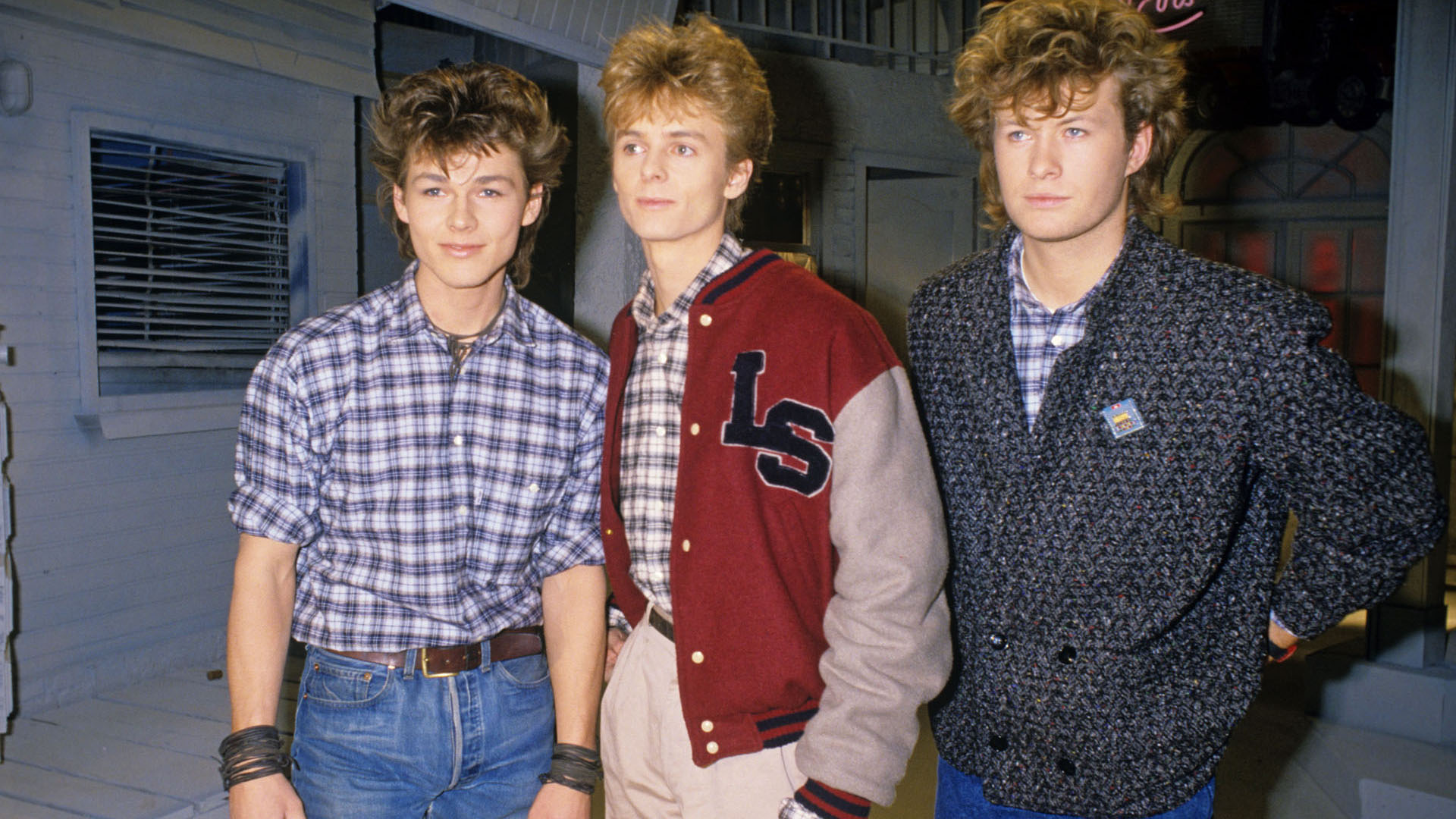
A-ha was formed by three Norwegian musicians: Morten Harket, Magne Furuholmen and Pål Waaktaar. In the early 1980s, they decided that Norway was simply too small for their musical ambitions. They wanted to reach an international audience, so they moved to London, where the British music industry offered greater opportunities.
Life in London was not easy. The young musicians had little money, and finding success proved much harder than they had imagined. They spent their time recording demos, contacting record companies and trying to develop their own musical style.
Eventually, they signed a recording contract with Warner Bros. Records. They had no idea that one of the songs they had been working on for years would soon change their lives.
A Melody That Refused to Disappear
The story of Take On Me actually began before A-ha existed.
Magne Furuholmen had created its famous keyboard melody when he was only about 15 years old. At the time, he and Pål Waaktaar were playing in an earlier band called Bridges. Some of the musical ideas that later became Take On Me appeared in a song called Miss Eerie.
The melody went through several changes over the following years. Different versions had different arrangements and lyrics, but the musicians continued returning to the same musical idea.
When Morten Harket joined them, he immediately recognised its potential. His extraordinary vocal range also helped shape the final version. The chorus was designed to move from relatively low notes to extremely high ones, creating one of the most challenging vocal performances in 1980s pop music.
Interestingly, the musicians drew inspiration from some unexpected places. Harket later remembered that part of the melody reminded him of an American chewing-gum advertisement. The dramatic movement of the chorus was also influenced by classical music, particularly Richard Strauss’s Also sprach Zarathustra.
The result was a fascinating mixture of influences: electronic pop, classical ideas and an instantly memorable melody.
The Hit That Wasn’t a Hit
Today, it is difficult to imagine Take On Me being anything other than a worldwide success. Yet its first release was a disappointment.
The original version, produced by Tony Mansfield, was released on 19 October 1984. According to A-ha’s official history, it sold only around 300 copies. The song attracted little attention, and the band failed to make a major breakthrough.
Many record companies might have decided to forget about it and move on to another song. Fortunately, that did not happen.
Warner Bros. still believed in the band’s potential, and British producer Alan Tarney was brought in to help create a new recording. The updated version had a stronger, clearer sound, with energetic drums, powerful synthesizers and Harket’s impressive vocals.
Even then, success was not guaranteed. The song needed something that would make people stop, watch and remember it.
That something turned out to be a music video.
When a Comic Book Came to Life
In 1985, music videos were becoming increasingly important. MTV had changed the way audiences discovered new artists, and a memorable video could sometimes make the difference between success and failure.
Warner Bros. decided to give Take On Me another chance, this time with something truly unusual.
The company hired director Steve Barron, who had already worked on famous music videos, including Michael Jackson’s Billie Jean.
Barron and his team developed a romantic fantasy about a young woman who enters a comic book and falls in love with one of its characters.
The woman was played by British actress Bunty Bailey, while Morten Harket played the mysterious comic-book hero.
The video begins in an ordinary London café. Bailey’s character is reading a comic book when the illustrated hero suddenly comes to life and invites her into his world. What follows is a strange and exciting adventure involving a motorcycle race, dangerous enemies and a love story that crosses the border between imagination and reality.
The most remarkable part, however, was the way the video looked.
The filmmakers combined ordinary live-action footage with hand-drawn animation using a technique called rotoscoping. This involved filming real people and then carefully tracing their movements, frame by frame, to create animated images.
Although the technique already existed, its use in Take On Me produced something that television audiences had rarely seen before.
Artists Michael Patterson and Candace Reckinger spent approximately 16 weeks working on thousands of individual drawings. The result was a world in which real people could move into pencil sketches and drawings could suddenly become real.
It was an enormous amount of work for a music video lasting less than four minutes.
But it was worth it.
From Almost Forgotten to Number One
Once the new video began appearing regularly on MTV, everything changed.
Viewers were fascinated by the unusual animation and romantic storyline. The video attracted attention, and the song quickly became more popular on radio stations as well.
On 19 October 1985, exactly one year after its unsuccessful first release, Take On Me reached number one on the US Billboard Hot 100.
It was an extraordinary achievement for a Norwegian band that had been almost completely unknown internationally just a short time earlier.
The song also became a major hit across Europe, reaching number two in the United Kingdom. A-ha’s debut album, Hunting High and Low, introduced audiences to other successful songs, including The Sun Always Shines on T.V.
The video itself became a major part of music history. At the 1986 MTV Video Music Awards, Take On Me won six awards, including Best Concept Video, Best Special Effects and Viewer’s Choice.
What had started as an unsuccessful single had become a cultural phenomenon.
A Song That Never Really Disappeared
For many artists, a successful song belongs to a particular moment in time. People enjoy it for a few months, perhaps a few years, and then gradually forget about it.
But Take On Me has never completely disappeared.
Its famous synthesizer melody remains instantly recognisable, while its music video continues to attract new audiences. The song has appeared in films, television programmes and video games, and it has been covered by numerous artists.
One particularly memorable appearance came in the video game The Last of Us Part II, where the character Ellie performs a quiet acoustic version of the song. Without the fast rhythm and electronic instruments of the original, the melody sounds surprisingly emotional.
The video has also found an entirely new audience online. In 2020, it passed one billion views on YouTube. Four years later, it became the first music video from the 1980s to reach two billion views on the platform.
Considering that the original video was created long before YouTube, smartphones or modern computer animation, this is a remarkable achievement.
More Than Just an Eighties Classic
There is something especially interesting about the history of Take On Me. We often imagine that successful songs become hits because everyone immediately recognises their quality. In reality, things are rarely that simple.
A-ha believed in their melody for years. They recorded it more than once, watched it fail and continued trying to find the right sound. Their record company took another chance, and a group of talented filmmakers created a visual story that helped audiences connect with the music.
Of course, the video would never have worked quite so well without the song itself. Its energetic rhythm, unforgettable keyboard melody and Morten Harket’s distinctive voice gave it something that could survive long after the excitement surrounding the video had faded.
More than four decades later, the story of Take On Me is about much more than one successful pop single. It reminds us of a time when music television was changing popular culture, when animation still required thousands of drawings made by hand, and when one creative idea could turn an almost forgotten recording into a worldwide phenomenon.
And perhaps that is the most surprising part of the whole story: one of the most famous songs of the 1980s nearly disappeared before the world had really heard it.

