A church-like chorus, a powerful dance beat, extravagant costumes and enough drama for a small opera – Army of Lovers were never interested in being ordinary. And if one song could sum up their colourful world, it would probably be Crucified. Released in 1991, the track became the Swedish group’s biggest international hit and, more than three decades later, it is still the song most people immediately connect with their name.
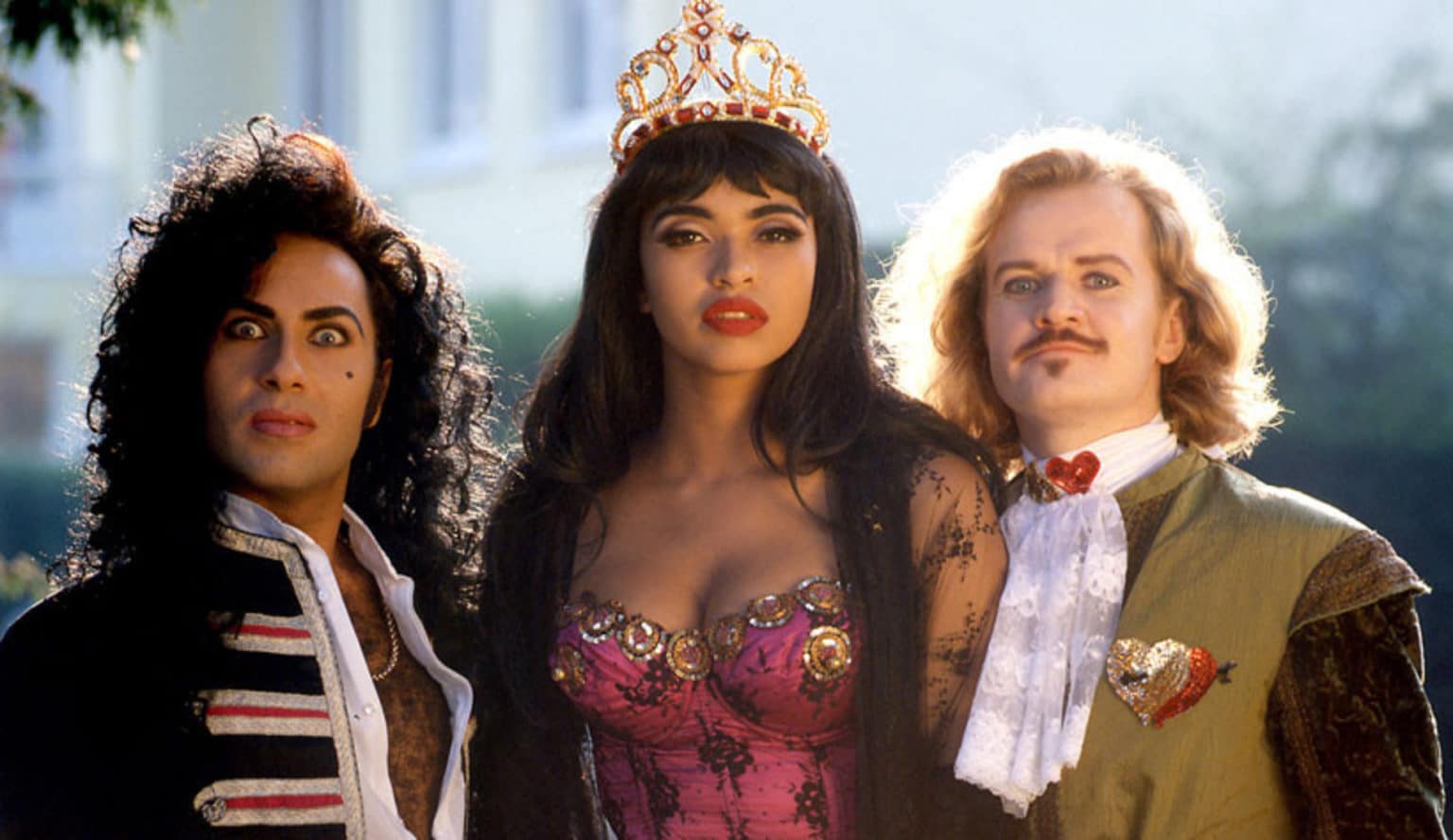
Army of Lovers grew out of the wonderfully strange world of Swedish pop in the second half of the 1980s. The group was created by Alexander Bard, together with Jean-Pierre Barda and Camilla Henemark, better known at the time as La Camilla. Before Army of Lovers, the three had already worked together in a project called Barbie. By 1987, however, they had created something much more ambitious. Their music mixed disco, electronic pop and club sounds, while their image borrowed freely from religion, history, royalty, fashion and camp theatre. Costume designer Camilla Thulin also played an important part in creating their unmistakable visual style.
The band released its first album, Disco Extravaganza, in 1990, but the real international breakthrough came one year later with Massive Luxury Overdose. The album included both Obsession and the song that would become their signature hit: Crucified.
A pop song with the drama turned all the way up
Crucified was released in Sweden in May 1991. It was written by Alexander Bard, Jean-Pierre Barda and Anders Wollbeck, with Bard and Wollbeck handling the main production. Jean-Pierre Barda provided the lead vocal, and the recording was made at Sonet Studios in Stockholm.
Musically, the song is an unusual mixture. Its strong electronic rhythm belongs clearly to early-1990s European dance music, but above it sits a melody that almost feels like a hymn. Add the dramatic backing vocals and Barda’s highly theatrical performance, and the result sounds somewhere between a nightclub record and a religious ceremony.
The lyrics play with the same contrast. Religious words and images are mixed with ideas of love, temptation, suffering and desire. Army of Lovers were fascinated by symbols and exaggeration, and Crucified turns that style into three and a half minutes of pop. The song takes something serious and ceremonial and places it inside a glamorous dance track – exactly the kind of contradiction the group enjoyed.
Then there was the visual side. Army of Lovers treated music videos almost like short films. Heavy make-up, extravagant clothes, historical references and religious imagery were all part of their world. At a time when MTV and other music television channels had become extremely important, this made them difficult to ignore.
And audiences did not ignore them.
Crucified reached the Swedish Top 10, peaking at number eight, and became an even bigger success elsewhere in Europe. It reached number one in Belgium and became a major hit in countries including Germany, Austria, Switzerland and the Netherlands. In Britain it eventually reached number 31 when it was released again in 1992.
It even crossed the Atlantic. The song became a significant American club hit, reaching number six on Billboard’s dance charts. For a Swedish act whose entire image seemed deliberately excessive and European, that was quite an achievement.
More than just another Eurodance group
Army of Lovers are often placed in the Eurodance or Europop category, but they never fitted comfortably into one box. Their records were designed for clubs, yet the group was just as interested in fashion, theatre, provocation and humour.
Alexander Bard was largely the creative force behind the project, while Jean-Pierre Barda became one of its most recognisable voices and visual personalities. The female membership changed several times. Camilla Henemark left after the success of Massive Luxury Overdose and was replaced by Michaela Dornonville de la Cour. Later, Dominika Peczynski joined the group and became another important part of its classic history. Bard and Barda remained the two constant figures through the different versions of Army of Lovers.
Albums such as The Gods of Earth and Heaven and Glory, Glamour and Gold followed, together with songs including Israelism, La Plage de Saint Tropez, Give My Life and Lit de Parade. By the second half of the 1990s, however, the group’s activity became less regular, and there were several reunions and breaks during the following years.
But Army of Lovers have always had a habit of returning when nobody quite expects them to.
The Army returns
At the end of 2012, Swedish television confirmed that the original trio – Bard, Barda and Camilla Henemark – were getting back together. Their comeback would take place on one of Sweden’s biggest television stages: Melodifestivalen 2013, the competition used to choose the country’s Eurovision entry. It was the first time Army of Lovers had entered the contest.
They competed with a new song called Rockin’ the Ride in Malmö on 23 February 2013. The comeback attracted plenty of attention, but the song finished sixth in its semi-final and did not continue to the next stage.
And then, in true Army of Lovers fashion, things became complicated.
Only a few days later it was announced that Camilla Henemark would no longer be part of the reunited group. Dominika Peczynski returned instead, creating a line-up of Bard, Barda and Peczynski. SVT reported the change on 28 February 2013, less than a week after their Melodifestivalen appearance.
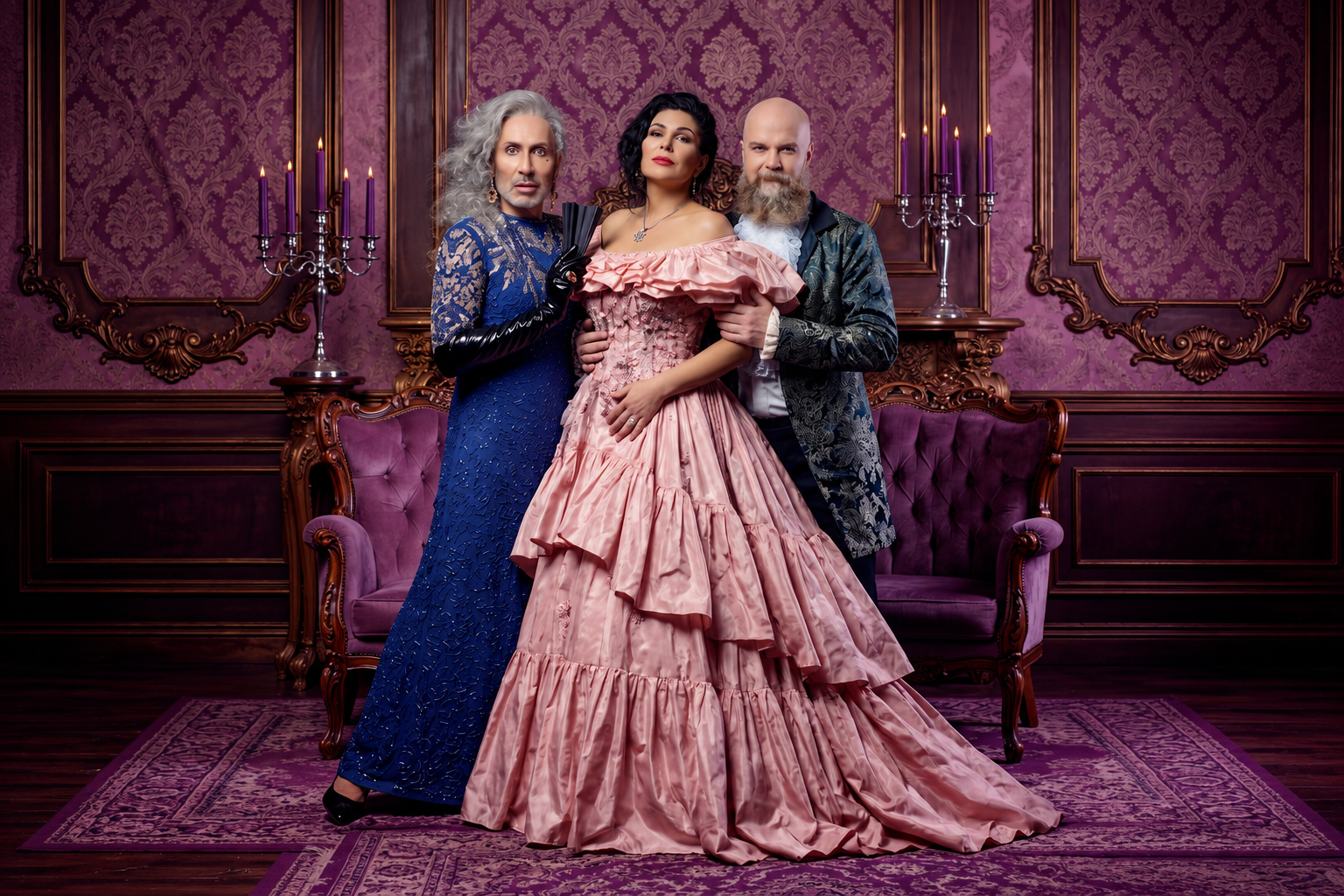
A new compilation, Big Battle of Egos, followed in March. It mixed classic Army of Lovers tracks with new recordings such as Rockin’ the Ride, Crashing Down, Signed on My Tattoo and Tragedy.
But one of the most interesting parts of the comeback was still ahead.
Crucified – again
More than twenty years after the original hit, Army of Lovers returned to their most famous song with Crucified 2013.
This was not simply an old recording with louder drums or improved sound quality. The song was revisited with new vocals and a more modern electronic production, bringing its early-1990s drama into the dance-pop world of the 2010s. Different recordings appeared during the reunion period: one involved new vocals from Camilla Henemark, while another version featured the later Bard–Barda–Dominika Peczynski line-up. The video for Crucified 2013, directed by Fredrik Boklund, appeared during the summer of 2013.
The new recording did not try to hide the age of the original song. In fact, that was part of its charm. The unforgettable melody and theatrical structure remained, but the production was given a harder, more contemporary club sound. It was less a replacement for the 1991 recording than a celebration of it.
And the song found a very suitable new home.
Copenhagen Pride selected Crucified (2013) as its official Pride song for 2013, and Army of Lovers performed at the festival that August. Considering the band’s long connection with camp culture, extravagant fashion and playing with traditional ideas about gender and sexuality, it was a natural match.
The revival even gave Crucified another moment on the American dance charts: the updated version reached Billboard’s Dance Club Songs chart in 2014, more than two decades after the original recording had first found success in US clubs.
Still wonderfully excessive
There is something strangely timeless about Crucified. The production of the original clearly belongs to the early 1990s, yet very few songs from that period sound quite like it. Perhaps that is because Army of Lovers were never really trying to sound normal in the first place.
They took disco and electronic pop, added religious symbolism, fashion, humour, sexuality and theatrical excess, and created their own little universe. Other artists of the era may have sold more records, but very few looked or sounded like Army of Lovers.
The 2013 version proved something else too. You can modernise the beat, change the production and even change the people singing parts of the song, but the central idea remains instantly recognisable.
More than thirty years after its original release, Crucified is still gloriously dramatic, slightly ridiculous, strangely beautiful – and completely Army of Lovers.
 Gergő's English Club