There are singers who have successful careers, and then there are singers whose voices become part of popular culture. Céline Dion belongs to the second group. Even people who have never bought one of her albums probably know at least a few seconds of My Heart Will Go On. For decades, her name has meant huge ballads, extraordinary vocal power and emotional performances in front of enormous audiences.
But over the past few years, Céline’s story has changed. It stopped being mainly about record sales, awards or famous songs. Instead, it became a story about losing something that had always seemed natural to her – and slowly finding a way back to it.
In September 2026, after more than six years without a full concert, Céline Dion finally returned to the stage in Paris.
To understand why that night meant so much, however, it is worth going back to the beginning.
From a crowded family home to the world stage
Céline Marie Claudette Dion was born on 30 March 1968 in Charlemagne, a small town in Quebec, Canada. She was the youngest of fourteen children, and music was everywhere in the Dion household. Her parents and siblings sang and performed together, so being on stage did not seem unusual to the young Céline.
At the age of twelve, she recorded a song she had written with her mother and brother. Her mother sent the recording to René Angélil, a music manager who immediately recognised something special in her voice. He believed in her so strongly that he even mortgaged his home to help finance her first record.
Céline quickly became successful in French-speaking Canada and later in France. In 1988, she represented Switzerland at the Eurovision Song Contest in Dublin with Ne partez pas sans moi and won the competition. By then she was already well known in the French-speaking world, but an even bigger challenge was waiting for her: building an international career in English.

Her first English-language album, Unison, arrived in 1990. It included Where Does My Heart Beat Now, which became her first major American hit. Two years later, her duet with Peabo Bryson, Beauty and the Beast, brought her a Grammy Award and introduced her voice to an even wider audience. Hits including The Power of Love, Because You Loved Me and It’s All Coming Back to Me Now followed.
By the middle of the 1990s, Céline was no longer simply a Canadian singer with international success. She had become one of the biggest pop stars in the world. Her album Falling into You won the Grammy for Album of the Year, while her powerful style of singing became instantly recognisable.
Then came Titanic.
The song everyone knows
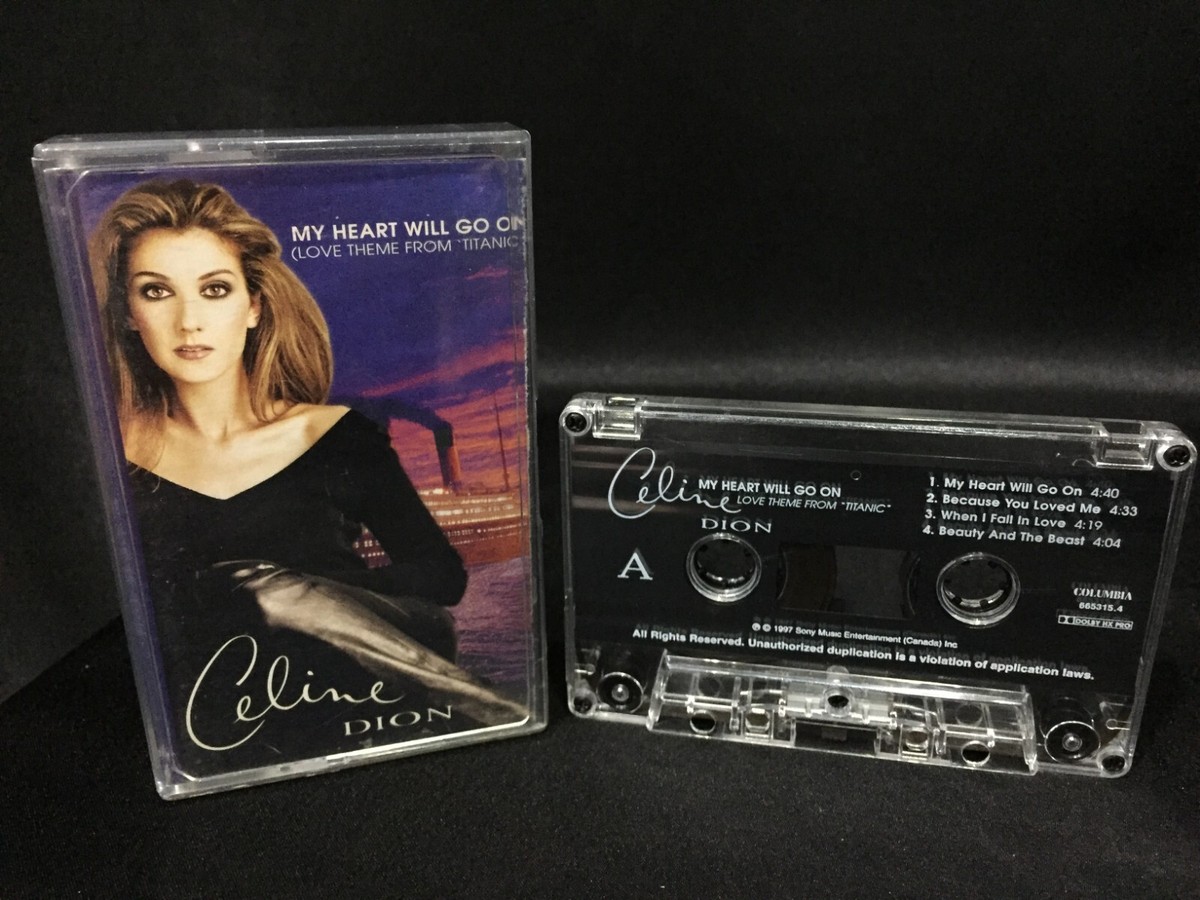
In 1997, Céline recorded My Heart Will Go On, written for James Cameron’s Titanic. She was reportedly not immediately excited by the idea of recording another film song, but the result became the most famous recording of her career.
As Titanic became a worldwide cultural phenomenon, the song seemed to be everywhere too. My Heart Will Go On won Record of the Year at the Grammys, while its writers James Horner and Will Jennings won Song of the Year. More than twenty-five years later, the opening flute melody can still make people think immediately of the film – and of Céline.
She followed this period with years of touring and recording, but perhaps one of the most important decisions of her career came in Las Vegas.
In 2003, she began A New Day…, a residency created especially for her at Caesars Palace. At the time, long Las Vegas residencies were often associated with artists whose biggest years were behind them. Céline helped change that image. Her show ran for more than four years, with over 700 sold-out performances and around three million spectators.
A second Las Vegas residency followed years later. By this point, Céline Dion had spent most of her life performing. The stage was not simply where she worked. It had become part of who she was.
Her private life was closely connected with her professional career as well. René Angélil, the man who had discovered her as a child, became her husband in 1994. He remained a central figure in her life and career until his death from cancer in January 2016.
Céline returned to the stage only weeks after losing him.
It was another example of something audiences had seen throughout her career: whatever happened in her private life, she seemed to find her way back to music.
The challenge that came next, however, was very different.
When Céline could no longer trust her own body
Céline began her Courage World Tour in 2019. The tour was interrupted in March 2020 as the COVID-19 pandemic closed concert venues around the world. She had already completed more than fifty North American performances.
At first, it seemed that the remaining concerts would simply be rescheduled.
But then health problems began to interfere with her plans.
In 2021, Céline postponed a planned Las Vegas residency because of severe muscle spasms. More concerts were delayed. Fans knew she was unwell, but the full reason remained unclear.
Then, on 8 December 2022, Céline spoke directly to the public.
She revealed that she had been diagnosed with stiff-person syndrome, usually shortened to SPS.
It is an extremely rare neurological disorder. According to the US National Institute of Neurological Disorders and Stroke, the condition can cause severe muscle stiffness and spasms. People with SPS may also become unusually sensitive to sound, touch and emotional stress, which can trigger these spasms. The condition is believed to involve the immune system and can affect movement and everyday activities.
For Céline, the consequences were especially serious.
Singing at her level requires much more than simply having a beautiful voice. A singer needs extremely precise control over breathing, posture and many different muscles. Céline later explained that the illness had affected her ability to sing in the way she had done throughout her career. She described the physical sensation of trying to sing as if pressure were being placed around her throat.
Touring became impossible.
In May 2023, the remaining dates of the Courage World Tour were officially cancelled. Céline said she was working hard to rebuild her strength but could not perform at the standard she expected from herself.
For the first time in decades, one of the world’s most famous live singers had disappeared from the stage.
And nobody could confidently say when – or whether – she would return.
One song under the Eiffel Tower
For almost two years after announcing her diagnosis, Céline’s public appearances were rare. Fans occasionally saw her at events, but a real return to live music still seemed uncertain.
Then came Paris.
On 26 July 2024, the opening ceremony of the Olympic Games took place across the French capital. At the end of an enormous show along the River Seine, the cameras turned towards the Eiffel Tower.
There stood Céline Dion.
Wearing a sparkling white gown, she performed Édith Piaf’s Hymne à l’amour from the Eiffel Tower.
It was her first live performance since March 2020.
There were no dancers surrounding her and no complicated story being told on stage. For a few minutes, the entire focus was on one singer, one song and one extraordinary location.
The performance was important because it answered at least one question: Céline Dion could sing publicly again.
But there was another, much more difficult question.
Could she perform an entire concert?
One Olympic song lasts only a few minutes. A Céline Dion show means hours of singing, movement, emotion, bright lights and thousands of people. SPS symptoms can be affected by physical and emotional stress, making the difference between a single carefully prepared performance and a full concert especially significant.
The Olympics showed that the door was open.
Céline still had to walk through it.
The comeback begins
On her 58th birthday, 30 March 2026, she finally announced the news fans had been hoping for.
Céline Dion was returning to live concerts in Paris.
A series of performances was announced at the huge arena in Nanterre, just outside central Paris. Demand was so high that more dates were eventually added, creating a total programme of 26 concerts running across 2026 and 2027. The shows sold out and attracted fans from around the world.
There was another sign that Céline was returning creatively as well. In April 2026, she released Dansons, a new French-language song written by her long-time collaborator Jean-Jacques Goldman. The two had previously created some of the most important music of her French-language career, including work connected with the hugely successful album D’eux.
Music was clearly becoming part of her daily life again.
But everything still depended on the first night.
September 12, 2026
On Saturday, 12 September, Céline Dion walked onto the stage at the Plenitude Arena in Nanterre for her first full concert in more than six years.
The opening song was On ne change pas – “We Don’t Change.”
The choice could hardly have been more appropriate.
Céline became emotional almost immediately. She had promised herself she would not cry, she told the crowd, but tears came during the opening part of the show.
This was not a carefully controlled four-minute Olympic appearance.
The concert lasted around two hours and fifteen minutes.
She performed 25 songs.
And some of them were among the most demanding pieces in her catalogue.
The Power of Love was there. So was My Heart Will Go On. She performed French-language favourites as well as songs that had followed her for decades.
Then came All By Myself.
For years, the song has been one of the clearest demonstrations of Céline’s vocal strength, especially because of its famous high note. During the comeback concert, she reached it and held it. According to the Associated Press reporter inside the arena, Céline then briefly looked towards her band almost as if she herself needed confirmation that she had done it.
The audience certainly did not need any confirmation.
They were already screaming.

A different kind of Céline Dion concert
One of the most interesting things about the comeback was what the production did not try to do.
It did not pretend that the previous six years had never happened.
The stage design was relatively restrained, allowing much of the attention to stay on Céline herself. She spoke openly about the difficult road that had brought her there and repeatedly thanked the audience for remaining with her.
Reuters reported that she told the crowd the road back had been longer and more difficult than expected, but that she had continued to hold on. She cried, joked with fans and gradually returned to many of the small theatrical habits that had always been part of a Céline Dion show.
That may be what made the evening so different from an ordinary greatest-hits concert.
Everybody in the building knew there was a question hanging over every song: could she do this again?
Not only one note.
Not only one song.
An entire evening.
And after 25 songs, the answer was there.
Paris becomes part of the story again
There is also something fitting about the fact that Céline chose Paris for this chapter of her career.
She comes from Quebec and became famous in French long before she became an English-language superstar. France has always been one of her most important musical homes.
When she arrived in Paris before the concerts, fans waited outside her hotel for hours, often singing her songs. The city joined in with the celebrations. A metro station near the venue was decorated with lyrics from her music, Galeries Lafayette opened a special merchandise pop-up, and Paris City Hall organised a giant karaoke event.
Céline called France her “second home.”
It was also Paris that had given the world the first real sign of her return in 2024.
The image of Céline alone on the Eiffel Tower singing Piaf had been almost cinematic. It looked like the perfect ending to a comeback story.
But it was not the ending.
It was the beginning.
She is not pretending nothing happened
Perhaps the most important part of Céline Dion’s return is that she has never suggested that her illness has simply disappeared.
Stiff-person syndrome is a serious neurological condition. Returning to the stage does not mean that the previous years can be erased or that every future performance is guaranteed to be easy.
That is part of what makes the 2026 concerts feel different.
For most of her career, Céline Dion amazed audiences because of what her voice could do. Huge notes seemed effortless. Songs that would be difficult for many singers became signatures for her.
Now there is another layer to every performance.
We know what it took for her to stand there.
The audience knows it too.
When she sings My Heart Will Go On today, people are not listening only to a famous song from Titanic. They are watching someone who spent years wondering whether she would ever be able to perform it in concert again.
That changes the meaning of the moment.
The voice returns home
Céline Dion has spent more than forty years on stage. She went from the youngest child in a huge Quebec family to Eurovision winner, Grammy-winning superstar, Las Vegas record-breaker and the voice behind one of the most famous film songs in history.
Then her body suddenly forced her to stop.
For six years, a woman whose life had been built around performing had no full concert stage to return to.
There were treatments, cancelled shows, uncertainty and long periods away from the public.
Then came four minutes on the Eiffel Tower.
Two years later came 25 songs in Paris.
And perhaps that difference tells us more about Céline Dion’s comeback than any dramatic headline can.
The Olympic performance proved that she could sing again.
September 12, 2026 proved that she could come back and give an audience an entire night.
There are more concerts ahead, and nobody – including Céline herself – can know exactly what the future will look like.
For now, however, one thing is certain.
After a very long silence, Céline Dion is back where she has always seemed most at home.
On stage.
 Gergő's English Club