It all started with a small house, a few pieces of furniture, and some rather unusual people who spoke a language nobody understood. More than 25 years later, The Sims is still one of the most recognisable video game franchises in the world. But how did a game about ordinary everyday life become such an extraordinary success?
There was something strangely magical about sitting in front of a computer in the early 2000s, creating a little family and moving them into an almost empty house. Perhaps there was only enough money for a cheap sofa, a small television and a rather uncomfortable bed. The kitchen was tiny, the bathroom even smaller, and the wallpaper was probably a terrible choice. But none of that really mattered. It was your house, your family and your little world. And for the next few hours, you could do almost anything you wanted with it.
Of course, things rarely went according to plan. Someone would burn dinner, another family member would fall asleep on the floor, and sooner or later, a mysterious fire would destroy half the kitchen. Meanwhile, your Sims continued chatting happily in a language that nobody understood.
It was ridiculous, unpredictable and sometimes surprisingly emotional. And millions of people absolutely loved it.
When The Sims arrived on computers in February 2000, it looked very different from the video games that dominated the market. There were no monsters to kill, no races to win and no great adventures waiting to be completed. Instead, players were invited to experience something much more familiar: ordinary everyday life.
It sounds like a strange idea for a successful computer game, doesn’t it? Yet more than 25 years later, The Sims has become one of the most influential video game franchises ever created.
It All Began with a House
The man behind The Sims was Will Wright, an American game designer who had already achieved enormous success with SimCity, released in 1989. While SimCity allowed players to design and manage entire cities, Wright became interested in something on a much smaller scale.
What if, instead of building cities, people could design individual homes? And what if those homes were occupied by little computer characters with their own needs, personalities and habits?
Part of the inspiration came from Wright’s personal experiences. In 1991, he lost his home in the devastating Oakland fire in California. Rebuilding his life made him think about the things people own, the places they live and the connections between their possessions and their everyday activities.
The original concept was closer to an architectural simulation than a traditional video game. Players would build houses, and virtual people would test how comfortable and practical those buildings were.
But something unexpected happened during development. The characters turned out to be much more interesting than the houses themselves.
They wanted food, comfort, entertainment and company. They formed relationships, reacted to their surroundings and occasionally behaved in completely unexpected ways.
Gradually, the focus shifted from the buildings to the people living inside them.
Not everyone at the company was convinced that the idea would work. After all, who would want to spend hours watching little computer people wash dishes, use the toilet or go to work?
As it turned out, quite a lot of people.
Welcome to the Neighbourhood
The first version of The Sims was released on 4 February 2000, and it soon developed a devoted following.
Players could design characters, choose their personalities, move them into houses and guide them through everyday life. They could find jobs, make friends, fall in love, get married and start families. They could also spend hours decorating their homes, carefully choosing everything from kitchen cupboards to garden furniture.
There was something wonderfully relaxing about the building process. You could begin with a simple house and gradually turn it into an enormous mansion, complete with a swimming pool, expensive furniture and far too many windows.
Naturally, earning enough money for these luxuries was not always easy. Fortunately, many players soon discovered the famous rosebud money cheat. For some, it became almost impossible to imagine playing The Sims without it.
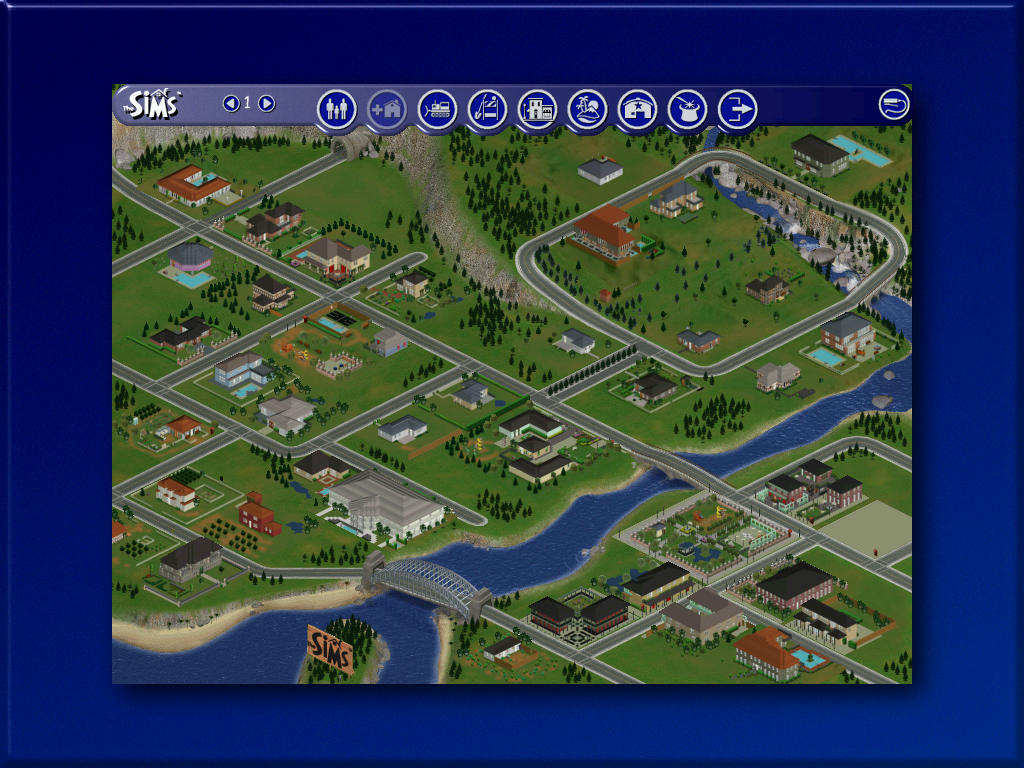
The game also introduced families who would become familiar faces for generations of players. There were the Goths, with their slightly mysterious atmosphere, and the Newbies, who helped new players learn how everything worked.
What made these characters special was not necessarily their appearance or background. It was the way players could create their own stories around them.
One person might turn the Goth family into a wealthy and successful household. Another might destroy their relationships within a single afternoon.
There were no strict rules about how these stories should develop. In fact, there was no real ending at all.
The first game eventually received seven expansion packs, bringing holidays, pets, parties, romantic adventures, magic and many other possibilities into the neighbourhood.
Before long, that simple little computer game had become a whole world of its own.
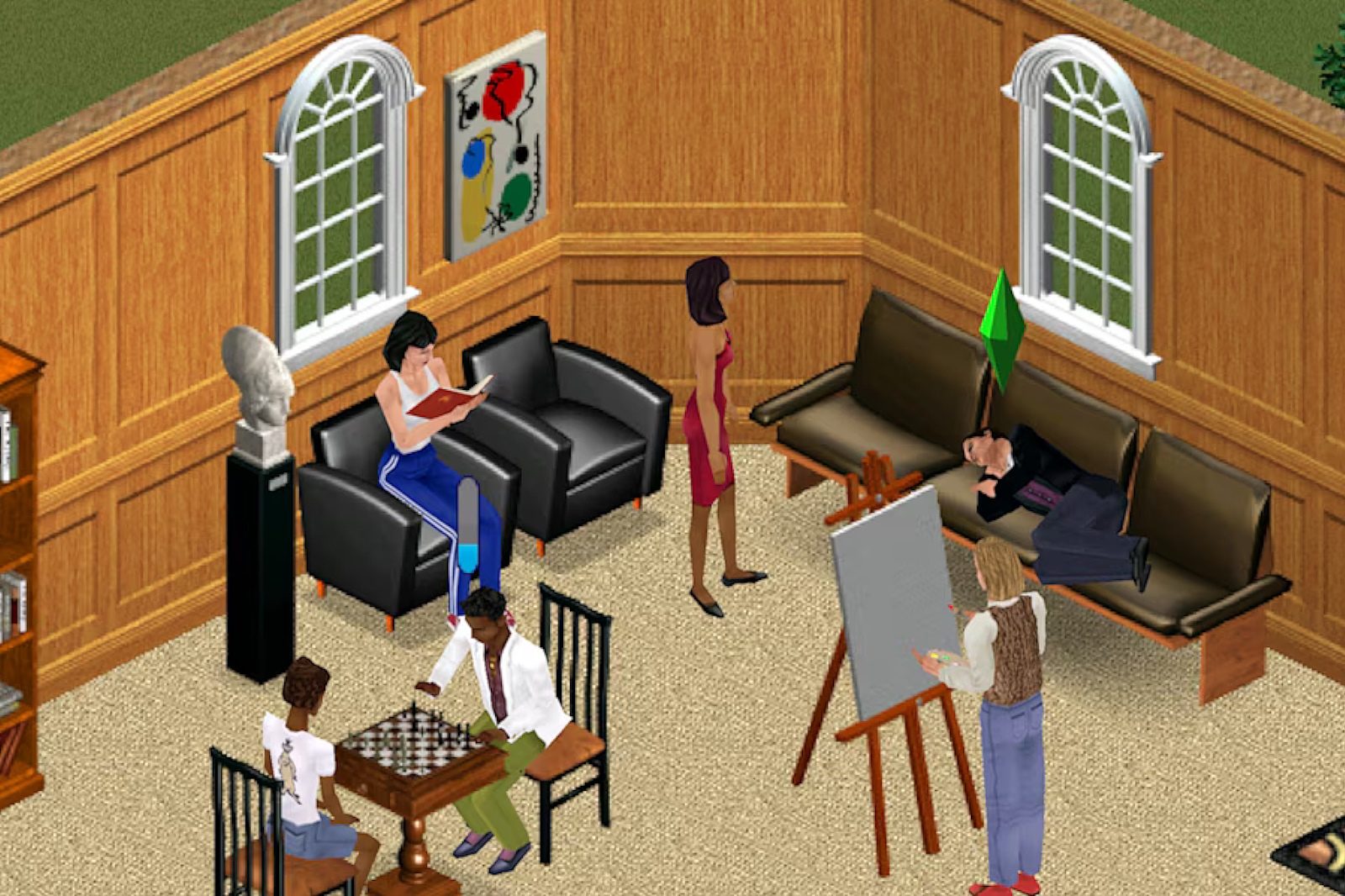
When Our Sims Began to Grow Old
By the time The Sims 2 appeared in September 2004, players had already spent countless hours looking after their virtual families. However, the sequel introduced something that made the experience feel considerably more personal.
For the first time, Sims could properly grow older.
Babies became toddlers, children turned into teenagers, and adults eventually reached old age. Families could continue through several generations, and children could inherit physical characteristics from their parents.
Suddenly, the characters were no longer simply people who lived in a house. They had entire life stories.
The Sims 2 also introduced memories, aspirations and fears, making the characters feel more individual. Some dreamed of becoming wealthy, while others wanted large families, successful careers or exciting romantic lives.
The improved graphics and detailed facial expressions made everything even more entertaining.
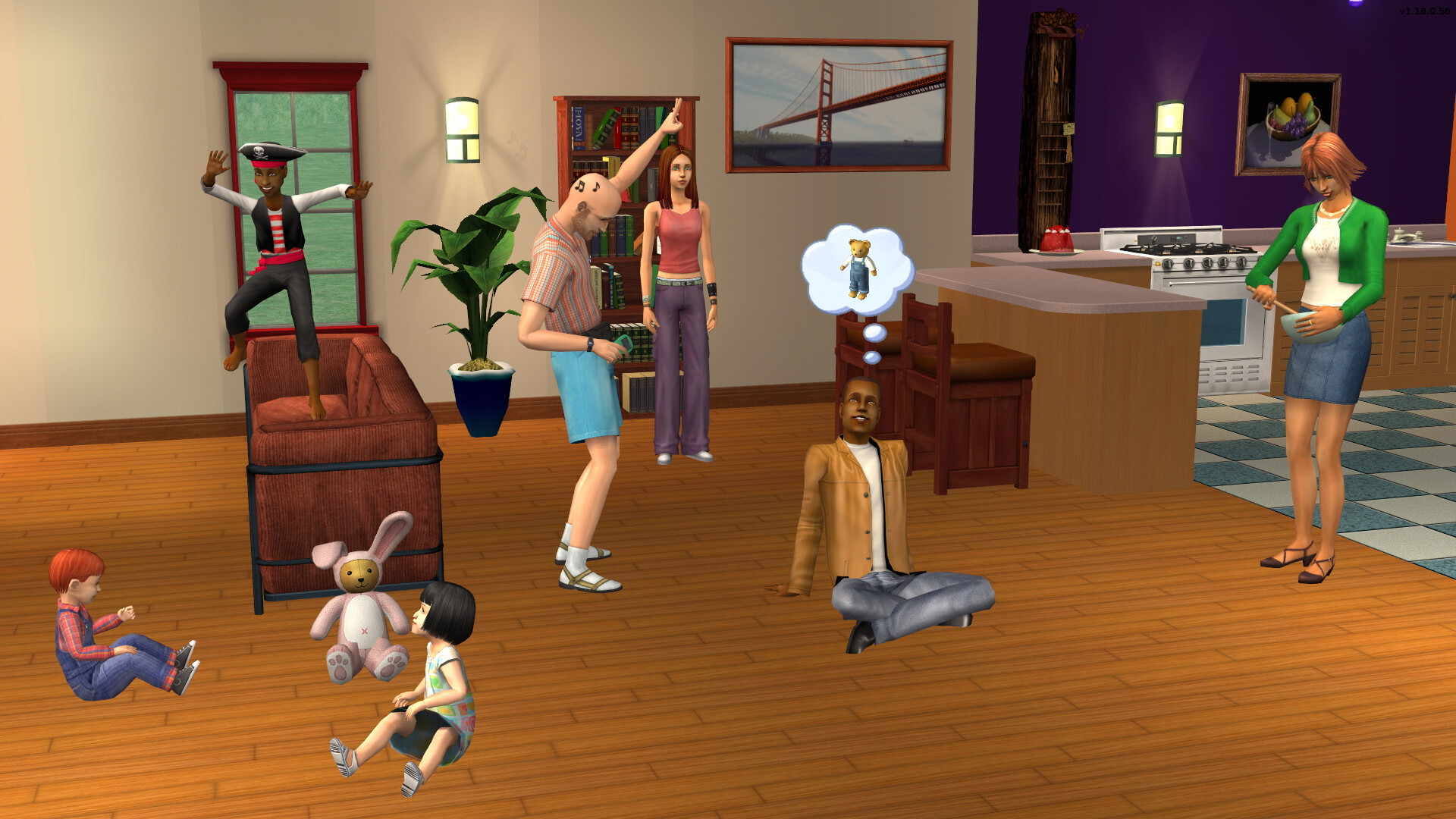
But perhaps the most memorable part of The Sims 2 was the collection of strange and fascinating families living in its neighbourhoods.
Pleasantview, for example, brought back several familiar characters from the original game. However, things had changed since players last met them.
Bella Goth had mysteriously disappeared, leaving her husband Mortimer and their children behind. Don Lothario had become involved in a complicated network of romantic relationships, while the Caliente sisters were surrounded by secrets of their own.
The game never explained every detail. Instead, players were encouraged to discover clues, develop theories and continue the stories themselves.
Even today, Bella Goth’s disappearance remains one of the most famous mysteries in the history of The Sims.
For many fans, this was the golden age of the franchise. The Sims 2 combined humour, family life, mystery and storytelling in a way that made its neighbourhoods feel surprisingly alive.
A Whole Town to Explore
Five years later, in June 2009, The Sims 3 took another ambitious step forward.
For the first time, players were no longer restricted to individual houses and small locations separated by loading screens. Their Sims could travel freely around an entire neighbourhood.
They could visit friends, explore parks, go fishing, visit community buildings or simply walk down the street while life continued around them.
It was a remarkable change.
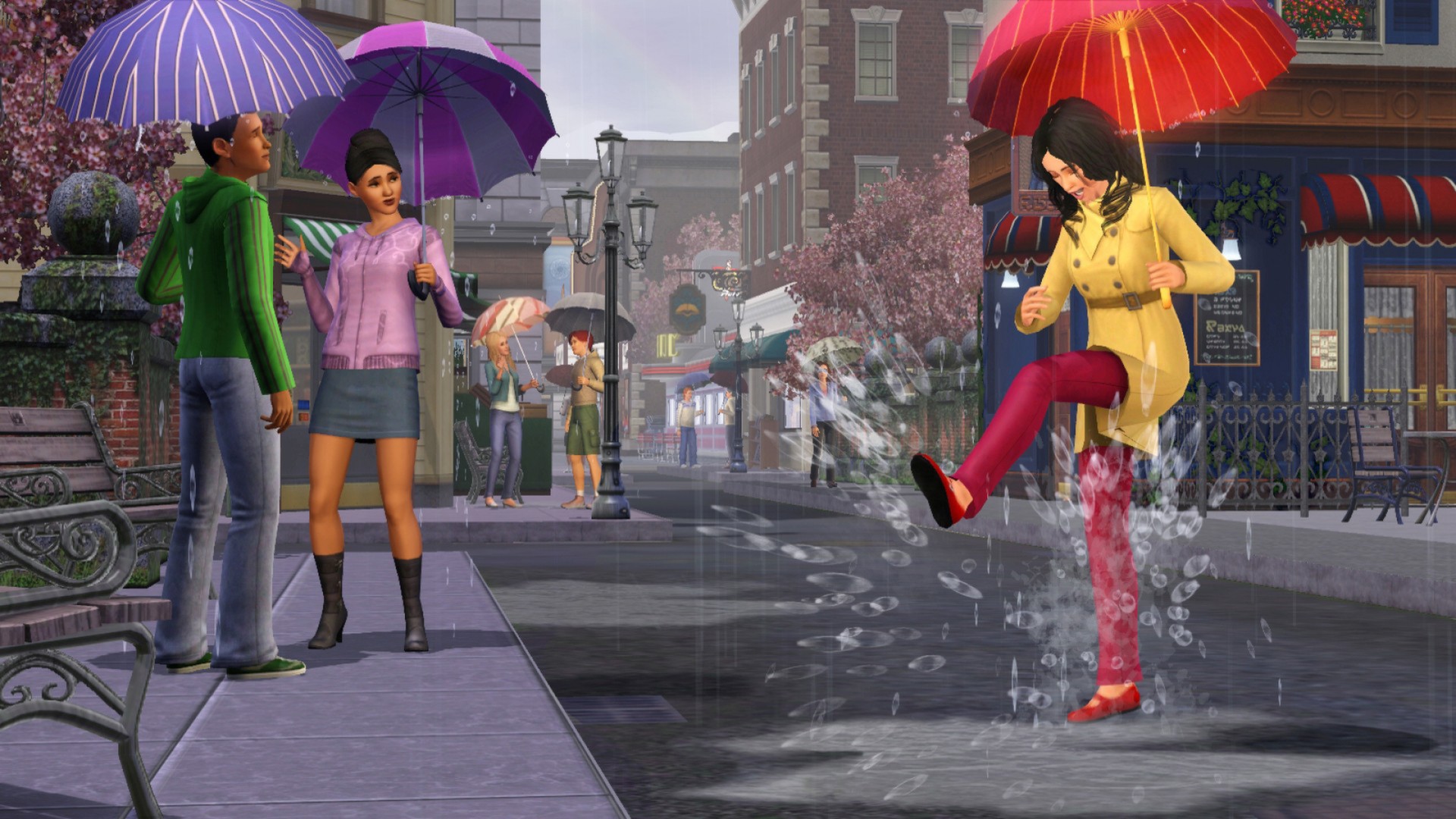
The original Sunset Valley neighbourhood was filled with familiar families, hidden connections and plenty of opportunities for new stories. Some characters even had links to the earlier games, giving long-time fans a chance to discover how the different generations fitted together.
Another popular feature was the ability to customise almost everything. Furniture, clothes, walls and floors could be redesigned using different colours and patterns.
A boring brown sofa could become bright purple. A traditional family home could suddenly turn into an unusual modern masterpiece.
And if you did not like the appearance of an object, you could simply change it.
Over time, expansion packs introduced universities, exotic destinations, supernatural creatures, pets and many other experiences.
The Sims 3 made it possible to create an entire world that felt connected and constantly changing. Even when players were busy controlling one family, the rest of the neighbourhood could continue developing its own stories.
It was probably the closest the series had come to creating a complete virtual society.
A Different Kind of Life
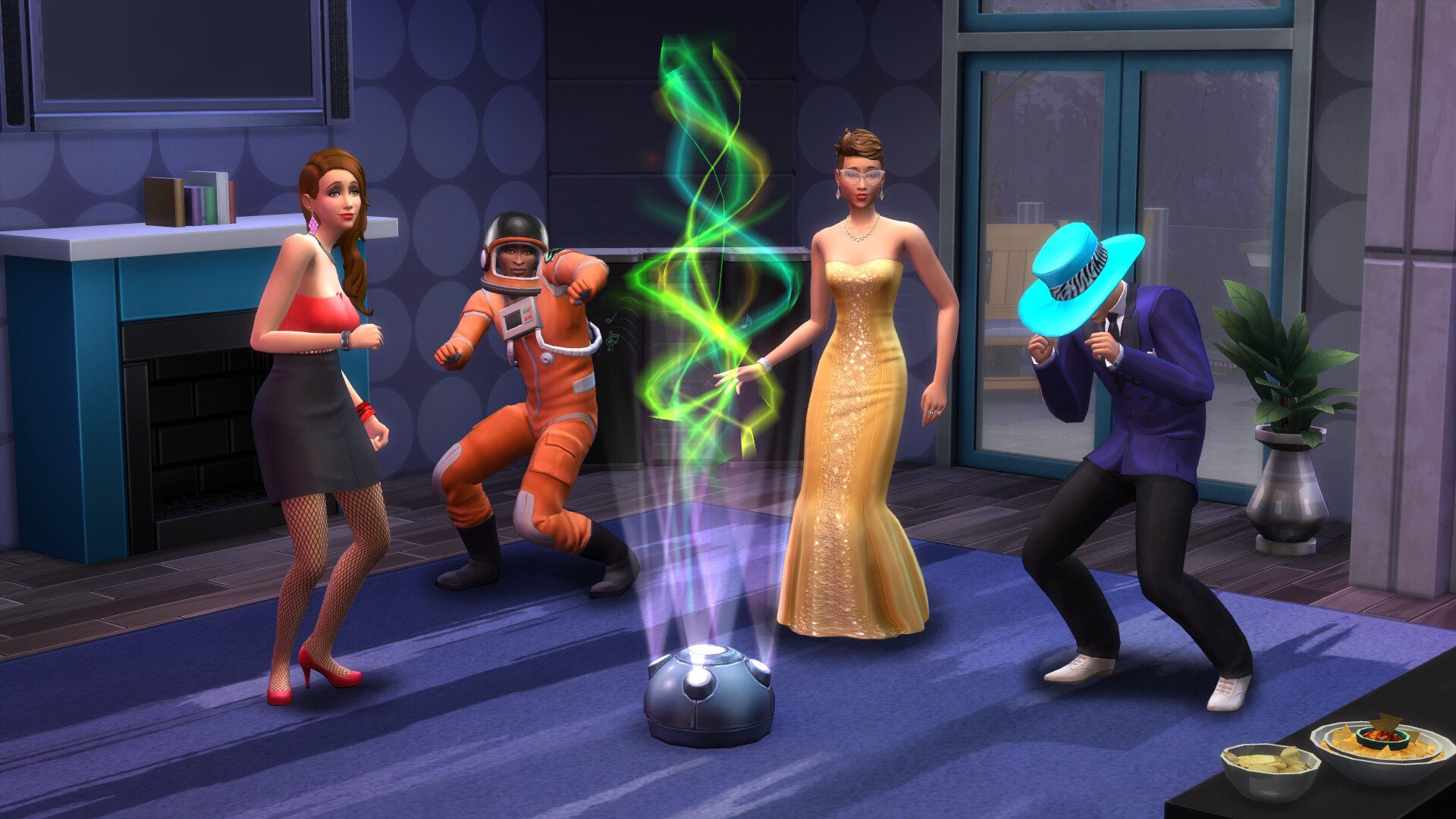
The Sims 4 arrived in September 2014, bringing a fresh visual style, more expressive characters and several changes to the familiar formula.
This time, emotions became an important part of everyday life. Sims could feel confident, embarrassed, inspired, angry or uncomfortable, and these feelings could influence their actions.
The building system also became more flexible. Instead of carefully rebuilding an entire house, players could move rooms, change their sizes and experiment with different architectural designs.
However, not everyone welcomed the changes.
One of the biggest disappointments for some long-time fans was the disappearance of the open-world system introduced in The Sims 3. Other features that players had enjoyed in earlier games were also missing when the fourth game first appeared.
Over the following years, the developers gradually expanded the experience with updates, additional worlds and numerous expansion packs.
The base game became free to play in October 2022, making it easier than ever for new players to discover the series.
By this point, The Sims had already become much more than a collection of computer games. It was an enormous creative community, with players designing houses, making videos, telling stories and sharing their creations with people around the world.
Sul Sul! A Language of Its Own
Of course, no article about The Sims would be complete without mentioning Simlish.
One of the most unusual decisions made during the development of the original game was to give the characters their own fictional language.
Instead of using English or another existing language, the developers created a form of speech based on invented sounds, expressions and emotional performances.
The result was Simlish, a language that sounds strangely familiar even though most of its words have no fixed meaning.
For players, this turned out to be a brilliant idea.
Because the characters were not speaking an ordinary language, people from different countries could enjoy the game without constantly listening to the same conversations in their own language. The Sims’ emotions were communicated through their voices, gestures and facial expressions.
And somehow, everyone understood what was happening.
A character shouting angrily in Simlish clearly did not need subtitles.
Over the years, certain expressions became especially popular. “Sul Sul”, for example, is now recognised by fans around the world as a typical Simlish greeting.
The fictional language even entered the music industry. Famous artists recorded special Simlish versions of their songs, which could then be heard on the radio stations inside the games.
It was another example of how something originally created for a computer game developed into a cultural phenomenon.
The Wonderful Art of Doing Absolutely Nothing
Perhaps the strangest thing about The Sims is that, when you think about it, very little actually happens.
Most of the time, the characters are doing things that we already do in real life.
They get up, eat breakfast, go to work, come home, watch television, talk to their friends and eventually go to bed.
And yet, these ordinary activities somehow become fascinating when they happen inside a computer.
Part of the attraction is undoubtedly the freedom to experiment. In real life, we cannot simply move our house to another street, change our career in a few seconds or redesign an entire kitchen whenever we feel bored.
In The Sims, however, almost anything is possible.
There is also something enjoyable about the unpredictability. No matter how carefully you plan your virtual family’s future, something unexpected can always happen.
A romantic dinner can end in disaster. A successful businessman can suddenly lose his job. A beautiful new kitchen can disappear in flames because someone has absolutely no cooking skills.
And sometimes, the most memorable moments are the ones we never intended to create.
The series has also given players a space to explore different personalities, relationships and lifestyles. Some recreate their real families, while others invent completely imaginary characters and stories.
For people interested in architecture, fashion or interior design, the games offer almost endless creative opportunities.
The huge community of players has taken this creativity even further, producing custom clothes, furniture, hairstyles, buildings and modifications that continue to change the experience.
A Little Piece of Our Childhood
For those who grew up during the 2000s, The Sims is often connected with very particular memories.
Perhaps you remember rushing home from school to continue building the perfect house. Perhaps you spent an entire afternoon creating a family, only to discover that you had forgotten to buy them a refrigerator.
Or maybe you remember the background music.
That cheerful, slightly unusual music playing while you chose wallpaper, moved furniture or built another unnecessary swimming pool.
Even today, hearing a few seconds of the original soundtrack can bring back memories of old computers, long afternoons and a time when the internet was a very different place.
There is something especially nostalgic about the original games. Their graphics may look outdated now, and their possibilities were much more limited than those of modern titles, but their atmosphere remains difficult to recreate.
The Sims never needed spectacular battles or complicated missions to keep people entertained. Sometimes, all it took was an empty house, a little imagination and a family of characters who did not always do what they were told.
Still Playing with Life
When Will Wright began developing his unusual idea, he probably could not have imagined just how much it would influence the video game industry.
What started as an experiment involving houses and artificial people became a worldwide success, inspiring millions of players to create their own characters, homes and stories.
The series has changed enormously since 2000. Its graphics have improved, its worlds have expanded, and its characters have become more complex. Yet the basic attraction remains remarkably familiar.
We still enjoy designing houses that we could never afford in real life. We still become attached to fictional families. And we still laugh when a perfectly ordinary day turns into a complete disaster.
Perhaps that is the real secret behind The Sims.
It gives us a miniature version of everyday life, but with just enough freedom, imagination and chaos to make it endlessly entertaining.
And somewhere, in a little virtual house, a Sim is probably standing in front of a kitchen counter, waving desperately because someone has placed a chair in the wrong position.

